
活動訊息EXHIBITION AND EVENT INFORMATION
-
 MORE
MORE -
 MORE
MOREMaking Cinema Accessible to All: TFAI Invests in Professional Audio Description to Create a Truly Inclusive Cinema Experience.
This year 2026 marks the 70th anniversary of Taiwanese-language cinema, and the Taiwan Film and Audiovisual Institute (TFAI) has launched a year-long program “Formosa Treasure: Taiyupian as World Cinema” featuring a series of events. Meanwhile, to promote the cultural accessibility and foster diversity, equity, and inclusion (DEI), TFAI selected director LEE Hsing’s Good Neighbors (1962), which was restored by TFAI in 2025, to produce the world’s first restored film with Taiwanese-language audio description. This groundbreaking film had its world premiere today (August 12th ). Florence CHAO, an experienced audio description professional, was invited to explain the importance of audio description. Six guide dogs from the Huiguang Guide Dog School also joined the audience in the theater. Through this event, TFAI announced its commitment to the “Project for the Production of Audio Descriptions for Classic Taiwanese Films and the Promotion of Inclusive Access,” inviting more audiences to step into the golden age of Taiwanese-language cinema. As new movies and drama series are constantly being released, audio description services enable visually impaired individuals who primarily rely on their hearing to enjoy brilliant film and TV works like everyone else. With its mission to promote cultural accessibility, TFAI selected director LEE Hsing’s Taiwanese-language film Good Neighbors as the starting point for initiating the “Project for the Production of Audio Descriptions for Classic Taiwanese Films and the Promotion of Inclusive Access.” Arthur CHU, the Chairperson of TFAI, noted that, “We chose Good Neighbors not only to celebrate the 70th anniversary of the Taiwanese-language films, but also to commemorate the fifth anniversary of director LEE Hsing’s passing, which falls on August 19, just one week later.” He added, “To mark the 70th anniversary of the Taiwanese-language films this year, TFAI invited the Golden Melody Award-winning singer Ricky HSIAO to compose the theme song ‘Let’s Catch a Movie’ for the whole program. We invite all audiences to open their five senses and ‘watch movies with their hearts.’ Audio description services embody this spirit, helping TFAI to achieve our goals of cultural and language accessibility.” Hopefully, the joys and sorrows portrayed in these great works will transcend age and ethnicity, becoming irreplaceable shared memories for all. LU Mei-li, the Deputy Director-General of the Bureau of Audiovisual and Music Industry Development also attended the event to show her support. She remarked, “The film Good Neighbors is a story about ethnic inclusion. It signifies the spirit of Taiwan, which we hope to pass down through these films. What makes today’s premiere more special is that this is the very first Taiwanese-language film with audio description produced by TFAI, representing its efforts to put into practice our firm belief that all people should have the opportunity to engage with and learn about our culture.” While streaming platforms have introduced audio description services in recent years, TFAI is also committed to meeting the diverse needs of audiences, in addition to its persistent dedication to the digital restoration of classic films. By providing accessible audiovisual content to fulfill a vision of cultural inclusion, TFAI has marked an important milestone in the development of Taiwanese film restoration and audio description services. TFAI has specially produced two versions of audio description for Good Neighbors, one in Taiwanese and the other in Mandarin. The bilingual versions echo a scene in the film, in which Dr. Huang, a Western-trained physician from a native Taiwanese family, and Dr. Chen, a Chinese medicine practitioner from a mainland Chinese immigrant family, live next door to each other while their families communicate in different languages. This lively and multilingual comedy full of humorous exchanges highlights the importance of professional audio description. To avoid overlapping with the film’s original dialogue and sound, audio descriptions must be inserted during appropriate pauses to convey the complicated visual images within a very limited amount of time. At the world premiere, Ms. CHAO explained that audio description is essentially a form of translation, “Except that our service is particularly tailored for people with visual impairments.” Interestingly, audio description also provides audiences with additional information that may otherwise go unnoticed when watching a film. In Good Neighbors, for example, the audio description specifically identifies Rose Marie, a well-known Western-style restaurant in Taipei during the 1950s and 1960s. In another scene, when the characters go on a date at the zoo, the audio description identifies the filming location as the former Taipei Zoo at Yuanshan and notes that two Asian elephants appearing on the screen are Lin Wang and Ma Lan. These supplementary details are like surprisingly cinematic Easter eggs for audiences. Following Good Neighbors, TFAI will continue to produce audio descriptions for classic Taiwanese films. Through the Project which is funded by the Bureau of Audiovisual and Music Industry Development under the Ministry of Culture, TFAI plans to release audio description versions of director CHEN Yu-hsun’s Tropical Fish (1995), as well as Back to Anping Harbor (1972), Dragon Inn (1967), The Sandwich Man (1983), and The Wedding Banquet (1993). TFAI will also make audio description equipment available for public use. Audiences interested in using the service are welcome to inquire at the reception desk on the first floor before the screening. ➤ TFAI selected director LEE Hsing’s Good Neighbors to produce the world’s first film with Taiwanese-language audio description. Back row from left: CHEN Chuan-huei, the producer of disability-focused TV shows from Public Television Service; SU, Chia-yu, the family representative of director LEE Hsing; DU Li-chin, the Executive Director of TFAI; LU Mei-li, the Deputy Director-General of the Bureau of Audiovisual and Music Industry Development; Arthur CHU, the Chairperson of TFAI; Florence CHAO, the instructor of audio description services; YANG Sheng-hong, the President of the Inclusive Freedom Association; HUANG Yu-siang, the pianist and the winner of the Golden Melody Award for Best Composer; TAN Hong-hui, the CEO of the Li Kang Khioh Taiwanese Cultural and Educational Foundation. (Courtesy of TFAI) ➤ Arthur CHU, the Chairperson of TFAI, noted that, “TFAI invites audiences to open their five senses and ‘watch movies with their hearts.’ Audio description services embody this spirit, helping TFAI to achieve our goals of cultural and language accessibility.” (Courtesy of TFAI) ➤ LU Mei-li, the Deputy Director-General of the Bureau of Audiovisual and Music Industry Development remarked that, “We firmly believe that all people have the opportunity to engage with and learn about our culture.” (Courtesy of TFAI) ➤Florence CHAO, the audio description instructor explained the importance of audio description in the theater. (Courtesy of TFAI) ➤ HUANG Yu-siang, the pianist and the winner of the Golden Melody Award for Best Composer, also showed up to support audio description services. (Courtesy of TFAI) ➤ Good Neighbors, the world’s first film with Taiwanese-language audio description, had its premiere. Six guide dogs from the Huiguang Guide Dog School also joined the audience in the theater. (Courtesy of TFAI) ➤ TFAI announced its commitment to the “Project for the Production of Audio Descriptions for Classic Taiwanese Films and the Promotion of Inclusive Access” to create an inclusive venue where everyone can enjoy cultural activities together. (Courtesy of TFAI) -
 MORE
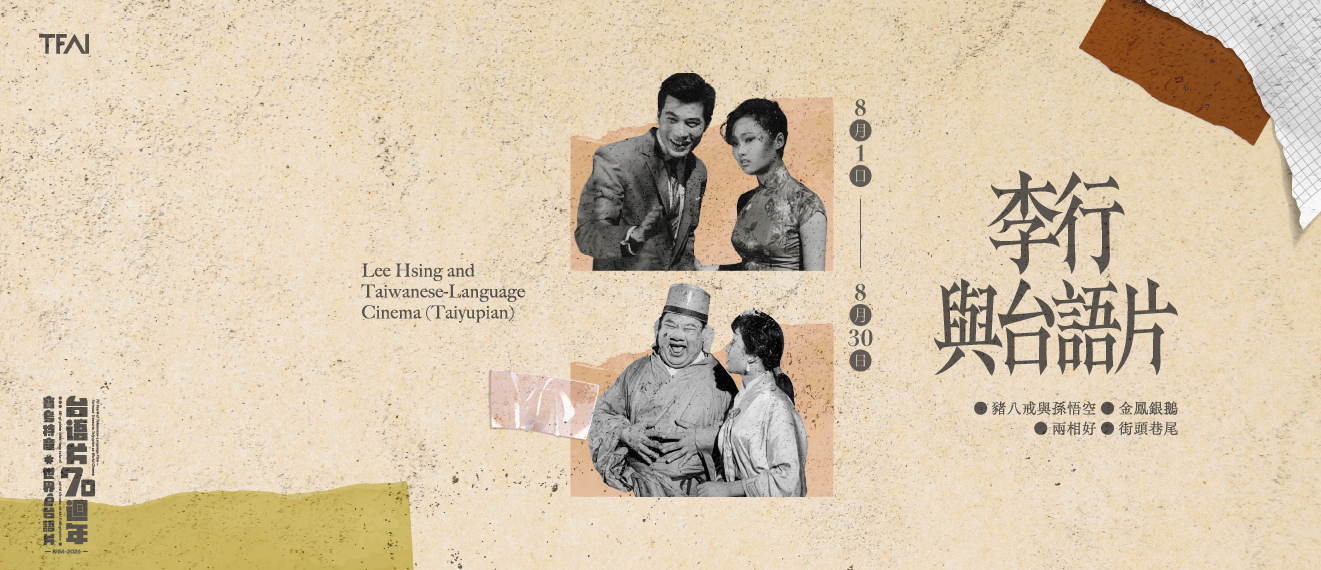
MORESame-Sex Romance and a Lecherous Zhu Bajie? Discover the Radical Taiyupian of LEE Hsing, the “Godfather of Taiwan Cinema”!
Celebrated as the “godfather of Taiwan cinema,” director LEE Hsing collaborated with the Central Motion Picture Corporation (CMPC) to pioneer the Healthy Realism movement, creating classics such as Beautiful Duckling (1965) and The Story of a Small Town (1979) that opened a new chapter in Taiwan cinema. Yet before that, he had already directed numerous Taiwanese-language films (“Taiyupian”), including Brother Wang and Brother Liu Tour Taiwan (1959), helping to spark a wave of Taiyupian comedies and revealing a creative range far broader than one might imagine. As part of the Taiwan Film and Audiovisual Institute’s celebrations for the 70th anniversary of Taiwanese-language cinema, the “Formosa Treasure: Taiyupian as World Cinema” series will present the August special program, “Lee Hsing and Taiwanese-Language Cinema (Taiyupian),” featuring four films from the director’s independent production era. Audiences may be shocked to discover that more than 60 years ago, this Golden Horse Award-winning director was already exploring daring stories such as a female same-sex romance and Zhu Bajie’s comic pursuit of love in Journey to the West! With HOU Hsiao-hsien as his former script supervisor and assistant director, and Kevin CHU regarded as his final protégé, LEE Hsing’s influence on Taiwan Cinema runs deep. As a China-born filmmaker working in the Taiwanese-language film market, he directed 12 Taiyupian between 1958 and 1963. He blended elements of Chinese cinema, traditional opera, Japanese cinema, and Western comedy, distilling this rich cultural hybridity into works unmistakably rooted in the local character of Taiyupian. Two Friends (1959), adapted from the fantastical world of Journey to the West, carries forward the hugely popular comic style of Brother Wang and Brother Liu Tour Taiwan (1959) and once again stars “Brother Wang,” LEE Kuan-chang, this time in the lead role of Zhu Bajie. Lecherous, lazy, and far from handsome, Zhu Bajie is no revered hero. He stumbles from one mishap to another on the journey to retrieve the Buddhist scriptures, yet his deeply human flaws make him endear to audiences. In the film, Zhu Bajie sings a humorous adaptation of the Taiwanese folk song “Diu Diu Dang Ah,” poking fun at himself with lyrics such as, “Though I may be a little ugly,” and “Everyone laughs at me for being a lecherous pig.” Beloved Taiwanese singer CHI Lu-hsia was among those invited to perform the songs behind the scenes, revealing through the film's playful spirit the mutually reinforcing relationship between Taiyupian and the pop music industry. In The Royal Society (1962), the only Taiwanese opera film LEE Hsing ever directed, Jinfeng and Yin-e, two young women disguising themselves as men, end up falling for each other’s cross-dressed personas, sparking an unexpectedly intimate bond! Featuring performances by the Sai Chin Pao Opera Troupe and shot in just 10 days, its remarkable production speed reflects the hands-on experience LEE Hsing had accumulated working on Taiyupian sets. Far removed from the upright and conservative subjects associated with his later Healthy Realism films, The Royal Society reveals an undercurrent of desire flowing between its two young female protagonists beneath the constraints of social status, arranged marriage, and the traditional family order, showcasing the uninhibited vitality of Taiyupian. Good Neighbors (1962) uses broad comedy to depict the fateful ties between two families. Dr. Huang, a Taiwanese physician practicing Western medicine, and Dr. Chen, a mainland Chinese practitioner of traditional Chinese medicine, live side by side. Constantly at odds because of differences in language and custom, their interactions give rise to one comic situation after another. Borrowing the narrative framework of Hong Kong's The Greatest Civil War on Earth series to explore ethnic conflict, Good Neighbors interweaves Taiwanese and Mandarin dialogue throughout. The film marks an important turning point in LEE Hsing’s transition from Taiwanese-language cinema to Mandarin-language cinema, while also serving as the screen debut of actress WANG Man-chiao, who would later in her career become affectionately known as Taiwan's “National Grandma.” More precious still, the film concludes with documentary footage of temple festival processions, preserving the folk customs of Taiwan at the time through a quasi-ethnographic approach. LEE Hsing’s first Mandarin-language film, Our Neighbor (1963), portrays the everyday lives of ordinary people. Having come to Taiwan from China, Shih San-tai and Chen A-fa live together in a crowded urban tenement, looking after one another. Shih San-tai, who makes a living collecting scrap, develops a deep father-daughter bond with the orphan Hsiao-chu, while Chen A-fa and neighbor Chu Li-li unwittingly fall for each other. Our Neighbor’s finely observed visual imagery is the work of master cinematographer LAI Cheng-ying, whose lens vividly captures the environment and atmosphere of life at the bottom of society. It also retains a small amount of Taiwanese dialogue and features Taiyupian star HO Yu-hua in a supporting role. The traces of LEE Hsing's Taiyupian experience remain clearly visible, while also foreshadowing the direction his later filmmaking would take. Two Friends (1959) stars LI Kuan-chang (left), the “Brother Wang” from Brother Wang and Brother Liu Tour Taiwan, as protagonist Zhu Bajie. (Courtesy of TFAI) The Zhu Bajie in Two Friends (1959) is lecherous, lazy, and far from handsome. (Courtesy of TFAI) The Royal Society (1962) is LEE Hsing’s only Taiwanese opera film. Right: WU Ming-hsia, one of the four leading xiaosheng performers of Taiwanese opera at the time, as Jinfeng. The Royal Society (1962) depicts the undercurrent of desire between two young women. Good Neighbors marks an important turning point in LEE Hsing’s transition from Taiyupian to Mandarin-language films. Good Neighbors follows two families whose differences in language and customs lead to constant friction and endless comic situations! LEE Hsing’s first Mandarin-language film, Our Neighbor (1963), still features a small amount of Taiwanese dialogue. -
 MORE
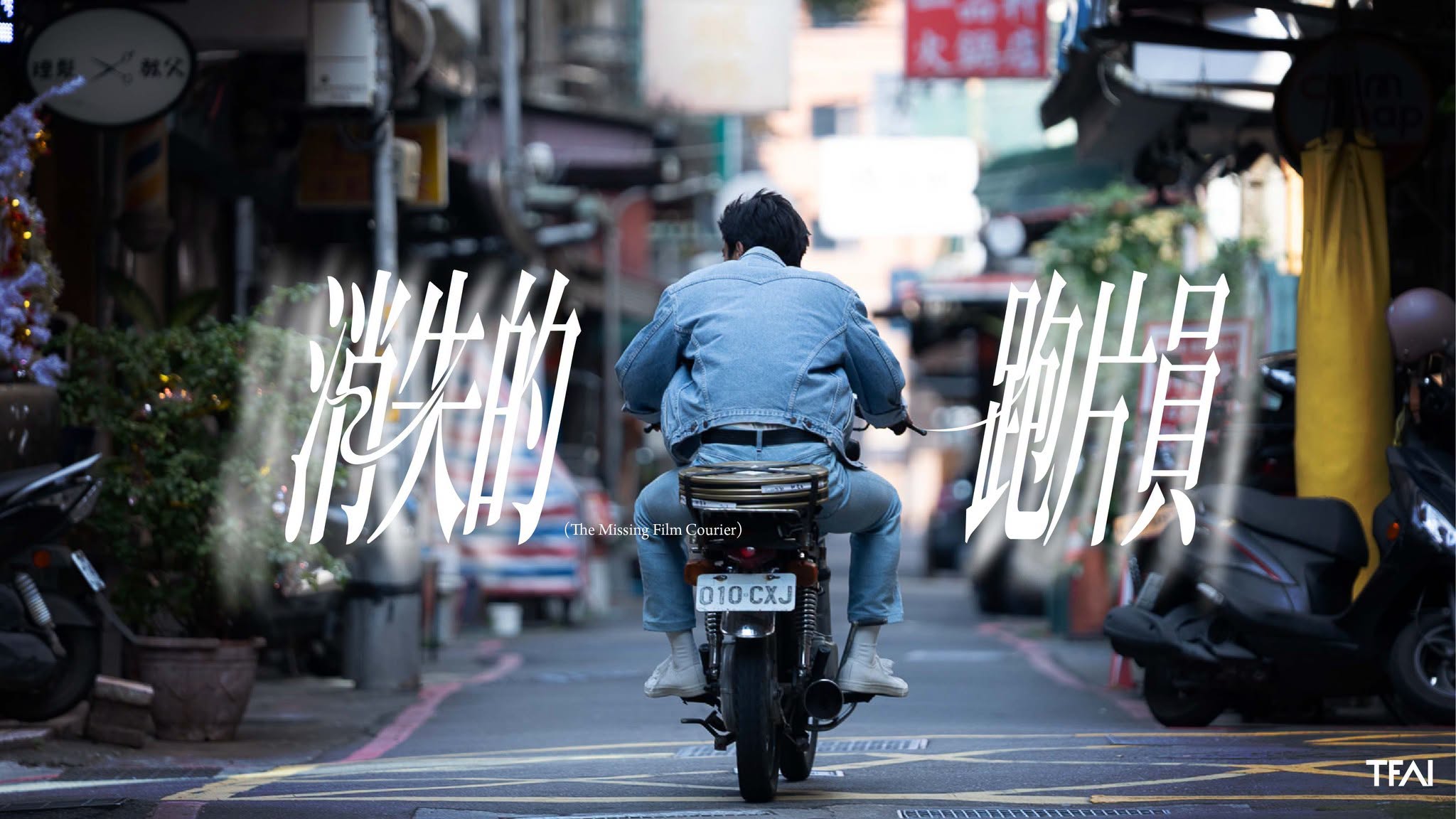
MORECHEN Yu-hsun and TSENG Jing-hua Reunite for The Missing Film Courier, TFAI’s New Sci-Fi Brand Film Reviving a Lost Cinema Profession
Following the nationwide buzz generated by A Foggy Tale (2025), acclaimed director CHEN Yu-hsun and actor TSENG Jing-hua have reunited for a new collaboration: The Missing Film Courier, the latest brand film for the Taiwan Film and Audiovisual Institute (TFAI). The film held its world premiere today (June 24), with CHEN and TSENG appearing in person to share behind-the-scenes stories and reflect on the evolution of Taiwan’s film industry. In the film, TSENG Jing-hua rides a vintage motorcycle and learns how to restore physical film reels, stepping into the roles of both a film courier and a film restoration specialist for the first time. Inspired by director CHEN Yu-hsun, TSENG also unleashes his inner comedian. Written and directed by CHEN Yu-hsun, The Missing Film Courier showcases his signature comedic style while incorporating numerous hidden references and cinematic easter eggs. TFAI Chairperson Arthur CHU recalled, “Last July, TFAI hosted a 30th-anniversary outdoor screening of Tropical Fish (1995). While Director CHEN was still carried away by the occasion, I sat down beside him and said, ‘Director, now that you’ve finished A Foggy Tale, would you have time to make a brand film for TFAI?” The strategically timed invitation drew laughter from the audience. CHEN readily agreed on the spot. However, in his trademark humorous fashion, he later joked that after writing the script, he couldn’t help but regret saying yes. The story begins on Ximending’s bustling cinema street thirty years ago, when iconic theaters such as LUX CINEMA, Hoover Theatre, Sun Cinema, Wanguo Theatre, and Shin Sheng Theatre lined the district. In the era before digital distribution, films could not be transmitted online. Instead, projection depended on “film couriers” who traveled between theaters delivering physical reels by motorcycle, ensuring screenings could proceed on schedule. Director CHEN Yu-hsun said, “We had to recreate scenes from 1995, incorporate time travel to the future, and handle all the visual effects!” He also took a hands-on approach to the production, composing the music and playing the guitar himself. What moved him most, however, was the enormous support from the cast and crew, all of whom readily agreed to take part in the project. “It wasn’t because they like me,” he joked. “It’s because everyone wanted to contribute to the preservation and promotion of film and audiovisual heritage.” The film stars TSENG Jing-hua, fresh from winning the Best Lead Actor at the Global OTT Awards. CHEN also expressed his gratitude to the award-winning creative team who generously lent their support, including cinematographer CHOU Yi-hsien, production designer WANG Chih-cheng, visual effects supervisor Tomi KUO, editor PAN Ke-yin, sound mixer LU Lu-ming, and sound designer TU Duu-Chih, as well as actors Greg HSU and Gingle WANG,who authorized the use of their likenesses for the film’s futuristic robots. Location shooting took place in Ximending, where streets were temporarily closed to recreate the atmosphere of the past and allow TSENG to experience the work of a film courier firsthand aboard a vintage motorcycle. TSENG Jing-hua said that he found the script intriguing from the moment he read it. Before taking part in the project, however, he had no idea such a profession had ever existed. “While filming, I could really feel the passion behind the work, especially during the scenes of delivering film reels by motorcycle,” he said. “It made me realize how many steps and how much manpower used to be involved in bringing a film to the screen. I really love that atmosphere of people working together so audiences can enjoy a movie in the cinema,” he added. At the premiere of the promotional film, both TSENG Jing-hua and director CHEN Yu-hsun had the opportunity to experience the weight of a film reel firsthand. “It’s so heavy!” CHEN exclaimed. A single reel weighs about three kilograms, and at least four reels are typically required to screen a feature film. With the arrival of the digital era, the profession of the film courier gradually disappeared. As such, TFAI’s promotional film The Missing Film Courier is not only a story about TSENG Jing-hua’s character being abducted by a robot and mysteriously disappearing; it also tributes to the many professions that have vanished from the film industry over time, as well as to the precious film and audiovisual heritage they helped preserve for future generations. The latter part of the film was shot at TFAI’s Xinzhuang headquarters in New Taipei City, including its lobby, library, and cinemas, whose minimalist white interiors provide a distinctive visual setting. In the story, TSENG is left in the year 2126 by robots resembling popular Taiwanese stars Greg HSU and Gingle WANG, where he assists with film restoration work. The painstaking process requires cleaning and repairing film frame by frame before completing digital image enhancement on computers. From filming, projection, and film delivery in the past to contemporary preservation and restoration practices, every stage of film audiovisual production demands physical endurance, professional expertise, and accumulated experience. Whether in front of or behind the camera, in the past or the future, film and audiovisual works are collective achievements that become all the more irreplaceable through the efforts of many people. The film also highlights the crucial role TFAI plays in safeguarding Taiwan’s film and audiovisual heritage and preserving the nation’s shared memory. The Missing Film Courier is now available in full on the official social media channels of the Taiwan Film and Audiovisual Institute via https://tfaitw.psee.ly/97cvca TFAI hosted the world premiere of its new brand film The Missing Film Courier. From left, CEO DU Li-chin, actor TSENG Jing-yua, director CHEN YU-hsun, Chairperson Arthur CHU. (Courtesy of TFAI) Director CHEN Yu-hsun and actor TSENG Jing-hua have reunited for a new collaboration: The Missing Film Courier. (Courtesy of TFAI) The Missing Film Courier was filmed in Ximenting. Director CHEN Yu-hsun gives on-set direction to TSENG Jing-hua as he portrays a film courier. (Courtesy of TFAI) The Missing Film Courier was filmed in Ximenting. Director CHEN Yu-hsun gives on-set direction to TSENG Jing-hua as he portrays a film courier. (Courtesy of TFAI) In TFAI’s new brand film The Missing Film Courier, TSENG Jing-hua takes on the role of a film restoration specialist. (Courtesy of TFAI) Reuniting after their collaboration on A Foggy Tale, director CHEN Yu-hsun and actor TSENG Jing-hua have once again joined forces for The Missing Film Courier, a new brand film for the Taiwan Film and Audiovisual Institute. (Courtesy of TFAI) -
 MORE
MORETFAI Confirmed as Host of the 2027 SEAPAVAA Conference
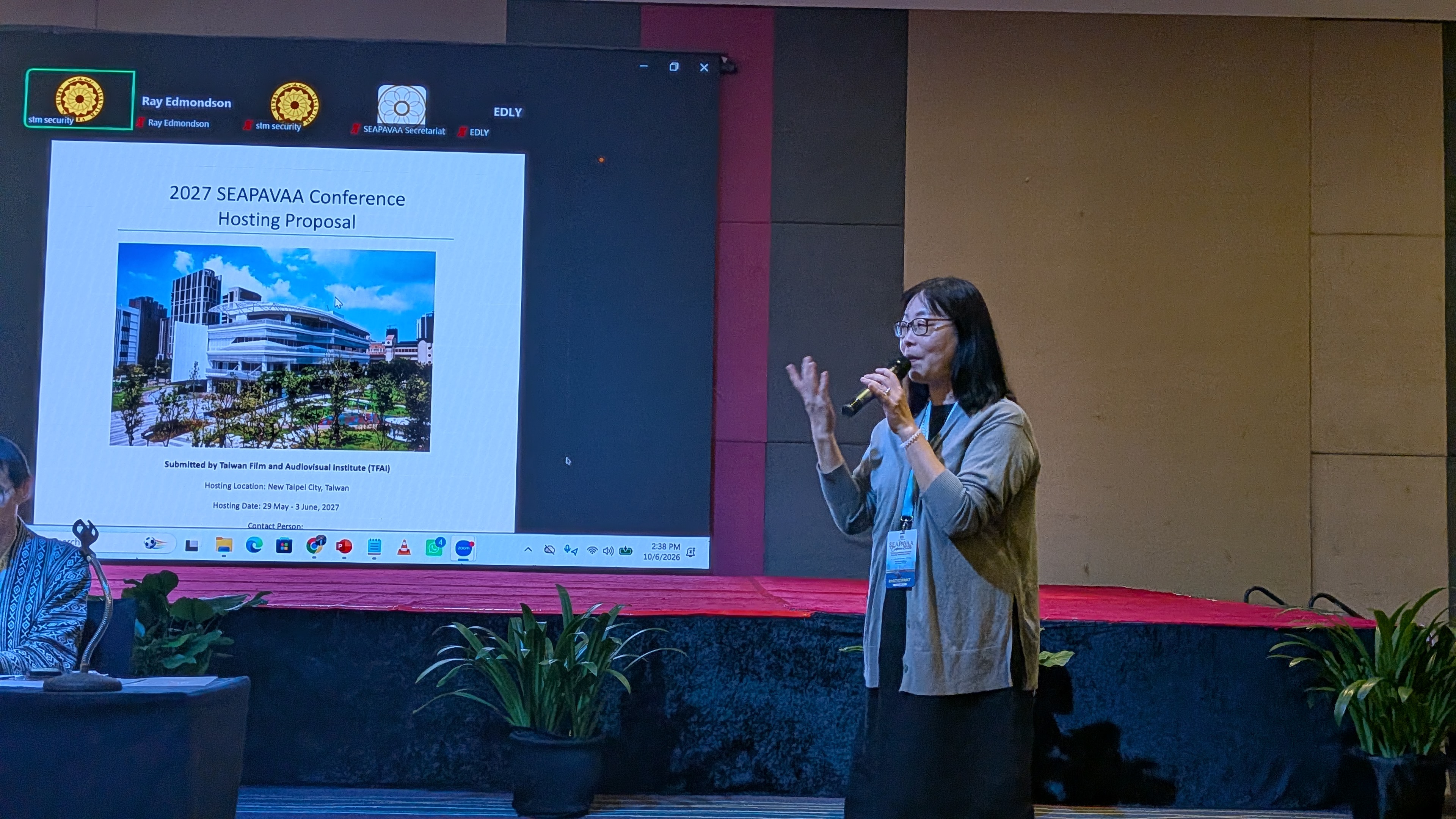
The Taiwan Film and Audiovisual Institute (TFAI) recently sent a delegation led by CEO DU Li-chin to Ipoh, Malaysia, to participate in the 2026 Conference and General Assembly of the Southeast Asia-Pacific Audiovisual Archive Association (SEAPAVAA). There, TFAI representatives exchanged insights with counterparts from film archives, national archives, and cultural institutions across the Asia-Pacific region on emerging trends in film and audiovisual preservation and collection management. During the event, the SEAPAVAA Executive Council officially announced that the TFAI will host the 2027 SEAPAVAA Conference, making Taiwan the next host nation for the flagship event of this leading international film and audiovisual archiving organization. SEAPAVAA is a leading professional organization for film and audiovisual archives in the Asia-Pacific region. As an NGO in operational relations with UNESCO, it promotes international cooperation, professional exchange, and the safeguarding of film and audiovisual heritage across the region. Since its establishment in 1996, it has fostered collaboration and exchange among member institutions in areas including audiovisual preservation, research and public outreach, professional training, and international cooperation. TFAI first proposed hosting the event to the SEAPAVAA Executive Council last year and formally submitted its bid earlier this year, highlighting both TFAI’s strengths as an internationally engaged audiovisual preservation and restoration institution and Taiwan's advantages as a host destination. At the General Assembly held on June 10, the Executive Council officially announced that the 2027 SEAPAVAA Conference and General Assembly will be hosted by TFAI for the first time. CEO DU Li-chin remarked: “We hope that hosting the annual conference will further strengthen Taiwan's ties with the international professional community and provide an opportunity to share Taiwan's achievements in film preservation, digital restoration, and audiovisual culture promotion with international partners, fostering new opportunities for cross-border exchange and collaboration.” DU also welcomed member institutions to participate in next year's gathering and introduced TFAI's recent developments and distinctive facilities. Five years ago, TFAI relocated to its current site in New Taipei City, where it expanded its campus with state-of-the-art screening theaters and exhibition spaces. It has since continued its transformation into a dedicated museum of film and audiovisual culture, working to preserve, activate, and promote Taiwan's shared heritage of cinema, television, and radio. The 2026 SEAPAVAA Conference, hosted by the National Archives of Malaysia, was held under the theme “Redefining Audiovisual in Archives – Relevancy, Technology and Unity,” exploring the transformations and challenges facing audiovisual archiving institutions in the digital age. Conference sessions addressed a range of topics, including public access to audiovisual collections, digital transformation, and inter-institutional collaboration. “Relevancy” focused on how film and audiovisual archives can strengthen their connections with contemporary society through cultural activation, community engagement, and digital storytelling. “Technology” examined developments such as AI-assisted cataloguing, digital restoration, cloud infrastructure, and automated workflows. “Unity” emphasized the importance of cross-border and cross-institutional collaboration, fostering resource sharing and professional exchange among archives, museums, and academic institutions. During the conference, the TFAI delegation also participated in a series of case-study presentations and exchanges on digital restoration, cultural accessibility, and cross-institutional collaboration. Among these, Japan's IMAGICA—a long-time partner of TFAI—discussed the technical challenges they encountered during a joint film restoration project and the solutions developed to address them. The practical experiences shared by participating institutions on archive management, digital technologies, and operational strategies also provided valuable insights for TFAI's future development and international collaborations. At the SEAPAVAA Welcome Dinner on June 8, the organizers hosted a special Archival Gems Screening, inviting member institutions to showcase their archival achievements and precious, rarely screened footage. At the event, the head of TFAI’s Department of International Cooperation introduced delegates to the historical significance of the 70th anniversary of Taiwanese-language cinema, as well as TFAI’s recent achievements in the preservation and digital restoration of Taiwanese-language films. The presentation also featured restored clips from classics including Zhang Di Seeks A-Zu (1969), Good Neighbors (1962), and Love Never Ceases (1962), offering international audiovisual archiving professionals a deeper appreciation of the unique value of Taiwan's cinematic heritage, as well as the long-term commitment and resources TFAI has devoted over the years to archival preservation and restoration. The SEAPAVAA Executive Council is scheduled to visit Taiwan this November to meet with TFAI for more in-depth discussions on preparations for the 2027 SEAPAVAA Conference. Details of the event and its program will be announced progressively from early next year. Please stay tuned to TFAI's official website and social media channels for the latest updates. TFAI showcased highlights from its Taiwanese-language film restorations at SEAPAVAA’s Archival Gems Screening event. (Courtesy of TFAI) CEO DU Li-chin presented TFAI’s recent developments and facility highlights to representatives of member institutions from around the world. (Courtesy of TFAI) Erica C.C. LIN, Head of International Cooperation, introduced TFAI’s recent film restoration achievements to conference delegates. (Courtesy of TFAI) ' IMAGICA presented TFAI as a case study in international collaboration. (Courtesy of TFAI)