
The Taiwan Film and Audiovisual Institute (TFAI) recently sent a delegation led by CEO DU Li-chin to Ipoh, Malaysia, to participate in the 2026 Conference and General Assembly of the Southeast Asia-Pacific Audiovisual Archive Association (SEAPAVAA). There, TFAI representatives exchanged insights with counterparts from film archives, national archives, and cultural institutions across the Asia-Pacific region on emerging trends in film and audiovisual preservation and collection management. During the event, the SEAPAVAA Executive Council officially announced that the TFAI will host the 2027 SEAPAVAA Conference, making Taiwan the next host nation for the flagship event of this leading international film and audiovisual archiving organization.
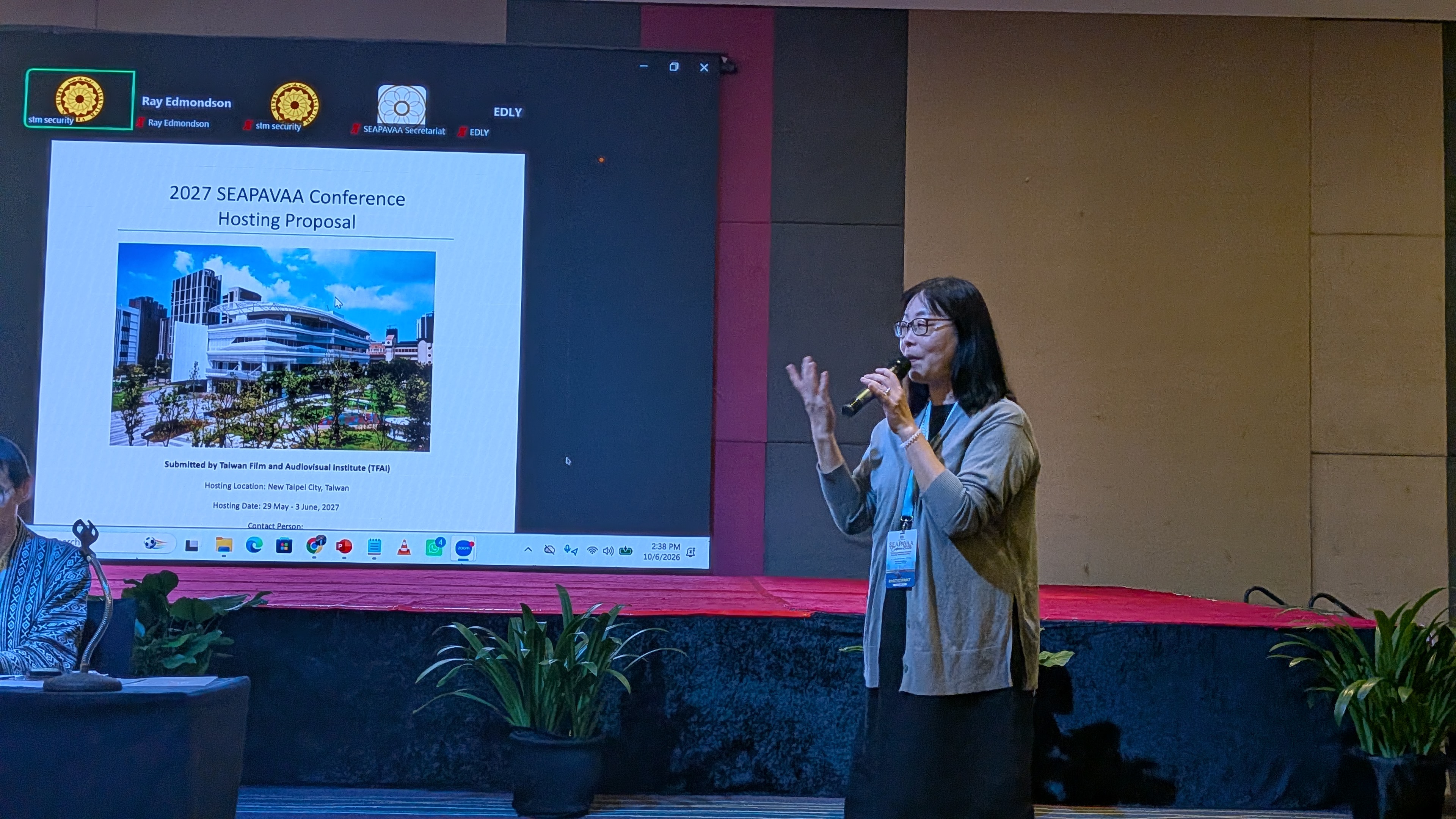
SEAPAVAA is a leading professional organization for film and audiovisual archives in the Asia-Pacific region. As an NGO in operational relations with UNESCO, it promotes international cooperation, professional exchange, and the safeguarding of film and audiovisual heritage across the region. Since its establishment in 1996, it has fostered collaboration and exchange among member institutions in areas including audiovisual preservation, research and public outreach, professional training, and international cooperation. TFAI first proposed hosting the event to the SEAPAVAA Executive Council last year and formally submitted its bid earlier this year, highlighting both TFAI’s strengths as an internationally engaged audiovisual preservation and restoration institution and Taiwan's advantages as a host destination. At the General Assembly held on June 10, the Executive Council officially announced that the 2027 SEAPAVAA Conference and General Assembly will be hosted by TFAI for the first time. CEO DU Li-chin remarked: “We hope that hosting the annual conference will further strengthen Taiwan's ties with the international professional community and provide an opportunity to share Taiwan's achievements in film preservation, digital restoration, and audiovisual culture promotion with international partners, fostering new opportunities for cross-border exchange and collaboration.” DU also welcomed member institutions to participate in next year's gathering and introduced TFAI's recent developments and distinctive facilities. Five years ago, TFAI relocated to its current site in New Taipei City, where it expanded its campus with state-of-the-art screening theaters and exhibition spaces. It has since continued its transformation into a dedicated museum of film and audiovisual culture, working to preserve, activate, and promote Taiwan's shared heritage of cinema, television, and radio.
The 2026 SEAPAVAA Conference, hosted by the National Archives of Malaysia, was held under the theme “Redefining Audiovisual in Archives – Relevancy, Technology and Unity,” exploring the transformations and challenges facing audiovisual archiving institutions in the digital age. Conference sessions addressed a range of topics, including public access to audiovisual collections, digital transformation, and inter-institutional collaboration. “Relevancy” focused on how film and audiovisual archives can strengthen their connections with contemporary society through cultural activation, community engagement, and digital storytelling. “Technology” examined developments such as AI-assisted cataloguing, digital restoration, cloud infrastructure, and automated workflows. “Unity” emphasized the importance of cross-border and cross-institutional collaboration, fostering resource sharing and professional exchange among archives, museums, and academic institutions.
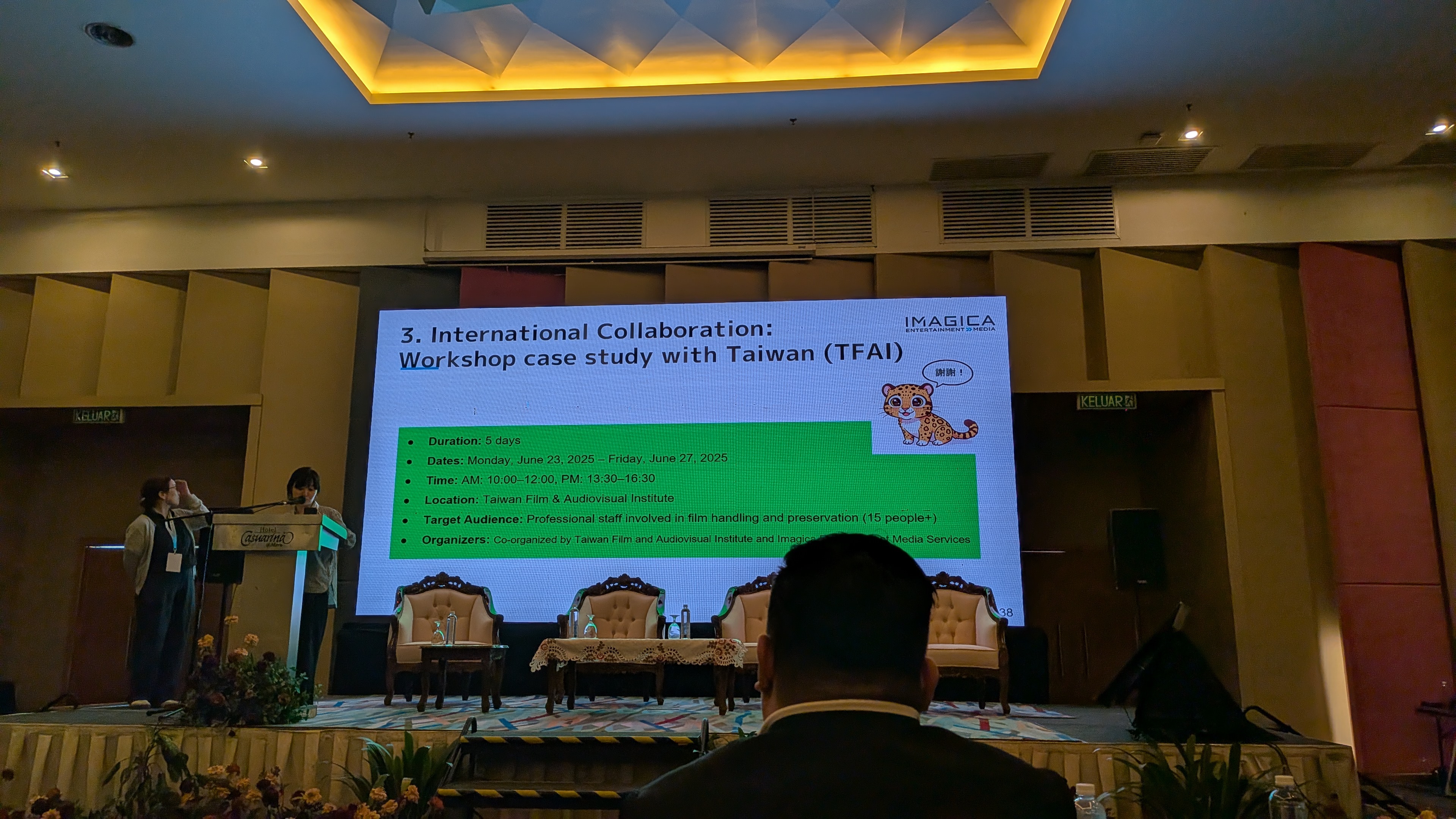
During the conference, the TFAI delegation also participated in a series of case-study presentations and exchanges on digital restoration, cultural accessibility, and cross-institutional collaboration. Among these, Japan's IMAGICA—a long-time partner of TFAI—discussed the technical challenges they encountered during a joint film restoration project and the solutions developed to address them. The practical experiences shared by participating institutions on archive management, digital technologies, and operational strategies also provided valuable insights for TFAI's future development and international collaborations.
At the SEAPAVAA Welcome Dinner on June 8, the organizers hosted a special Archival Gems Screening, inviting member institutions to showcase their archival achievements and precious, rarely screened footage. At the event, the head of TFAI’s Department of International Cooperation introduced delegates to the historical significance of the 70th anniversary of Taiwanese-language cinema, as well as TFAI’s recent achievements in the preservation and digital restoration of Taiwanese-language films. The presentation also featured restored clips from classics including Zhang Di Seeks A-Zu (1969), Good Neighbors (1962), and Love Never Ceases (1962), offering international audiovisual archiving professionals a deeper appreciation of the unique value of Taiwan's cinematic heritage, as well as the long-term commitment and resources TFAI has devoted over the years to archival preservation and restoration.
The SEAPAVAA Executive Council is scheduled to visit Taiwan this November to meet with TFAI for more in-depth discussions on preparations for the 2027 SEAPAVAA Conference. Details of the event and its program will be announced progressively from early next year. Please stay tuned to TFAI's official website and social media channels for the latest updates.
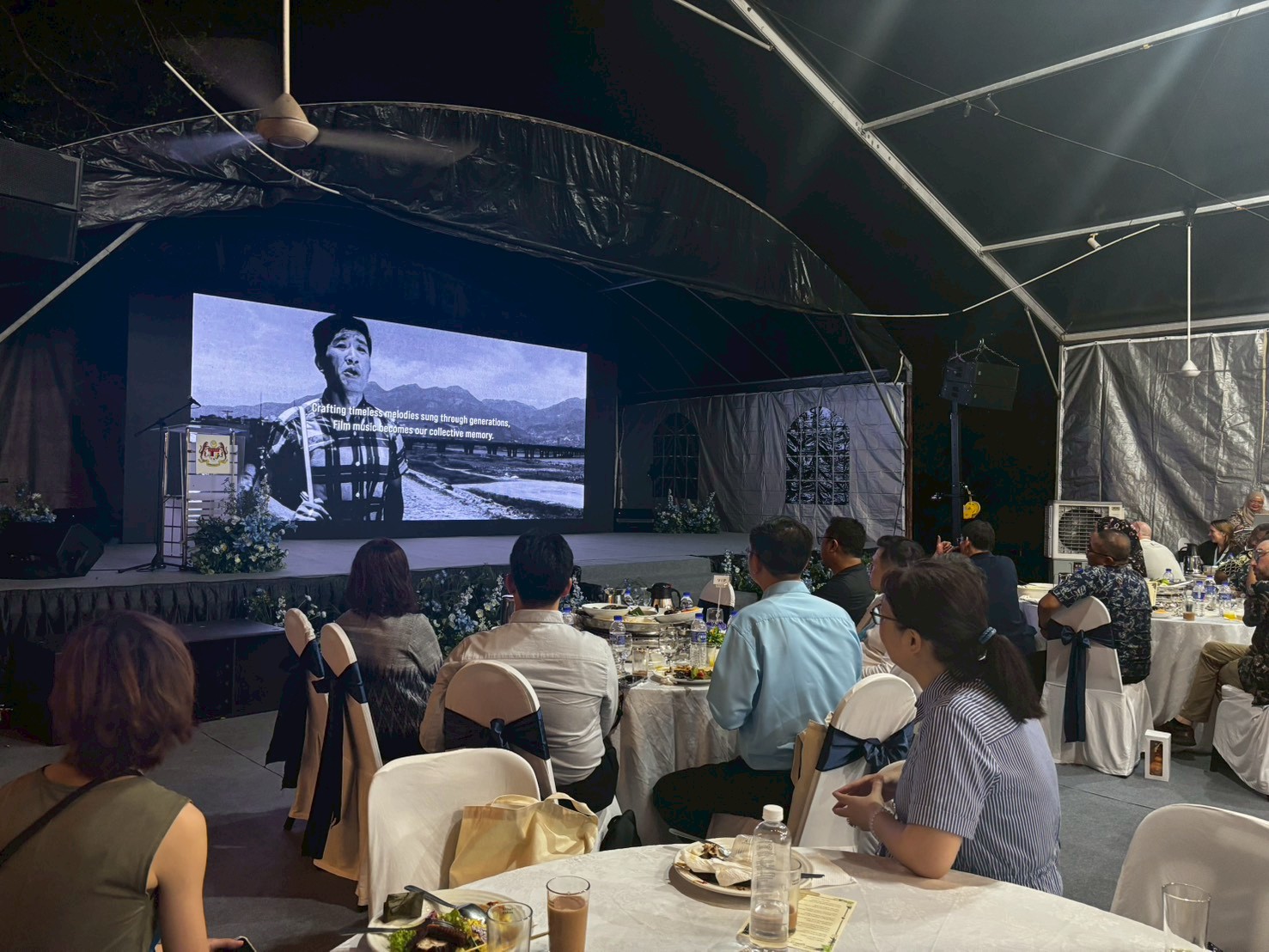
TFAI showcased highlights from its Taiwanese-language film restorations at SEAPAVAA’s Archival Gems Screening event. (Courtesy of TFAI)
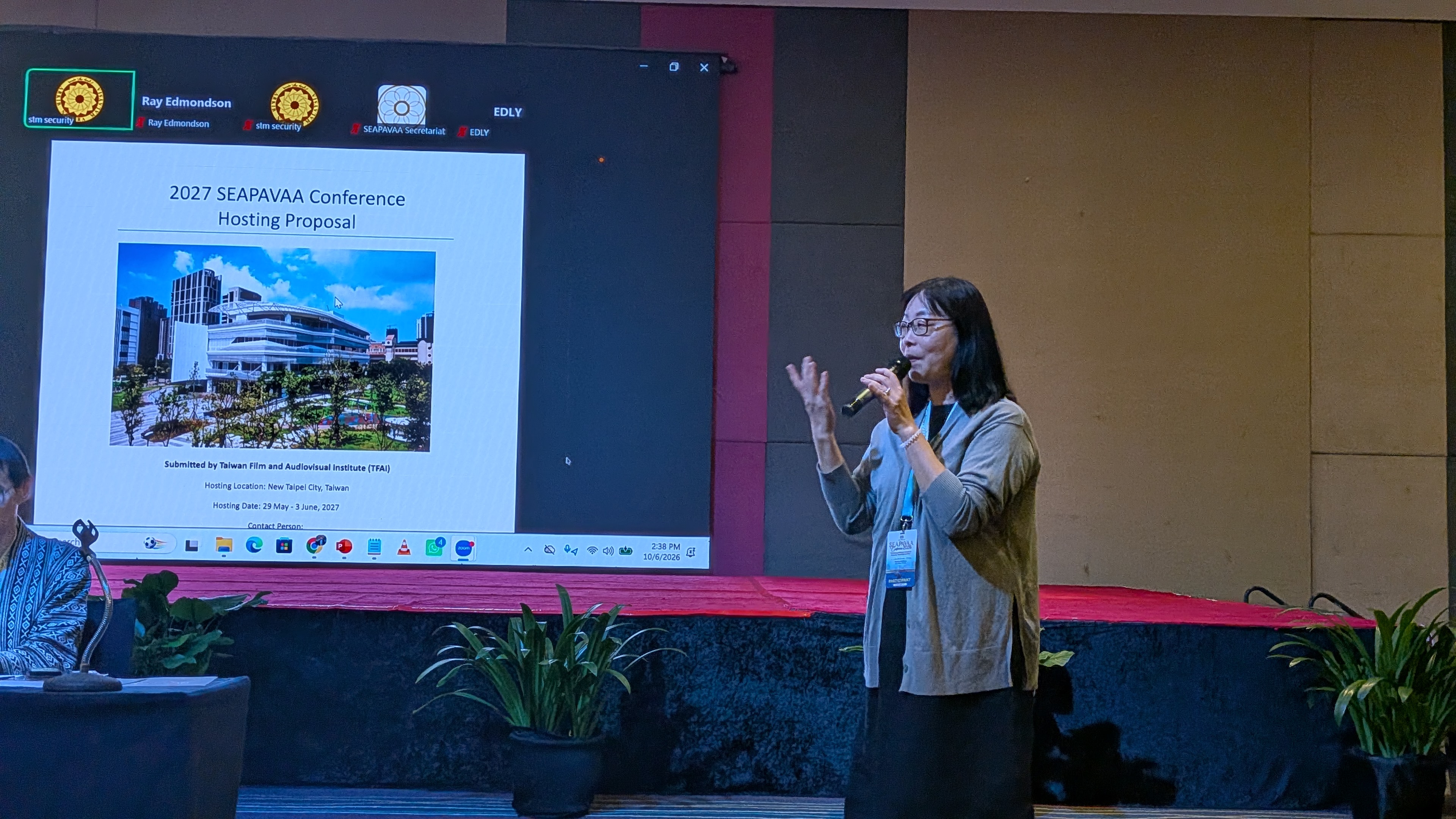
CEO DU Li-chin presented TFAI’s recent developments and facility highlights to representatives of member institutions from around the world. (Courtesy of TFAI)
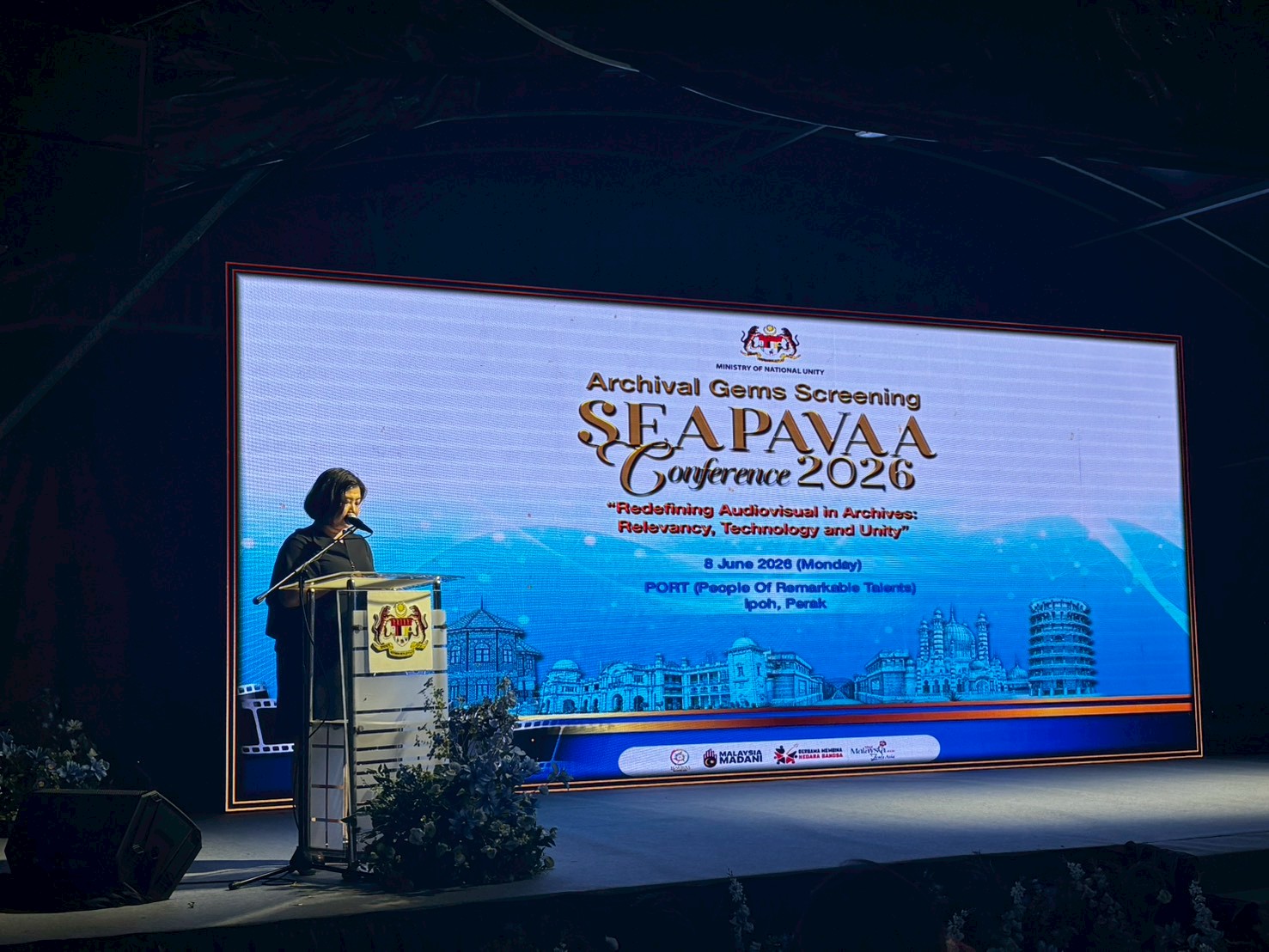
Erica C.C. LIN, Head of International Cooperation, introduced TFAI’s recent film restoration achievements to conference delegates. (Courtesy of TFAI)
 '
'
IMAGICA presented TFAI as a case study in international collaboration. (Courtesy of TFAI)