
活動訊息EXHIBITION AND EVENT INFORMATION
-
 MORE
MORE -
 MORE
MOREChen Kun-hou's Classic Osmanthus Alley Makes World Premiere at Lumière Festival in New 4K Restoration and Original Taiwanese Soundtrack
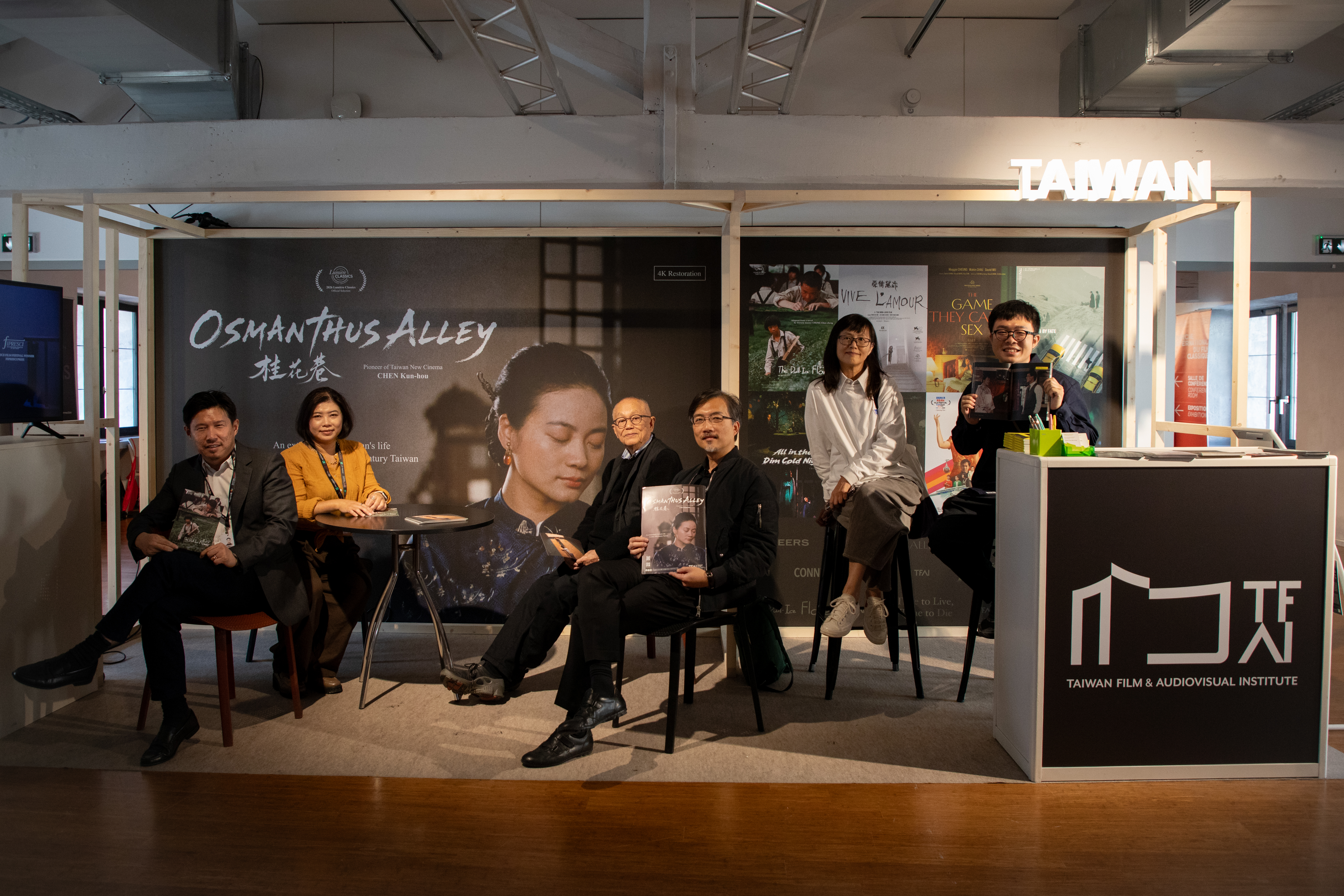
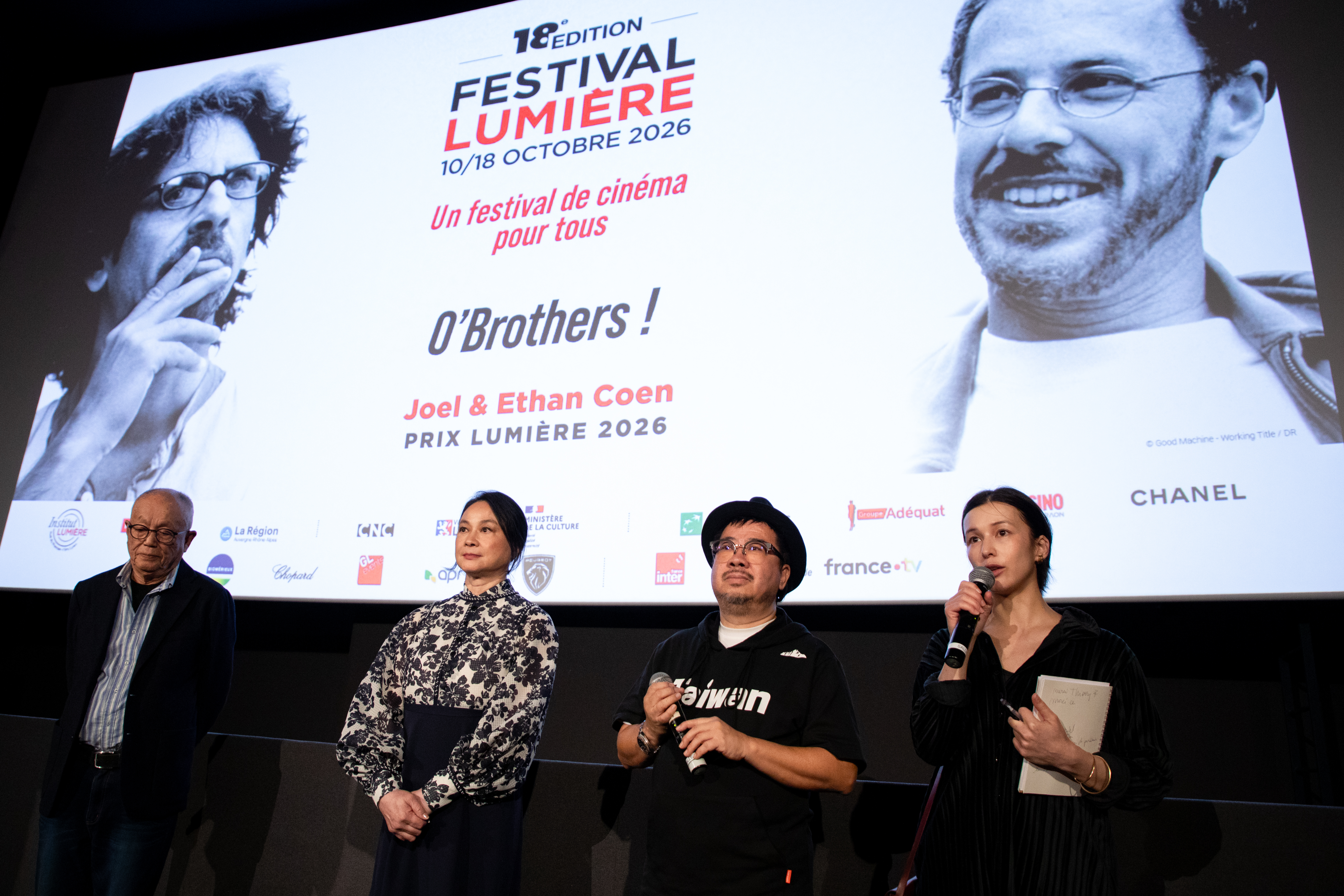
CHEN Kun-hou's Osmanthus Alley (1987), newly restored in 4K by the Taiwan Film and Audiovisual Institute (TFAI), was selected for the Lumière Classics section of this year's Lumière Film Festival in France and held its world premiere on the evening of October 12, local time. TFAI Chairman Arthur CHU, director CHEN Kun-hou, and the film's lead actress and Golden Horse Best Actress winner LU Hsiao-fen all arrived in Lyon on October 10, joining renowned international film figures including Joel and Ethan COEN, ZHANG Ziyi, TSUI Hark, and Todd HAYNES. Each year, the Lumière Classics section is dedicated to selecting the year's finest restorations of 20th-century films, paying tribute to film history while giving past classics the opportunity to be rediscovered and introduced to a new generation of audiences. This year, in addition to Osmanthus Alley making its international screen debut in its original Taiwanese-language version, the Marché International du Film Classique (MIFC) is presenting “Taiwan in Focus,” a special program highlighting the results of TFAI's longstanding efforts in the preservation, restoration, and international promotion of Taiwanese cinema. TFAI Chairman Arthur CHU, who also attended the event, further explained the journey of restoring the film, “Osmanthus Alley is one of the most meaningful restoration experiences we have had at TFAI with Taiwanese cinema, because it restored the original language that had once been stripped away. We are deeply grateful for the support of all copyright holders, which has finally made it possible to successfully restore the film to its original state.” TFAI’s restored films have already made their mark at Lumière on several occasions. In 2018, Lumière presented a retrospective of director King HU, bringing four of his most iconic wuxia films back to the big screen, including A Touch of Zen (1971), while director TSENG Chuang-hsiang's The Woman of Wrath (1984) was screened in 2024. With Osmanthus Alley now selected for Lumière Classics this year, TFAI looks forward to continuing to share more Taiwanese films with audiences around the world through screenings, international forums, industry exchanges, and a variety of other initiatives. Osmanthus Alley, adapted from HSIAO Li-hung's bestselling novel, delicately portrays the social landscape of early Taiwan, tracing the life experiences of women of the era. LU Hsiao-fen plays Ti-hong, a girl from a poor fishing village, whose lonely and troubled life seems predestined, evoking a profound sense of sorrow. CHEN Kun-hou has said that Osmanthus Alley is like a “childhood memory” to him, as the story's setting closely mirrors his own experiences growing up. Back then, CHEN insisted on shooting the film entirely in Taiwanese to authentically portray personal emotions and historical realities. However, the Central Motion Picture Corporation (CMPC), in line with the government's Mandarin-language policy at the time, required Osmanthus Alley to be released in Mandarin dubbing. In the end, the Taiwanese-language version received only a handful of screenings at four cinemas, something that pained the director for many years. Now, more than 30 years later, Osmanthus Alley has been presented to international audiences for the first time in a 4K digital restoration of its original Taiwanese-language version. Not only has this finally made up for CHEN Kun-hou's long-held regret and restored the unique rhythms and emotional nuances of the Taiwanese language, but it has also allowed this precious and deeply moving work of Taiwanese film heritage to take its place in world film history in its most original and authentic form. ➤ Taiwan Film and Audiovisual Institute (TFAI) recovered the original Taiwanese soundtrack to digitally restore Osmanthus Alley (1987), which held its world premiere at the Lumière Film Festival, a world-class realm for restored classics. (Courtesy of TFAI) ➤ TFAI Chairman Arthur CHU stated: Osmanthus Alley (1987) restored the original language that had once been stripped away, making it particularly meaningful. (Courtesy of TFAI) ➤ Director CHEN Kun-hou emotionally expressed: “Taiwanese-langauge is undoubtedly one of the main characters in Osmanthus Alley (1987).” (Courtesy of TFAI) ➤ Golden Horse Best Actress winner LU Hsiao-fen remarked: After 39 years, this “osmanthus flower” has bloomed once again—the older it gets, the sweeter its scent! (Courtesy of TFAI) ➤ The world premiere of the digitally restored Osmanthus Alley (1987) was packed to capacity! The audience responded with full enthusiasm when the filmmakers appeared. (Courtesy of TFAI) ➤ Thierry Frémaux, Director of the Lumière Film Festival, personally attended the world premiere of Osmanthus Alley (1987) and praised it highly: “This is a masterpiece of classic restoration from Taiwan, a great nation of cinema!” (Courtesy of TFAI) ➤ French audiences gave high praises to Osmanthus Alley (1987), a representative piece of Taiwanese restoration. (Courtesy of TFAI) ➤ Enthusiastic French audience members surrounded director CHEN Kun-hou after the screening of Osmanthus Alley (1987), asking for autographs and photos. (Courtesy of TFAI) ➤ The Taiwan Film and Audiovisual Institute (TFAI) and the creative team of Osmanthus Alley (1987) arrived at the Lumière Film Festival. From left: CHEN Hung-sing, Director of the Taiwan Cultural Center in France; Director Chen Kun-hou; Best Actress winner LU Hsiao-fen; and Arthur CHU, Chairman of TFAI. (Courtesy of TFAI) ➤ LU Hsiao-fen plays KAO Ti-hung in Osmanthus Alley (1987), a woman born in a poor fishing village whose lonely and troubled life evokes a profound sense of sorrow. (Courtesy of TFAI) ➤ Osmanthus Alley (1987) features a dream ensemble cast including LU Hsiao-fen (left) and Wakin CHAU (right). (Courtesy of TFAI) ➤ The original novel of Osmanthus Alley (1987) portrays the life of a wealthy family in early Taiwan. (Courtesy of TFAI) ➤ Director CHEN Kun-hou expressed that the film Osmanthus Alley (1987) feels "just like a childhood memory." (Courtesy of TFAI) -
 MORE
MOREEdward Yang's Restored Classic The Terrorizers Thrills Audiences at Czech Special Screenings
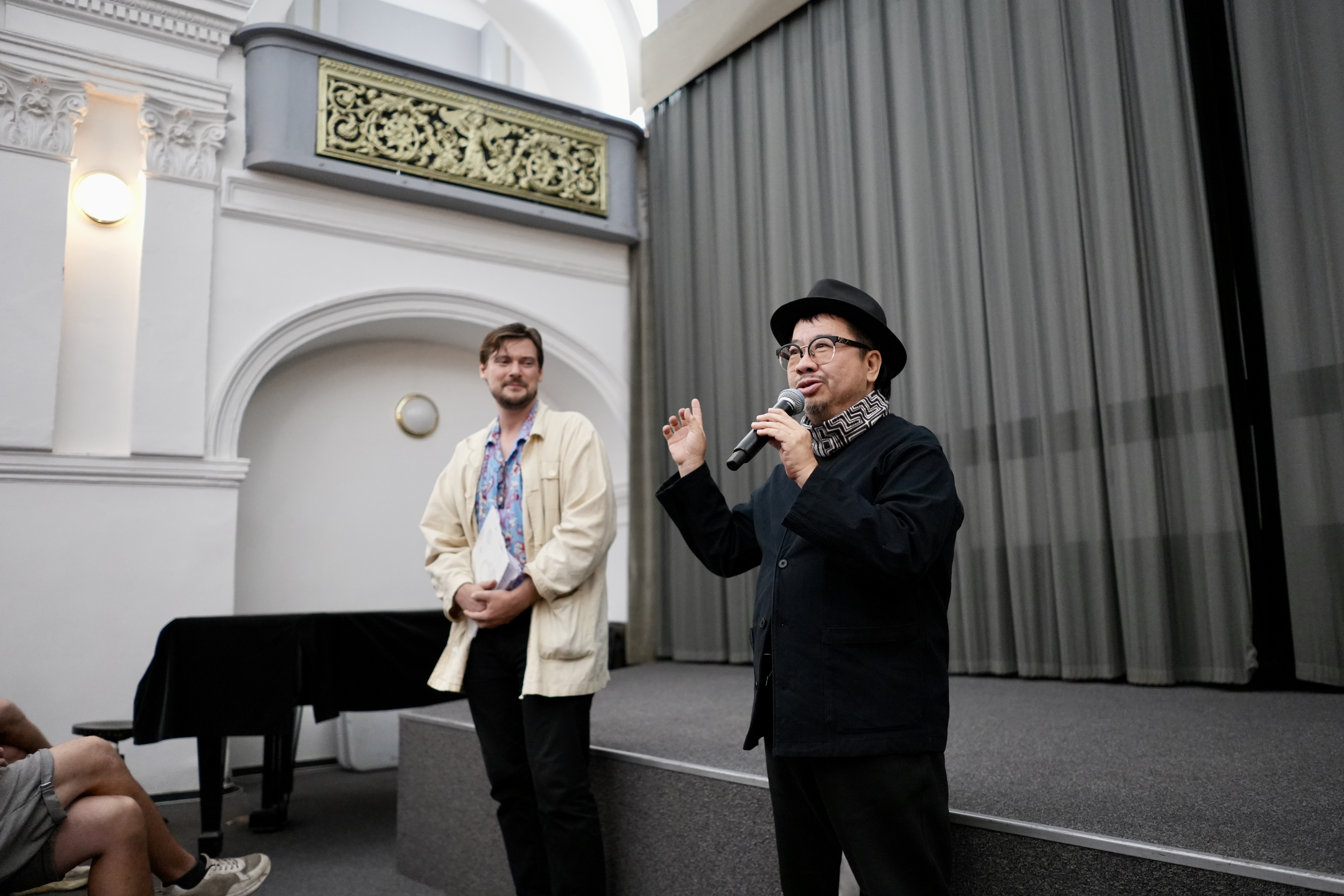
Edward YANG's acclaimed classic The Terrorizers (1986), which earned the director his first Golden Horse Award for Best Narrative Feature, was screened on October 8 as the closing film of the special program “Under the Same Roof: The Taiwanese New Wave” in the Czech Republic. The film kept the entire audience riveted throughout the screening, with many expressing their admiration afterward: “Who would have thought that Taiwan was already making such mind-bending and captivating films 40 years ago!” Co-organized by Taiwan's Ministry of Culture, the Taiwan Film and Audiovisual Institute (TFAI), the Taipei Economic and Cultural Office in Prague (TECO), and the Czech Republic's Národní filmový archive (National Film Archive), “Under the Same Roof: The Taiwanese New Wave” ran from September 17 to October 8 in Prague, the Czech capital renowned as one of Europe's cultural and artistic centers. The program featured restored classics by Taiwan New Cinema masters such as Edward YANG, HOU Hsiao-hsien, and TSAI Ming-liang, whose distinctive visual styles, atmospheres, and subject matter treated Czech cinephiles to an eye-opening cinematic experience. The Terrorizers received an enthusiastic response from audiences at both of its program screenings. During the post-screening discussion, event curator David HAVAS praised the film for its postmodern, metafictional approach, and political allegories, describing it as one of his favorite Taiwanese films. TFAI Chairman Arthur CHU, who also attended the event, reminded the audience that The Terrorizers is a Taiwanese film made 40 years ago. With his incisive eye and bold, forward-thinking storytelling, Edward YANG broke away from conventional narrative formulas, casting a detached gaze on the social atmosphere of that time, which appeared alienated and indifferent on the surface yet was internally on the verge of collapse. A local audience member shared that watching The Terrorizers was just as fascinating as watching the mind-bending films that have become popular in recent years, expressing amazement that Taiwan could have produced such a masterpiece 40 years ago. In response, TFAI Chairman Arthur CHU remarked that the mind-bending nature of Edward YANG's films is by no means a product of pure imagination, but stems from his penetrating observations of Taiwanese society. Looking back today, his films seem more like urban prophecies. Many audience members expressed a desire to see more, hoping to have opportunities to watch the latest Taiwanese films in the future. Arthur CHU also emphasized that this event has laid a strong foundation for collaboration with the Czech National Film Archive. Moving forward, both sides will work even harder to bring both classic and contemporary Taiwanese films to Czech audiences. This year’s “Under the Same Roof” Taiwanese film program centered on the theme of “family,” with more than a year of planning and film selection involving close coordination between the Czech National Film Archive and TFAI. The final lineup featured restored classics exploring family-related themes, including Edward YANG's The Terrorizers (1986), HOU Hsiao-hsien's The Time to Live and the Time to Die (1985), TSAI Ming-liang's Rebels of the Neon God (1992) and The River (1997), and Teenage Fugitive (1984), directed by CHANG Pei-cheng and written by TSAI Ming-liang. Curator David HAVAS remarked: “The breakdown of family relationships and the severing of emotional bonds are actually quite common in Czech society. However, compared with Taiwanese cinema, Czech films perhaps have not explored these themes in such depth.” He added that “Under the Same Roof” takes family relationships and shared living arrangements as its starting point, while also reflecting broader changes in society and international affairs. The Terrorizers won Best Narrative Feature at the 23rd Golden Horse Awards. Its enigmatic screenplay, blurring the lines between reality and fiction, was highly unusual in Taiwanese film history and remains one of Edward YANG's signature mind-bending works. YANG once explained: “The most exciting aspect of The Terrorizers is WANG An's real-life experience of making prank calls. Since the story revolves around this, there must be a married couple and a mother. This is a logical development, like a puzzle game.” Taiwan New Cinema emerged against the backdrop of rapid social transformation in the 1980s, as filmmakers experimented with new narrative approaches and alternative cinematic language to portray emotions and everyday life more authentically. By bringing stories of family relationships, generational differences, and social change to the screen, the movement attracted international attention at the time. TFAI will continue its mission of digitally restoring classic Taiwanese films, with the hope that Taiwan‘s boundless creative energy and rich cultural heritage will bring a refreshing sense of discovery to contemporary international audiences. ➤ Edward YANG's acclaimed classic The Terrorizers (1986), which earned the director his first Golden Horse Award for Best Narrative Feature, was screened on October 8 as the closing film of the “Under the Same Roof: The Taiwanese New Wave” special program in the Czech Republic. (Courtesy of TFAI) ➤ The Terrorizers (1986) received an enthusiastic audience response at both of its special screenings during the “Under the Same Roof: The Taiwanese New Wave” program. TFAI Chairman Arthur CHU (right) attended the post-screening discussion. (© Zuzana Homolka Fedorová) ➤ Local Czech audiences expressed amazement that Taiwan could have produced a masterpiece like The Terrorizers (1986) 40 years ago. (© Zuzana Homolka Fedorová) ➤ Curator David HAVAS described The Terrorizers (1986) as one of his favorite Taiwanese films. (© Zuzana Homolka Fedorová) ➤ TFAI Chairman Arthur CHU remarked that The Terrorizers (1986), a Taiwanese film made 40 years ago, showcases director Edward YANG's incisive eye and forward-thinking storytelling. (Courtesy of TFAI) ➤ The Terrorizers (1986) won Best Narrative Feature at the 23rd Golden Horse Awards and remains one of Edward YANG's signature mind-bending works. (Courtesy of TFAI) -
 MORE
MOREStep into a Real-life Taiwan Travelogue! TFAI Unveils the Earliest Vlog of a Round-Island Trip, Featuring Footage of Taiwan's Railways Under Japanese Rule
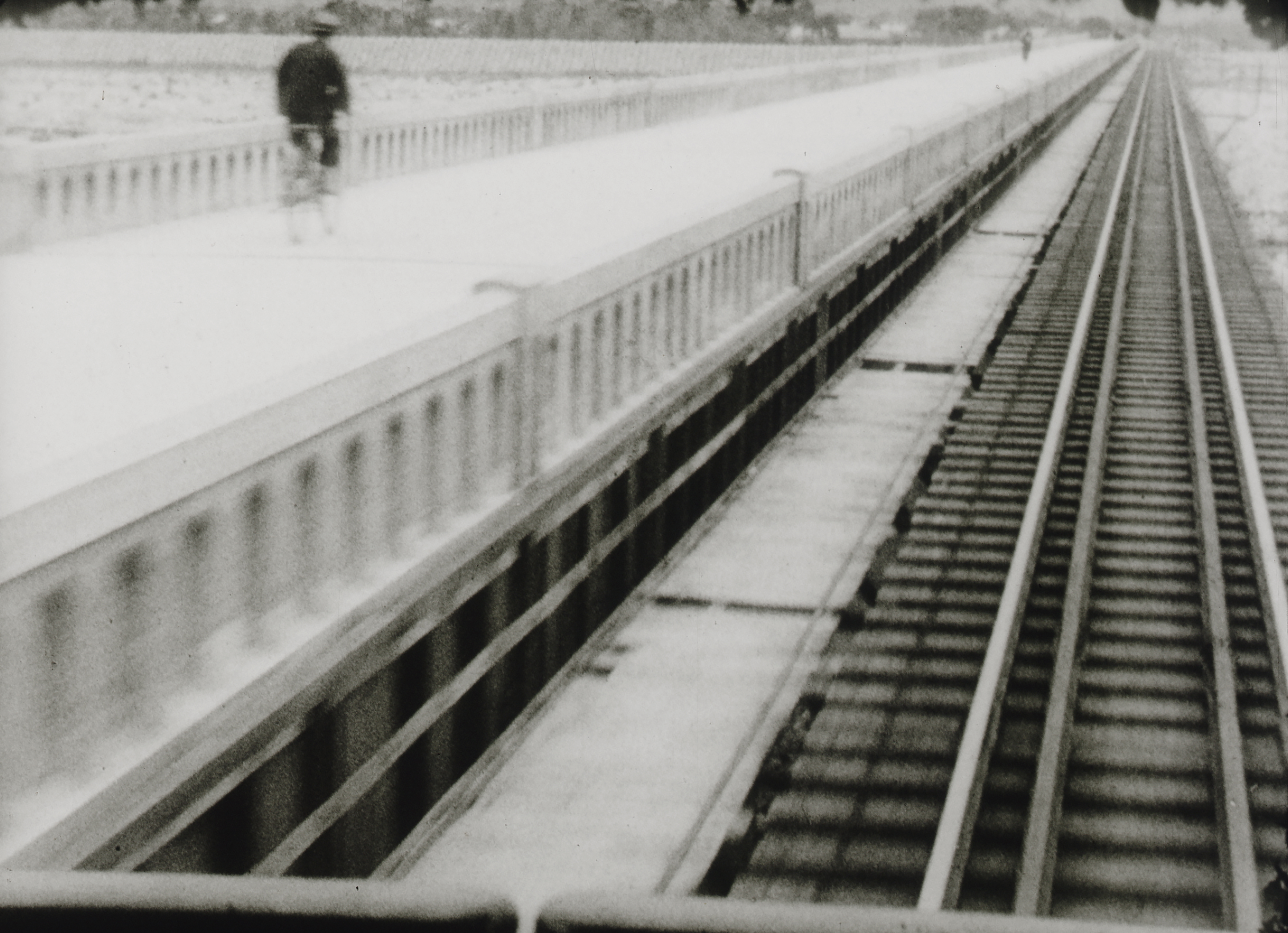
Set during the Japanese colonial era, Yang Shuangzi's International Booker Prize winning novel Taiwan Travelogue follows a culinary and railway journey across Taiwan to explore profound dialectics of Taiwan's colonial history. To mark the National Heritage Day, which falls on the third weekend of September this year, the Taiwan Film and Audiovisual Institute (TFAI) unveiled a series of videos titled “Taiwan's Railways During the Japanese Colonial Period” on its official YouTube channel. The historical context and themes explored in these videos perfectly echo those of Taiwan Travelogue, while offering a rare and fascinating glimpse into Taiwan's railways under Japanese rule. In line with its Open Access policy that aims to promote public access, TFAI has been gradually releasing precious audiovisual archives from its collection. To coincide with the National Heritage Day to promote Taiwan's tangible cultural heritage, this online video exhibition uses “trains” and “railways” as key themes to showcase documentary footage of Taiwan during the Japanese colonial era. The four black-and-white silent films, each less than ten minutes long, provide modern audiences with a lively picture of Taiwan's diverse landscapes and scenic spots, as well as the railway culture in the last century. Outside the Train Window (c. 1935, filmed by the Railway Department of the Governor-General of Taiwan) features the historic Da'an River Bridge in Taichung City and the Dajia Tunnel, which was then the only railway tunnel beneath a river in Taiwan. A Pleasant Journey (c. 1936, filmed by Taiwan Travel Club) captures two travelers waiting for their friend in front of Tainan Railway Station. This film follows their journey from having their tickets checked to boarding the train. It documents the historic scenes of the sleek C55-class steam locomotive, an engine driver tossing and catching the electronic token, and track workers using pickaxes to maintain the rails. Travel by Rail (c. 1937, photographer unknown) captures the Alishan Forest Railway boarding point, the long Zhuoshui River Railway Bridge, and the Xinying Sugar Factory on the vast Jianan Plain. The final segment “A Trip to the Beach” depicts the delight of travelers heading to a seaside resort by rail. Even through the screen, viewers can sense the excitement and joyful atmosphere inside the train cars. Scenic Taiwan (c. 1937, photographer unknown) even features a sequence in which members of the Railway Department’s Military Canine Association send military dogs to the front lines, reflecting the historical context of the Marco Polo Bridge Incident which had just erupted at the time of filming. These precious images are sure to delight not only history buffs and railway enthusiasts, but also dog lovers. Interspersed throughout the film are intertitles such as “racing along the coastline in the cool breeze,” “not forgetting the hardworking railway workers behind the scenes,” and “an idyllic day-trip destination,” vividly depicting the development of Taiwan’s railway system and this island nation’s charming tourist atmosphere. Issue 208 of the Film Appreciation Journal features a special project titled “Outside the Train Window—A Collection of Footage of Taiwan’s Railways During the Japanese Colonial Period,” inviting cultural and historical experts to analyze the historical context and social realities of the time through the footage and present their preliminary research findings. At that time, Taiwan was under Japanese colonial rule. As symbols of modernization, these railway films served not only to promote tourism, but also to showcase local produce and infrastructure, including new stations, routes, and train models, through the ever-changing scenery outside the train windows. Plus, they document the various tasks involved in maintaining railway operations. The colonial authorities’ propagandistic intentions were therefore evident. The opening of Travel by Rail also features two newsreel segments: the triumphant return of the Japanese reconnaissance aircraft “Kamikaze” (Divine Wind) at Taipei Airport and the swimming competition between Taiwan and the Philippines, highlighting Japan's industrial strength and diplomatic achievements at the time. Following last year's release of Formosa, the earliest documentary about Taiwan, TFAI has now released this series of videos about Taiwan's railways during the Japanese Colonial Period. Footage from ninety years ago continues to bring surprises. Du Li-chin, Executive Director of TFAI, stated, “Over the next five years, TFAI will carry out its public mission based on three core objectives—'Centering Taiwan,’ ‘Archiving Time,’ and ‘Accessing Memory’—with Open Access project as a concrete manifestation of this commitment. As we view these four railway films made between 1935 and 1937, we are required to confront the historical context in which they were made. By that time, Japan had already ruled Taiwan for forty years, and in 1935, the Taiwan Governor-General’s Office showcased the empire’s achievements of its colonial development and promotion through the Taiwan Exposition: In Commemoration of the First Forty Years of Colonial Rule. These railway films are by no means mere scenic records; rather, they are deeply imprinted with the imperial gaze of colonial power. Today, we are archiving and making this collection of footage available to the public precisely to encourage people to look beyond the rulers' gaze, see the political context behind it, and unearth the collective memory of the Taiwanese people, thereby reclaiming our own right to interpret history.” Believing that valuable historical discoveries can often come from the public, TFAI views the digitization of archives and the interpretation of information as merely the first step. We look forward to the public sharing and discussing these images after their release, uncovering more historical details and unexpected discoveries through contemporary perspectives. The YouTube List of Taiwan's Railways During the Japanese Colonial Period:https://tfaitw.pse.is/9m3xln Issue 208 of Film Appreciation Journal: https://tfaitw.pse.is/9m3xrn ➤ Pic1: An image from Outside the Train Window (c. 1935, filmed by the Railway Department of the Governor General of Taiwan), highlighting the progress of the railway system and the train speeding along the tracks. (Courtesy of TFAI) ➤ Pic 2: An image from Outside the Train Window (c. 1935, filmed by the Railway Department of the Governor General of Taiwan), featuring the historic Da’an River Bridge in Taichung City. (Courtesy of TFAI) ➤ Pic 3: An image from Travel by Rail (c. 1937, photographer unknown), showcasing the newsreel of the swimming competition between Taiwan and the Philippines. (Courtesy of TFAI) ➤ Pic 4: An image from Travel by Rail (c. 1937, photographer unknown), offering a glimpse of the travelers heading to the seaside resort by train. (Courtesy of TFAI) ➤ Pic 4: An image from Travel by Rail (c. 1937, photographer unknown), offering a glimpse of the travelers heading to the seaside resort by train. (Courtesy of TFAI) ➤ Pic 6: An image from A Pleasant Journey (c. 1936, filmed by Taiwan Travel Club), capturing two travelers waiting for their friend in front of Tainan Railway Station. (Courtesy of TFAI) ➤ Pic 7: An image from A Pleasant Journey (c. 1936, filmed by Taiwan Travel Club), showing an engine driver tossing and catching the electronic token. (Courtesy of TFAI) ➤ Pic 8: An image from A Pleasant Journey (c. 1936, filmed by Taiwan Travel Club), showing track workers using pickaxes to maintain the rails. (Courtesy of TFAI) ➤ Pic 9: An image from Scenic Taiwan (c. 1937, photographer unknown), showcasing members of the Railway Department’s Military Canine Association sending military dogs to the front lines. (Courtesy of TFAI) ➤ Pic 10: An image from Scenic Taiwan (c. 1937, photographer unknown) in which the appearance of a military dog reflects the historical context of the Marco Polo Bridge Incident that had just erupted at the time of filming. (Courtesy of TFAI) ➤Pic 11: Issue 208 of the Film Appreciation Journal features a special project titled “Outside the Train Window—A Collection of Footage of Taiwan’s Railways During the Japanese Colonial Period.” (Courtesy of TFAI) ➤ Pic 12: Issue 208 of the Film Appreciation Journal features a special project titled “Outside the Train Window—A Collection of Footage of Taiwan’s Railways During the Japanese Colonial Period,” inviting cultural and historical experts to analyze the historical footage. (Courtesy of TFAI) -
 MORE
MOREMaking Cinema Accessible to All: TFAI Invests in Professional Audio Description to Create a Truly Inclusive Cinema Experience.
This year 2026 marks the 70th anniversary of Taiwanese-language cinema, and the Taiwan Film and Audiovisual Institute (TFAI) has launched a year-long program “Formosa Treasure: Taiyupian as World Cinema” featuring a series of events. Meanwhile, to promote the cultural accessibility and foster diversity, equity, and inclusion (DEI), TFAI selected director LEE Hsing’s Good Neighbors (1962), which was restored by TFAI in 2025, to produce the world’s first restored film with Taiwanese-language audio description. This groundbreaking film had its world premiere today (August 12th ). Florence CHAO, an experienced audio description professional, was invited to explain the importance of audio description. Six guide dogs from the Huiguang Guide Dog School also joined the audience in the theater. Through this event, TFAI announced its commitment to the “Project for the Production of Audio Descriptions for Classic Taiwanese Films and the Promotion of Inclusive Access,” inviting more audiences to step into the golden age of Taiwanese-language cinema. As new movies and drama series are constantly being released, audio description services enable visually impaired individuals who primarily rely on their hearing to enjoy brilliant film and TV works like everyone else. With its mission to promote cultural accessibility, TFAI selected director LEE Hsing’s Taiwanese-language film Good Neighbors as the starting point for initiating the “Project for the Production of Audio Descriptions for Classic Taiwanese Films and the Promotion of Inclusive Access.” Arthur CHU, the Chairperson of TFAI, noted that, “We chose Good Neighbors not only to celebrate the 70th anniversary of the Taiwanese-language films, but also to commemorate the fifth anniversary of director LEE Hsing’s passing, which falls on August 19, just one week later.” He added, “To mark the 70th anniversary of the Taiwanese-language films this year, TFAI invited the Golden Melody Award-winning singer Ricky HSIAO to compose the theme song ‘Let’s Catch a Movie’ for the whole program. We invite all audiences to open their five senses and ‘watch movies with their hearts.’ Audio description services embody this spirit, helping TFAI to achieve our goals of cultural and language accessibility.” Hopefully, the joys and sorrows portrayed in these great works will transcend age and ethnicity, becoming irreplaceable shared memories for all. LU Mei-li, the Deputy Director-General of the Bureau of Audiovisual and Music Industry Development also attended the event to show her support. She remarked, “The film Good Neighbors is a story about ethnic inclusion. It signifies the spirit of Taiwan, which we hope to pass down through these films. What makes today’s premiere more special is that this is the very first Taiwanese-language film with audio description produced by TFAI, representing its efforts to put into practice our firm belief that all people should have the opportunity to engage with and learn about our culture.” While streaming platforms have introduced audio description services in recent years, TFAI is also committed to meeting the diverse needs of audiences, in addition to its persistent dedication to the digital restoration of classic films. By providing accessible audiovisual content to fulfill a vision of cultural inclusion, TFAI has marked an important milestone in the development of Taiwanese film restoration and audio description services. TFAI has specially produced two versions of audio description for Good Neighbors, one in Taiwanese and the other in Mandarin. The bilingual versions echo a scene in the film, in which Dr. Huang, a Western-trained physician from a native Taiwanese family, and Dr. Chen, a Chinese medicine practitioner from a mainland Chinese immigrant family, live next door to each other while their families communicate in different languages. This lively and multilingual comedy full of humorous exchanges highlights the importance of professional audio description. To avoid overlapping with the film’s original dialogue and sound, audio descriptions must be inserted during appropriate pauses to convey the complicated visual images within a very limited amount of time. At the world premiere, Ms. CHAO explained that audio description is essentially a form of translation, “Except that our service is particularly tailored for people with visual impairments.” Interestingly, audio description also provides audiences with additional information that may otherwise go unnoticed when watching a film. In Good Neighbors, for example, the audio description specifically identifies Rose Marie, a well-known Western-style restaurant in Taipei during the 1950s and 1960s. In another scene, when the characters go on a date at the zoo, the audio description identifies the filming location as the former Taipei Zoo at Yuanshan and notes that two Asian elephants appearing on the screen are Lin Wang and Ma Lan. These supplementary details are like surprisingly cinematic Easter eggs for audiences. Following Good Neighbors, TFAI will continue to produce audio descriptions for classic Taiwanese films. Through the Project which is funded by the Bureau of Audiovisual and Music Industry Development under the Ministry of Culture, TFAI plans to release audio description versions of director CHEN Yu-hsun’s Tropical Fish (1995), as well as Back to Anping Harbor (1972), Dragon Inn (1967), The Sandwich Man (1983), and The Wedding Banquet (1993). TFAI will also make audio description equipment available for public use. Audiences interested in using the service are welcome to inquire at the reception desk on the first floor before the screening. ➤ TFAI selected director LEE Hsing’s Good Neighbors to produce the world’s first film with Taiwanese-language audio description. Back row from left: CHEN Chuan-huei, the producer of disability-focused TV shows from Public Television Service; SU, Chia-yu, the family representative of director LEE Hsing; DU Li-chin, the Executive Director of TFAI; LU Mei-li, the Deputy Director-General of the Bureau of Audiovisual and Music Industry Development; Arthur CHU, the Chairperson of TFAI; Florence CHAO, the instructor of audio description services; YANG Sheng-hong, the President of the Inclusive Freedom Association; HUANG Yu-siang, the pianist and the winner of the Golden Melody Award for Best Composer; TAN Hong-hui, the CEO of the Li Kang Khioh Taiwanese Cultural and Educational Foundation. (Courtesy of TFAI) ➤ Arthur CHU, the Chairperson of TFAI, noted that, “TFAI invites audiences to open their five senses and ‘watch movies with their hearts.’ Audio description services embody this spirit, helping TFAI to achieve our goals of cultural and language accessibility.” (Courtesy of TFAI) ➤ LU Mei-li, the Deputy Director-General of the Bureau of Audiovisual and Music Industry Development remarked that, “We firmly believe that all people have the opportunity to engage with and learn about our culture.” (Courtesy of TFAI) ➤Florence CHAO, the audio description instructor explained the importance of audio description in the theater. (Courtesy of TFAI) ➤ HUANG Yu-siang, the pianist and the winner of the Golden Melody Award for Best Composer, also showed up to support audio description services. (Courtesy of TFAI) ➤ Good Neighbors, the world’s first film with Taiwanese-language audio description, had its premiere. Six guide dogs from the Huiguang Guide Dog School also joined the audience in the theater. (Courtesy of TFAI) ➤ TFAI announced its commitment to the “Project for the Production of Audio Descriptions for Classic Taiwanese Films and the Promotion of Inclusive Access” to create an inclusive venue where everyone can enjoy cultural activities together. (Courtesy of TFAI)