
活動訊息EXHIBITION AND EVENT INFORMATION
-
 MORE
MORE -
 MORE
MORETFAI’s Rare Home Movie Collection and Taiwanese Documentaries Receive Critical Acclaim at the Yamagata International Documentary Film Festival
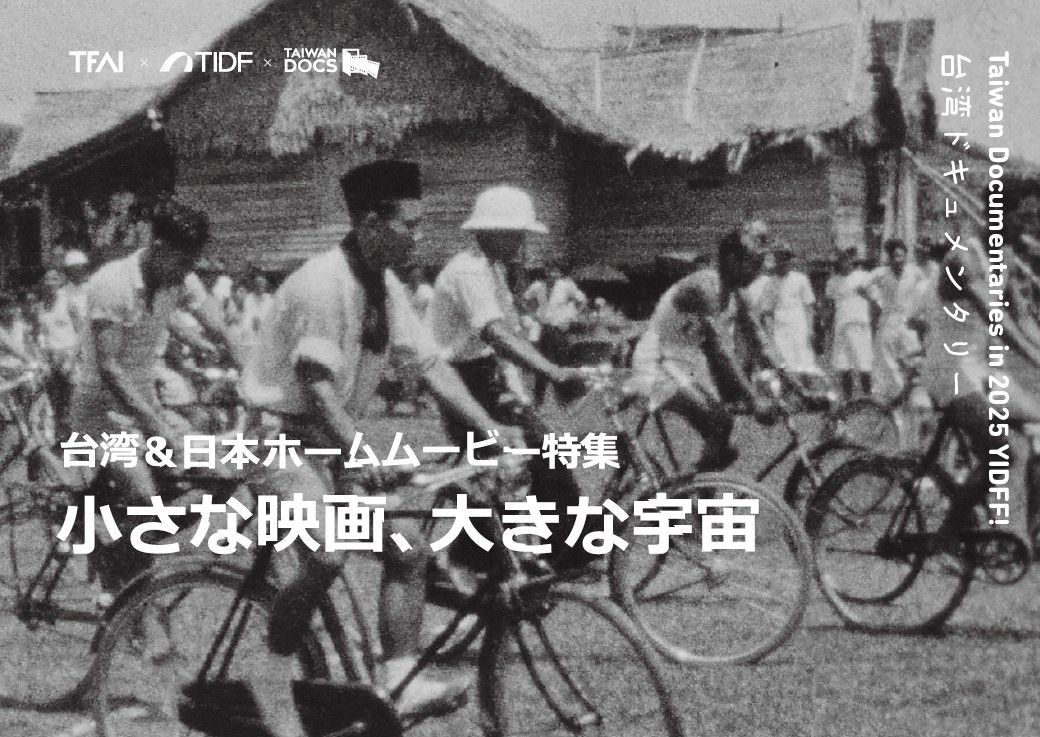
As one of Asia’s leading documentary festivals, the Yamagata International Documentary Film Festival (YIDFF) took place from October 9 to 16. This year, four Taiwanese documentaries were selected for its renowned competition — the highest number of Taiwanese films in competition in the festival’s history! Riding on this momentum, Taiwan Docs -an initiative of Taiwan Film and Audiovisual Institute (TFAI) dedicated to bringing Taiwanese documentaries and filmmakers to international audiences, - partnered with YIDFF to present the special program “Taiwanese & Japanese Home Movies: Small Film, Vast Universe.” This collaboration highlighted TFAI’s precious archival collection, including rare footage from both Yamagata and Hualien filmed in the 1960s, making their screening especially meaningful today. TFAI and YIDFF also co-hosted a Taiwan Night, expanding international exchange and visibility for Taiwanese documentary filmmakers. At the event, TFAI Director Iris DU remarked, “It's really a pleasure to collaborate with the Yamagata International Documentary Film Festival on a special program this year and to co-host the Taiwan Night, celebrating friendship, creativity, and our shared love for documentary films,” while Wood LIN, TFAI Supervisor of Research and Curation and Program Director for Taiwan International Documentary Festival (TIDF), noted, “YIDFF and the TIDF share a long and profound friendship. We hope this partnership will continue for years to come, and we warmly invite everyone to join us at next year’s TIDF in May .” ➤TFAI Director Iris DU delivers remarks at the “Taiwan Night” during YIDFF 2025. (Photo courtesy of TFAI) Teams of all four Taiwanese competition films were present at YIDFF:● Sayun Simung, director of SPI (world premiere, New Asian Currents Competition)● SONG Cheng-ying, HU Chin-ya, directors of The Tales of the Tale (New Asian Currents Competition)● Frankie SIN, director of Another Home (International Competition)● SO Yo-hen, director of Taman-taman (Park) (International Competition) Over 100 documentary professionals from around the world gathered alongside Taiwanese filmmakers, creating a lively and inspiring exchange. ➤Still from SPI, which had its world premiere at YIDFF 2025. (Photo courtesy of Taiwan Docs) The program “Taiwanese & Japanese Home Movies: Small Film, Vast Universe” concluded recently, featuring selected works from last year’s TIDF program “Untitled Reel: Amateur, Small-gauge Films and Others.” It showcased 8mm film collection from TFAI, accompanied by contextual commentary by SU Ui-tiok, co-curator of the program. The lineup included films by Dr. TING Ray-yü of the TING family in Lukang from the period under Japanese rule (1935–1943) and works by documentary photographer HSU Tsang-tse, who captured his family and daily life in the 1960s–70s. These touching everyday scenes transcend time and space, engaging in a cross-cultural dialogue with Japanese small-gauge home movies and receiving enthusiastic acclaim from audiences. ➤Co-curator SU Ui-tiok introduces the program “Taiwanese & Japanese Home Movies: Small Film, Vast Universe”. (Photo courtesy of TIDF) Another highlight this year was “Return: Yamagata × Hualien 1960s,” co-presented with the Hualien Film Center. Dedicated to preserving audiovisual heritage, TFAI drew from its Taiwan Film Culture Company’s (TFCC) newsreels collection to revisit footage of 1960s Hualien, paired with contemporaneous images of Yamagata City. The program also featured an original score by musician LIM Giong, transforming archival materials into emotionally resonant audiovisual works through creative reinterpretation. These films guided audiences back to the everyday memories of the two cities in the 1960s and evoked the enduring friendship between Taiwan and Japan, strengthened through mutual support in times of major events. Through Taiwan Docs, TFAI continues to foster strong relationships with leading international documentary professionals, promoting Taiwanese documentaries on the global stage and helping local filmmakers build international networks and strengthen industry connections. For the latest updates, please visit the Taiwan Docs website, Facebook page, and Instagram. -
 MORE
MORETSAI Ming-liang Honored with FIPRESCI 100 Lifetime Achievement Award as Vive L’Amour Returns to Venice in 4K
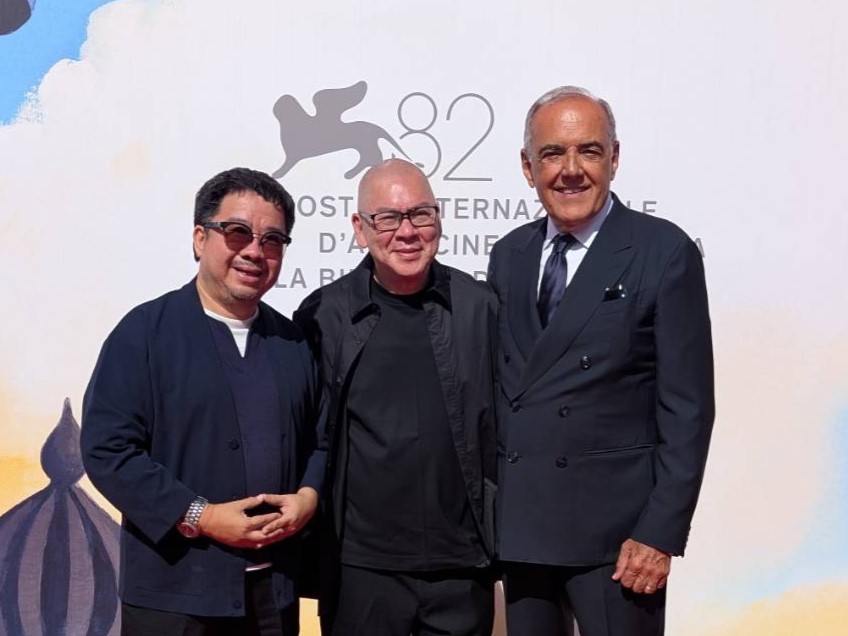
Thirty-one years after winning the Golden Lion at the 51st Venice International Film Festival in 1994, TSAI Ming-liang’s seminal work Vive L’Amour made a triumphant return to Venice with its 4K digital restoration by the Taiwan Film and Audiovisual Institute (TFAI). The film was presented in the prestigious Venice Classics section of the 82nd Venice International Film Festival and had its world premiere at the festival yesterday (September 3). TFAI Chairperson Arthur CHU, director TSAI Ming-liang, and actor LEE Kang-sheng were all in attendance, joining cinephiles worldwide in celebrating this historic moment. ➤ Vive L’Amour (4K Restoration) was selected for the Venice Classics section of the 82nd Venice International Film Festival. The world premiere of the 4K digital restoration of Vive L’Amour was held in Venice to a packed house, with the audience’s enthusiasm reflecting their eagerness to witness the artistry of a master filmmaker. Through sparse dialogue and a detached visual language, the film portrays the loneliness of urban life, showcasing TSAI Ming-liang’s distinctive aesthetic and marking the beginning of his long-term collaboration with actor LEE Kang-sheng. ➤ From left to right: LEE Kang-sheng(Actor), Arthur CHU(Chairperson of TFAI), Paola CASELLA(Vice President of FIPRESCI), TSAI Ming-liang(Director), Alberto BARBERA(Artistic Director of the Biennale Cinema for 2025), Ahmed SHAWKY(President of FIPRESCI) Before the premiere, the festival presented director Tsai Ming-liang with the FIPRESCI 100 Lifetime Achievement Award, in recognition of his significant contributions and influence in the film industry, as well as his continuous innovation and challenges in aesthetics and narrative. This marks the 7th FIPRESCI award of his illustrious career, following previous honors in Venice, Berlin, and Cannes. ➤ TSAI Ming-Liang Receives FIPRESCI 100 Lifetime Achievement Award in Venice. Accepting the award, TSAI reflected: “Within 30 years, I have received five FIPRESCI awards in succession. I have always felt the strong support of international film critics, and that has made my creative journey never feel lonely.” He also remarked on his return to Venice: “The Golden Lion Award is very important to me. It was the place where I first connected with international audiences. After 31 years, returning to Venice and seeing new young audiences watching my films makes me very happy. I am grateful to the Taiwan Film and Audiovisual Institute for restoring the 4K version, allowing Vive L’Amour to return to Venice once again.” Actor LEE Kang-sheng, TSAI’s longtime collaborator, expressed his feelings: “Coming to Venice feels like coming home. And coincidentally this year, Director TSAI also brings his new work Back Home. I hope you all enjoy it.” Arthur CHU, Chairperson of TFAI, emphasized the significance of the restoration: “Restoring this film is not only about preserving the director’s unique cinematic aesthetics, but also about documenting the growth of his actors and the transformation of Taipei as a city. Vive L’Amour remains a vital testimony of our cultural memory.” ➤ Vive L’Amour captured the loneliness of urban life through sparse dialogue and a detached visual language. This meticulous 4K digital restoration was completed through a close collaboration between the TFAI and Director TSAI, restoring the images of Taipei and sound textures to the way the director originally intended them to be presented. As a result, the film was able to return to the international festival stage 31 years later with a fresh look, extending its artistic vitality and cultural influence. Just last year (2024), TFAI staged a special outdoor screening of Vive L’Amour in Taipei’s Da’an Forest Park on New Year’s Eve. More than 3,000 people gathered to weep together as they ushered in the new year, an event so remarkable it drew coverage from CNN and international media. The widely talked-about event paid tribute to the film’s iconic eight-minute crying sequence, which won actress YANG Kuei-mei Best Actress at the Singapore International Film Festival and paved the way for roles in TSAI Ming-liang’s later films. ➤ Arthur CHU, the chairperson of TFAI, invites audience to Taipei to watch Vive L’Amour on New Year’s Eve Following the Venice premiere, TSAI Ming-liang has also been invited to deliver a Masterclass on September 5th, offering festival audiences an intimate look into his creative journey and cinematic philosophy. -
 MORE
MOREJudy ONGG Attends Osaka Asian Film Festival as Restored Classic Tracing to Expo ’70 Has World Premiere
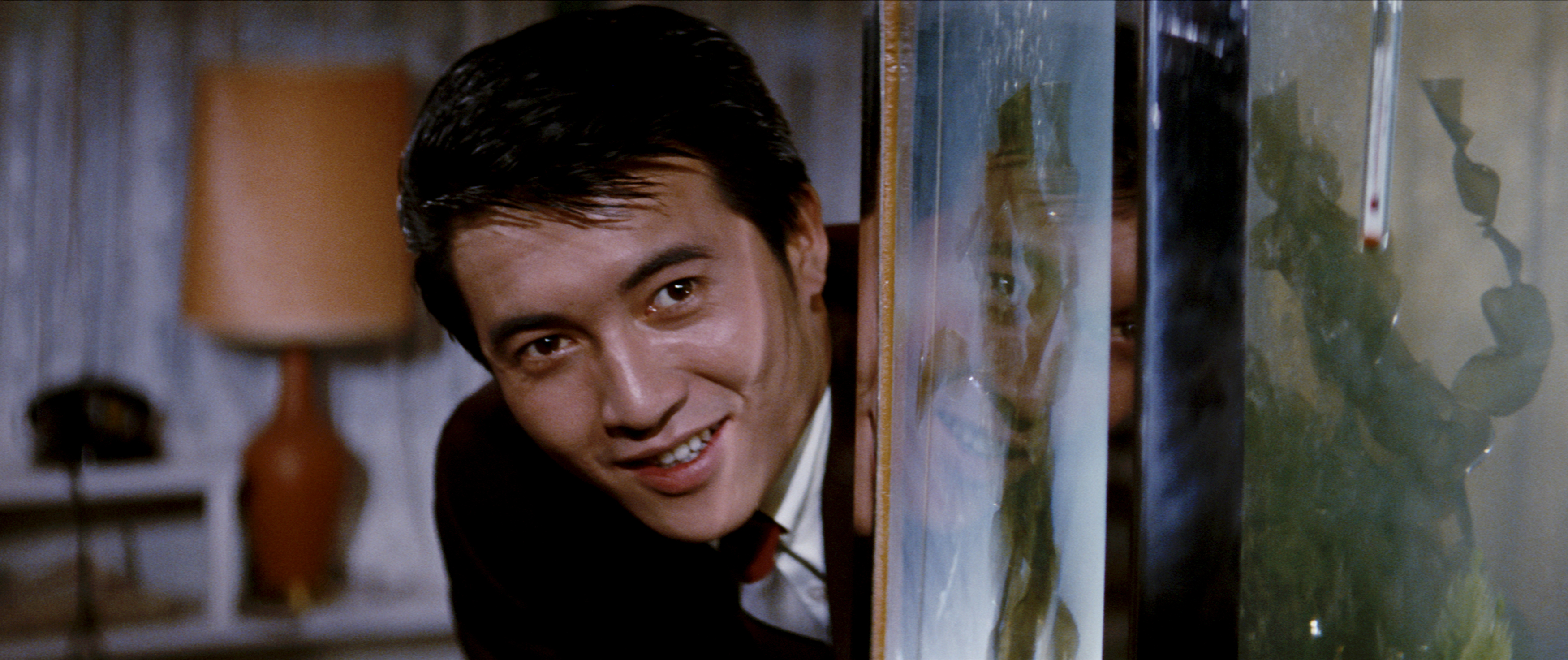
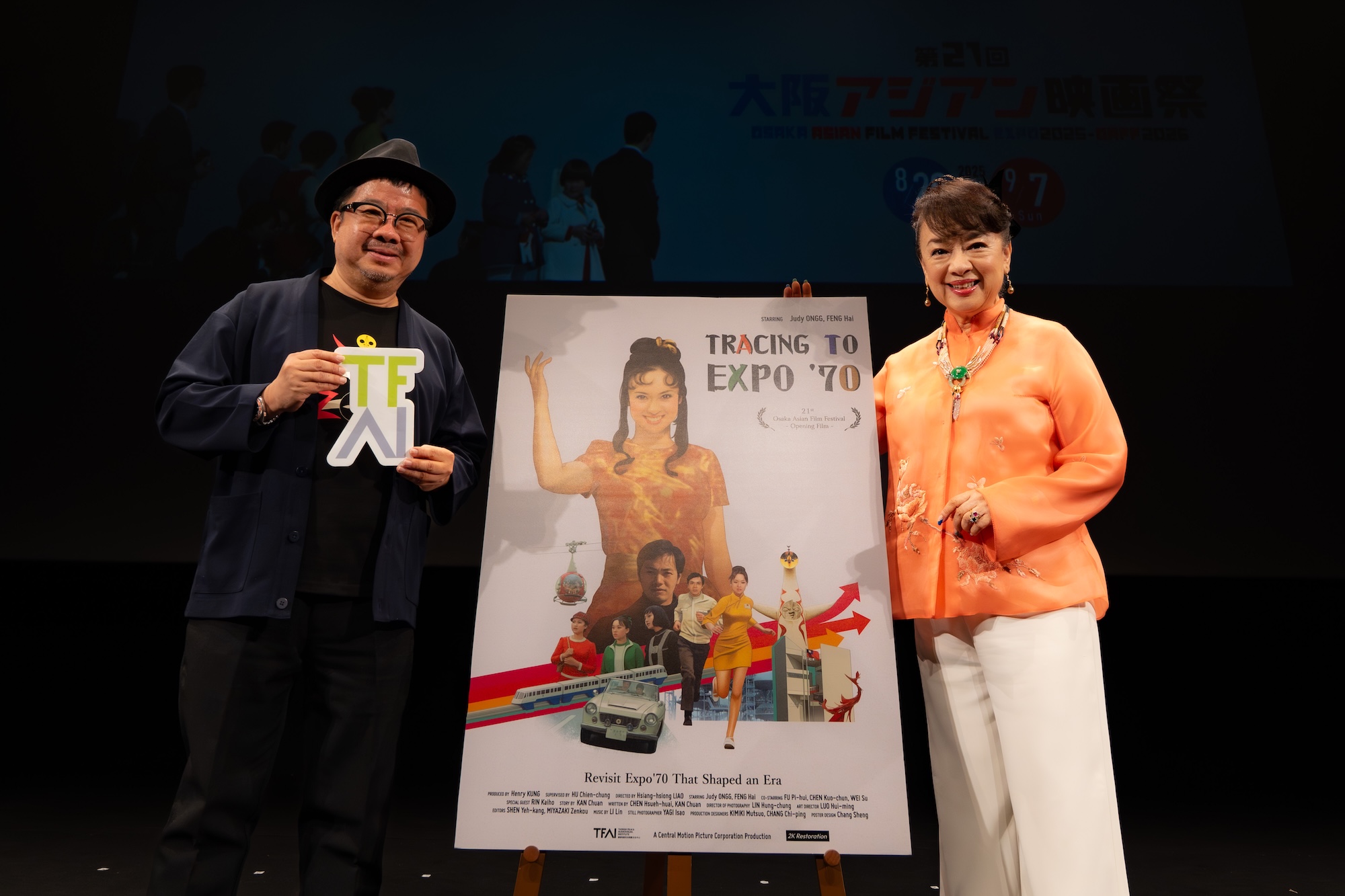
As global attention turns to Expo 2025 Osaka, the 21st Osaka Asian Film Festival (OAFF, August 29 – September 7) opened with the world premiere of Tracing to Expo ’70 (2K Restoration), restored by the Taiwan Film and Audiovisual Institute (TFAI). Starring then-20-year-old Taiwan–Japan superstar Judy ONGG, the film returns to Osaka’s big screen 55 years after its original release. Tickets sold out immediately, underscoring the strong anticipation among cinephiles and Expo enthusiasts. ➤ After half a century, Tracing to Expo ’70 (2K Restoration) returned to Osaka for its world premiere. The opening ceremony was followed by the screening, which offered audiences a vivid glimpse of the 1970 Osaka Expo. The restored images bridged past and present, sparking laughter and amazement throughout the theater and highlighting cinema’s power to preserve memory. ➤The world premiere of TFAI’s Tracing to Expo ’70 (2K Restoration), selected as the Opening Film of OAFF, was met with overwhelming enthusiasm, playing to a full house. (© OAFF EXPO2025-OAFF2026) The evening reached its peak when Judy ONGG appeared in person for a post-screening talk. She greeted the audience in fluent Japanese and Taiwanese and recalled styling all her costumes herself. She also shared anecdotes from filming, including running through snowy Hokkaido streets in high heels, drawing warm applause. ➤ Judy ONGG styled her own looks for the film. TFAI Chairperson Arthur CHU (褚明仁) remarked: “The highlight tonight is standing alongside Ms. ONGG. As someone from the Expo generation, I vividly remember watching the opening ceremony on television 55 years ago. To relive those moments today is deeply moving. Restoring Tracing to Expo ’70 is not only about reviving a film, but about restoring the spirit of its era.” The festival also featured the film on its official poster and published CHU’s bilingual essay reflecting on its cultural and historical significance. OAFF Programme Director Sozo TERUOKA (暉峻創三) praised the restoration as “a discourse spanning international politics, Taiwan–Japan exchange, and film history,” while highlighting its striking costumes, colors, and music. ➤ Osaka Asian Film Festival Programme Director Sozo TERUOKA praised the film’s costumes, color design, and music. Rarely seen since its 1970 release, Tracing to Expo ’70 was long regarded in Japan as a “phantom film.” TERUOKA first discovered it while curating the 2003 Tokyo International Film Festival’s “Judy ONGG’s Taiwan Film Era” retrospective but was unable to present it then due to the deteriorated print. He expressed gratitude that TFAI completed the digital restoration in time for OAFF and entrusted the world premiere to the festival. ➤ Tracing to Expo ’70 (2K Restoration) gives audiences a glimpse of the differences between the 1970 World Expo and today’s Expo. In addition to Tracing to Expo ’70, TFAI present other restored works at OAFF, including the Taiwan–Japan co-produced tokusatsu Dragon Superman (2K Restoration), the Taiyupian (Taiwanese-language feature) Goodbye Seventeen (2K Restoration), and the teen romance The Fellow Who Rejected College – 2025 Director’s Edition (2K Restoration). Together, these films showcase the richness of Taiwan’s cinematic heritage. -
 MORE
MOREHailed as the Taiwanese version of The Catcher in the Rye, the digitally restored The Fellow Who Rejected College returns to the big screen!
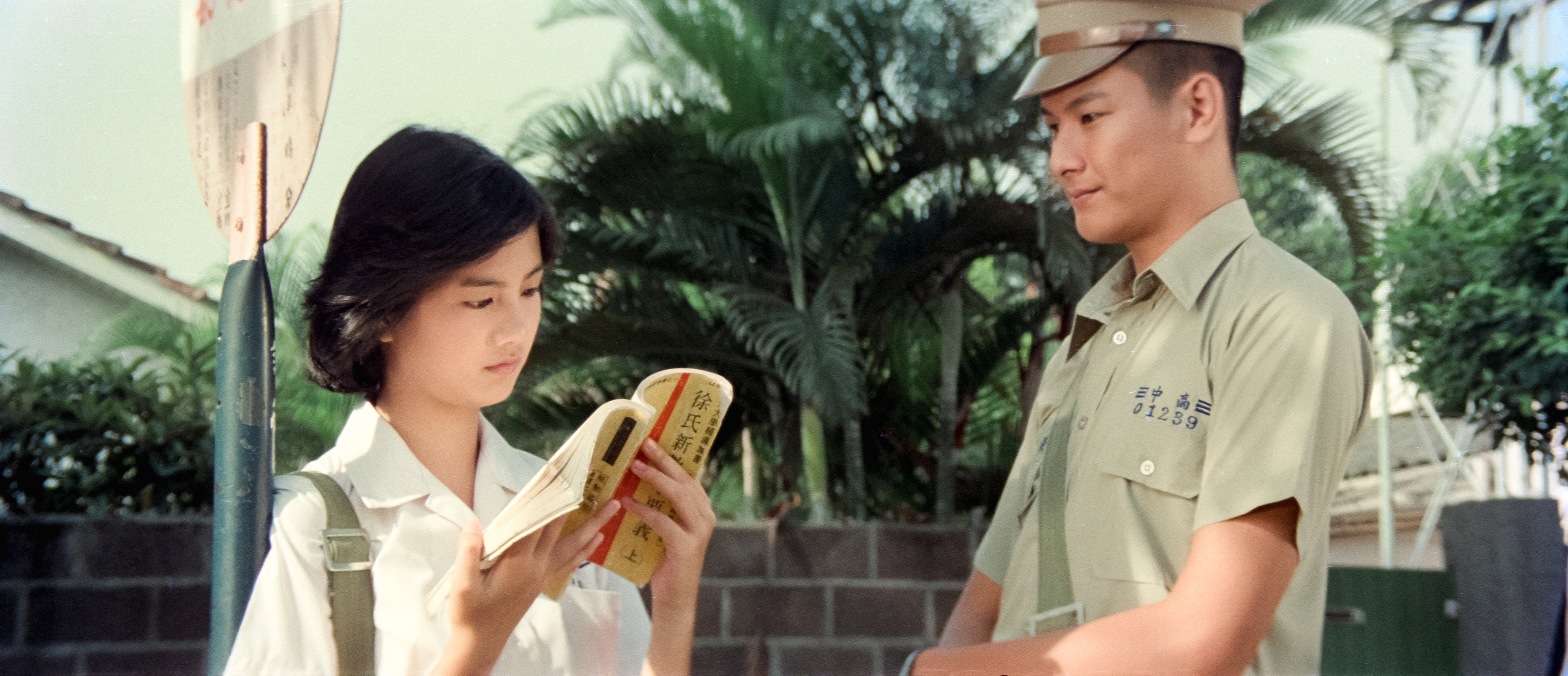
Directed by TCHII Ching-long (also known as HSU Chin-liang), The Fellow Who Rejected College is a Taiwanese teen movie made in 1979. Yesterday (August 20), the 2K digitally restored version of the film held its world premiere at the Golden Village VivoCity in Singapore. Restored by Taiwan Film and Audiovisual Institute (TFAI), the film was screened in the luxury 602-seat cinema and director HSU Chin-liang, the Representative of Taipei Representative Office in Singapore Dr. TUNG Chen-yuan, TFAI Chairman Arthur CHU, and TFAI Executive Director DU Li-chin were among the guests. The Fellow Who Rejected College not only directly points out the conflicts between the education system and the social values but portrays how teenagers struggle while growing up. When the film was released back then, it received such critical acclaim that it was selected as one of the ten best Chinese-language films of 1980 and hailed as the Taiwanese version of The Catcher in the Rye. ➤ The digitally restored The Fellow Who Rejected College held its world premiere in Singapore. From left to right: Representative of Taipei Representative Office in Singapore Dr. TUNG Chen-yuan, TFAI Chairman Arthur CHU, director HSU Chin-liang, and Singapore Film Society Chairman Kenneth TAN (courtesy of Singapore Film Society) Co-organized by Singapore Film Society and TFAI, it was the first screening shown to an international audience after the film was digitally restored. Last night, nearly 500 audiences attended the premiere, immersing themselves in the atmosphere of nostalgia created by the giant 22.5-meter screen in the luxury cinema. Based on the 1975 autobiographical novel The Boy Who Refused to Take the Joint Entrance Exams by Wu Hsiang-hui, the screen adaptation follows a high school student of the same name who struggles to break free from the rigid education system while under intense academic pressure. The story touched the hearts of the students suffering from the joint entrance exam in Taiwan and sold more than half a million copies, resonating with countless readers. In 1979, director HSU Chin-liang worked with screenwriters WU Nien-jen and KU Ya-jung and made it into a film. It was shot in Taipei on location and extended the influence of the novel. Moreover, director HSU daringly cast new actors, WANG Fu-shih and PENG Hsueh-fen, who rose to fame as a result. The film had such distinctive characters, including the realistic style and the reflection on the system that it became the most rebellious representative of the youth cinema at that time and set a new trend of films about students in Taiwan. ➤ Kenneth TAN is the key figure in the world premiere of the digitally restored The Fellow Who Rejected College, who saw the film 43 times in the theater back then (courtesy of Singapore Film Society) The original negative of The Fellow Who Rejected College was saved from a closing laboratory. In 2025, TFAI team launched the 2K restoration project, made possible thanks to Mrs. PENG Hsueh-fen, the female lead of the film. Her generous support has greatly contributed to TFAI's mission of preserving, digitally restoring, and promoting classic films, bringing old films back to life! The interesting thing is that the key figure in making this world premiere happen is Kenneth TAN, the Chairman of Singapore Film Society, who saw the film 43 times in the theater when it was initially released. Calling himself a “staunch fan” of the film, TAN was getting very emotional at the premiere since his beloved film was brought back to the big screen thanks to a string of chances. He remembered that he was going to take his GCE O-Levels in the following year and this film influenced the direction he headed in later in his life. Chairman TAN expressed, “If you could see only one film in your life, you definitely shouldn’t miss The Fellow Who Rejected College.” ➤ Fans taking a selfie with HSU Chin-liang, the director of The Fellow Who Rejected College (second from the right) (courtesy of Singapore Film Society) TFAI Chairman Arthur CHU said, “Last year, I heard the moving story of Chairman TAN that this film was such an inspiration for him that he ended up devoting himself to the film industry. Therefore, I feel it’s particularly meaningful that we have restored it. For years, the print had been well preserved at TFAI and with the support from the Ministry of Culture, we began digitally restoring the film. We believe that what has been restored is not only the film but the soul of an era. In the film, we see people using rotary dial phones, the hero and the heroine writing letters to each other, calling from payphones, the popular campus folk songs, and the pressure of getting admitted into a university; all these things allow the audiences to feel the changes of time and nostalgia. The Fellow Who Rejected College is the 99th film that TFAI restored and the first that gets theatrically released outside Taiwan immediately after the restoration.” ➤ The Fellow Who Rejected College touched the hearts of the students suffering from the joint entrance exam, resonating with countless audiences After its world premiere, the digitally restored version of The Fellow Who Rejected College will return to the cinemas in Singapore in September. Dr. TUNG Chen-yuan, the Representative of Taipei Representative Office in Singapore, attended the premiere since this theatrical release of a Taiwanese classic film, a joint effort between Taiwan and Singapore, is highly important. The film will be shown on 17 screens in premium slots in eight movie theaters for a year, and we believe it will trigger passionate debate among students. Meanwhile, the film continues its international film festival run, and the next stop is the 21th Osaka Asian Film Festival, at which two special screenings are scheduled on September 1 and 3. We expect more audiences to get to see this Taiwanese teen movie that marked a significant milestone in the history of Taiwan cinema. ➤ The digitally restored The Fellow Who Rejected College will be theatrically released in Singapore from September onwards (courtesy of Singapore Film Society)