
活動訊息EXHIBITION AND EVENT INFORMATION
-
 MORE
MORE -
 MORE
MORETFAI Strengthens Global Ties Through Recent International Exchanges
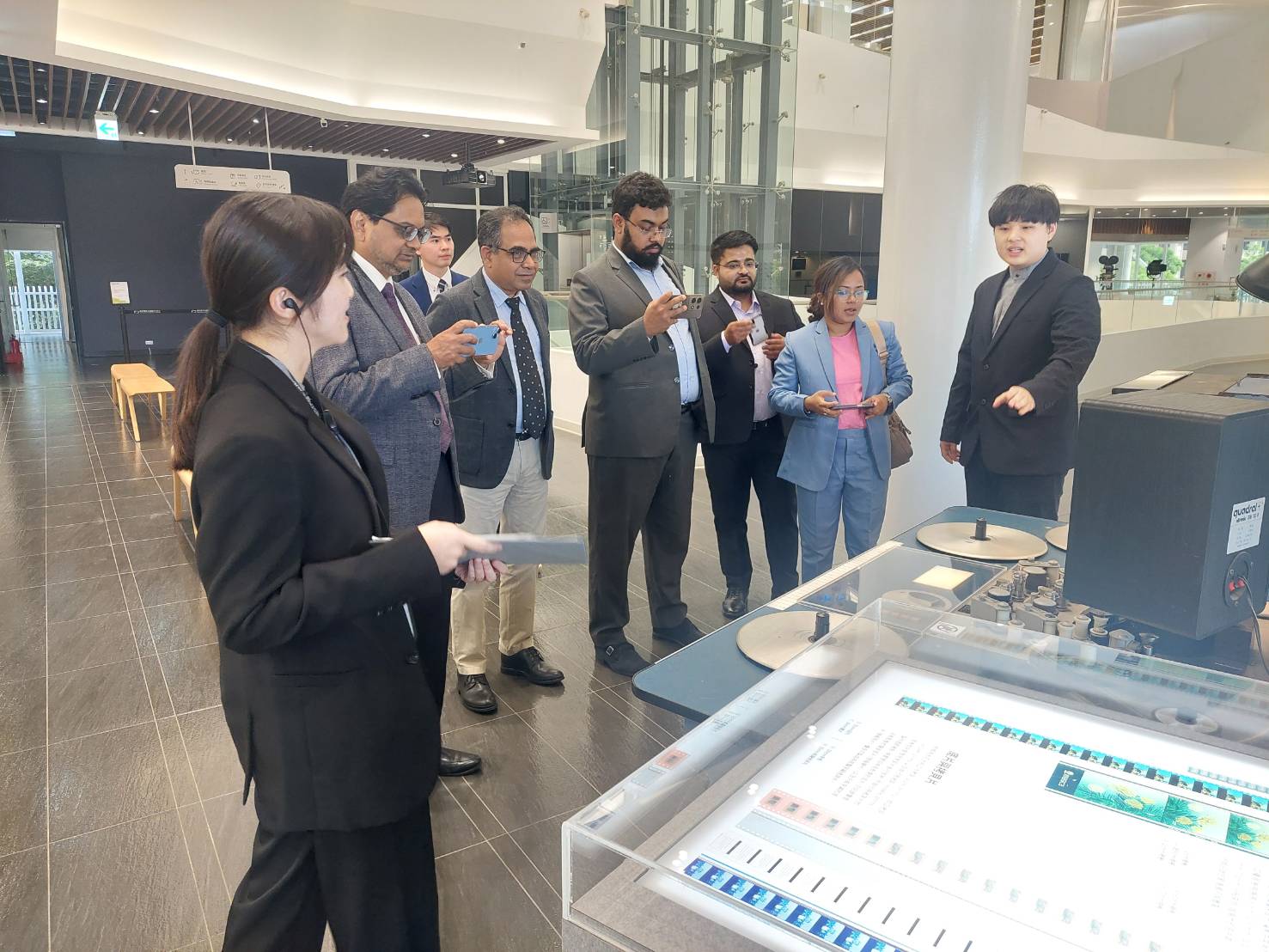
Taiwan Film and Audiovisual Institute (TFAI) has been actively elevating Taiwan's audiovisual heritage on the global stage through extensive international partnerships and collaborations. With a rich history of successful cooperation with renowned institutions and prestigious film festivals such as Cannes, Venice, and Berlin, TFAI has firmly established itself as a respected leader in promoting Taiwanese classic cinema worldwide. The Institute’s growing international prestige has attracted numerous global visitors eager to explore collaborative opportunities. In June alone, TFAI hosted distinguished delegations from the Tokyo International Film Festival, the Osaka Asian Film Festival, the International Film Festival Rotterdam, the Far East Film Festival, Toronto Reel Asian International Film Festival, the South Asian Think Tank Delegation, and Japan’s Taiwan Master Filmmakers Retrospective (台湾巨匠傑作選). These high-level exchanges underscore TFAI’s commitment to fostering meaningful dialogues in film restoration, archiving, audiovisual promotion, and research, further solidifying Taiwan’s influential presence in the international film community. On June 23rd, the Institute had the honor of welcoming Mr. ISHIZAKA Kenji, Senior Programmer of the Tokyo International Film Festival and one of the international film selectors for the 2025 Taipei Film Festival, during his visit to Taiwan. Mr. ISHIZAKA toured the Institute’s exhibitions on film restoration, which feature not only archival displays but also rare antique film equipment from the Institute’s collection and an extensive library. Mr. ISHIZAKA later met with TFAI Chairman Arthur CHU and the team to exchange views on film culture, archival practices, and regional collaborations. Both sides explored a range of promising avenues for future cooperation, signaling exciting possibilities ahead for exchanges between organizations. ➤ Mr. ISHIZAKA Kenji (second from the right), Senior Programmer of the Tokyo International Film Festival, visited TFAI and toured the Institute’s exhibition. ➤Arthur CHU, Chairman of TFAI, and Mr. ISHIZAKA Kenji posed in front of a poster for one of the Institute’s restored classic films. On June 26th, TFAI welcomed a distinguished delegation from the South Asian Think Tank at the invitation of the Ministry of Foreign Affairs. The visiting group included emerging journalists, economists, filmmakers, and policy researchers from Sri Lanka, Bangladesh, and Nepal, representing diverse perspectives within the regional cultural and media landscape. ➤The South Asian Think Tank Delegation toured the Institute’s display of vintage filmmaking equipment. ➤The South Asian Think Tank Delegation met with the TFAI team to exchange insights on Taiwan’s audiovisual industry and the Institute’s role in preservation, restoration, and international collaboration. The delegation participated in a comprehensive facility tour and engaged in discussions with TFAI Deputy Director Ying-Chih LIN and Pecha LO, Supervisor of the Promotion and Cooperation Division. These exchanges explored Taiwan's evolving audiovisual industry, TFAI's film restoration initiatives, and the Institute's commitment to expanding public access to its extensive archival collections. On June 27th, Osaka Asian Film Festival’s Programming Director TERUOKA Sozo had a thorough meeting with TFAI to discuss the upcoming co-curated “Taiwan Classic Film Programme”, which will be an official activity of the 21st Osaka Asian Film Festival in conjunction with Expo 2025 Osaka. TFAI will present multiple newly restored films to global audiences. ➤TFAI and Osaka Asian Film Festival co-curate “Taiwan Classic Film Programme” as part of the Expo 2025 Osaka special selection. As we enter the second half of 2025, TFAI continues to expand its global presence within film preservation networks. In an era of rapid change, national film archives play an increasingly vital role in preserving cultural narratives and providing grounding through the irreplaceable moving images. TFAI seeks and welcomes collaboration with film archives, audiovisual institutions, and film festivals around the world. In the coming months, TFAI will be present at major international events such as the Venice International Film Festival, the SEAPAVAA Annual Conference, Lumière Festival's Marché International du Film Classique, and, in response to the Ministry of Culture’s initiative during the Expo 2025 Osaka, present a collection of Taiwanese classic films during the event.. TFAI is committed to working with like-minded partners around the world to advance the preservation and appreciation of moving images. -
 MORE
MOREDigitally restored “Gorgeous” makes world premiere at Taipei Film Festival: An audacious literary adaptation brimming with puns that defied censorship
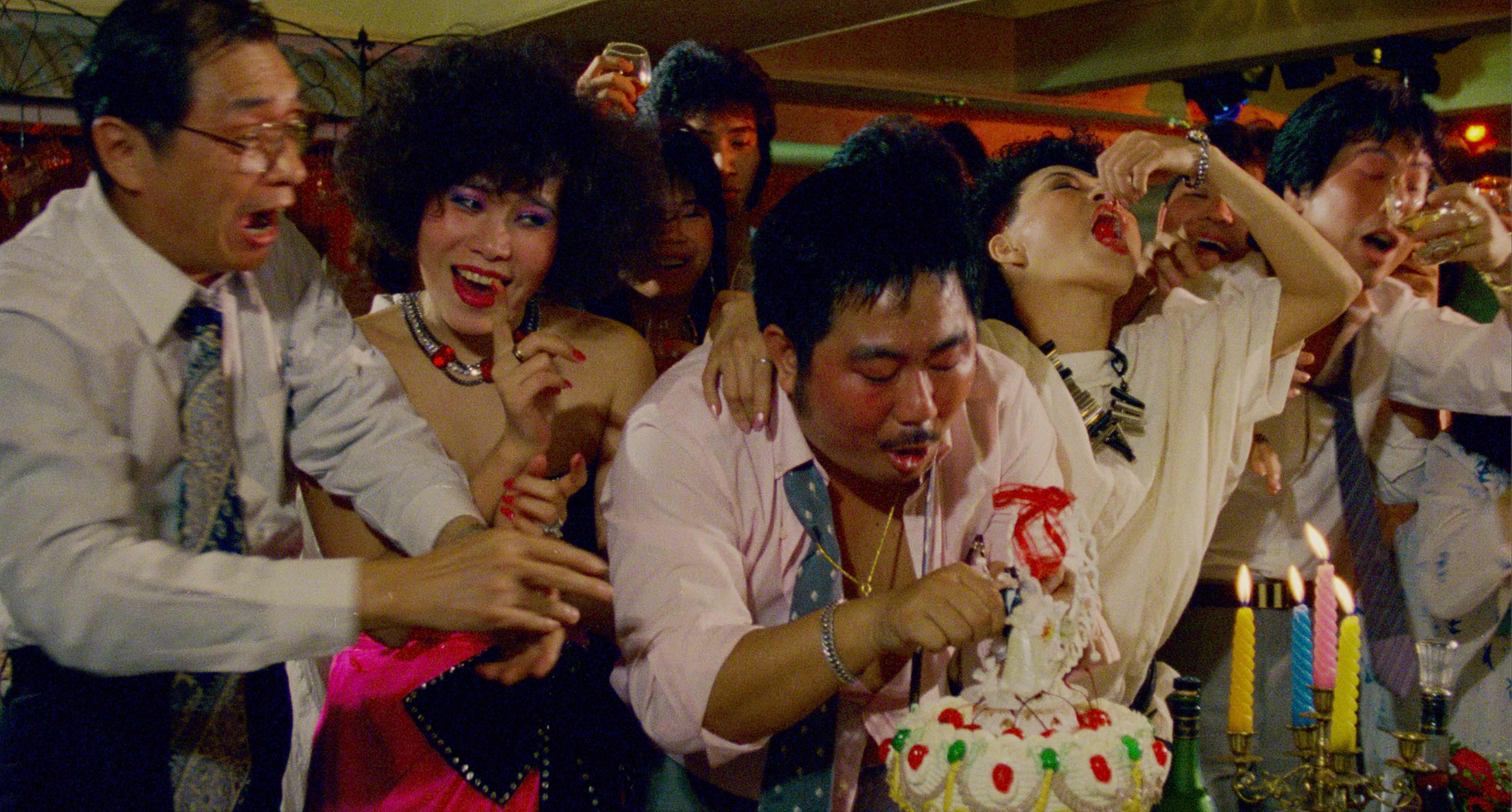
Nothing can stop the Taiwanese playing with puns, and it is true even in a film made four decades ago. Gorgeous (1985), the only Taiwanese film among the five selected for the Classics Revisited section, just had its world premiere at the Taipei Film Festival. As in the original novel, this screen adaptation is full of wordplay. The story follows a young man from a farming village in Southern Taiwan who looks for a job in an airline company; he not only has to quickly learn to survive the new workplace, but also deal with urban folks who blindly worship the West. To him, Taipei is not a city of glamor but absurdity. ➤ Gorgeous (1985) holds its world premiere in the Classics Revisited section at Taipei Film Festival (Courtesy of TFAI) This digitally restored version of Gorgeous, shown in the Classics Revisited section at the Taipei Film Festival, was completed by the Taiwan Film and Audiovisual Institute (TFAI). Arthur CHU, the chairman of TFAI, attended the world premiere and introduced the film to the audience before the screening: “When we talk about Taiwanese cinema, especially from an international perspective, we immediately think about the 'Taiwan New Cinema' movement. Yet in 1985, alongside acclaimed directors like HOU Hsiao-hsien and KO I-cheng, there was another group of filmmakers who, while not classified under the New Cinema banner, were equally committed to creating films that spoke directly to the audiences and sought success in the box office. Director CHANG Mei-chun’s Gorgeous stands as a representative example of such efforts.” Adapted from WANG Tsen-ho’s eponymous novel, Gorgeous cleverly reflects the social atmosphere caught between the U.S.-Taiwan diplomatic break-up and a craze for all things Western. In the film, “gorgeous refers to white-collar workers in the airline company, who consider themselves superior; they have family members who are either green card holders or have immigrated to the US, representing a certain social class that worships the country. ➤ Chairman of TFAI, Arthur Chu, made a special appearance at the world premiere of Gorgeous (1985), delivering an introduction and sharing insights with the audience before the screening. (Photo Credit: Taipei Film Festival / Chen Yan-Wen) Chairman CHU also pointed out that “In adapting Gorgeous, CHANG Mei-chun incorporated elements of fantasy sequences, monologues, and non-linear structures like flashbacks. In many ways, this can be seen as an attempt to break away from the confines of traditional narrative conventions.” LIN, the protagonist from a village in Southern Taiwan, is played by the then-new rising star YANG Ching-huang. The kind, innocent, and honest young man serves as a sharp contrast to the preposterous and laughable city folks. In an attempt to remember his colleague’s names “Dorothy” and “Rocky Tung”, LIN pronounced them in Taiwanese Hokkien, which just so happen to sound like “take out the trash” and “garbage can” in the language — and that left everyone laughing and shaking their heads. You can also see LIN Jui-yang, who was hailed as the “most handsome Taiwanese actor”, and other well-known actors such as Su Chu and A-pi-po, in cameo roles. On that, Chairman CHU further noted, “Gorgeous presents an aesthetic and performance distinctively different from that of Taiwan New Cinema. It retains the heightened dramatic flair of traditional commercial films, at times taking on what one might call exaggerated, overtly expressive acting. The film offers a valuable opportunity for us to revisit how filmmakers outside the New Cinema movement approached local themes, responded to the industry’s challenges, and met expectations of their audiences.” ➤ Rising star Yang Ching-huang (left) and “the most handsome actor in Taiwan” Lin Jui-yang (right) co-star in Gorgeous (Courtesy of TFAI) ➤Gorgeous portrays a young man from a farming village in Southern Taiwan working in an airline company in Taipei (Courtesy of TFAI) TFAI is dedicated to preserving and promoting the nation’s audiovisual heritage and continues to present landmark works in the history of Taiwanese cinema. The digitally restored version of Gorgeous not only preserves the marks left by an era of censorship but also reflects the market for commercial films at the time. Originally, some lines conveyed same-sex intimacy and scenes that showed the protagonist trading his body for coins; all these were deleted as a result of censorship and commercial concerns, which disrupted the development of the plot. However, many stereotypical depictions of gender or race were left intact in the film, revealing the shifts in social values over time that are worth pondering over. The hope is that these moments will spark thoughtful conversations among audiences. ➤ In Gorgeous, Taipei is not a city of glamor but absurdity (Courtesy of TFAI) Another special screening after the world premiere is scheduled on June 27th (Fri) at the Taipei Film Festival. Meanwhile, the film is invited to have its international premiere in July at the New York Asian Film Festival as a representative of Taiwan cinema in the NYAFF Rediscoveries – Classics Rebooted section. -
 MORE
MOREBFI curates a Taiwan New Cinema season and invites directors Chen Kun-hou and Huang Yu-shan to show their classics with UK audiences
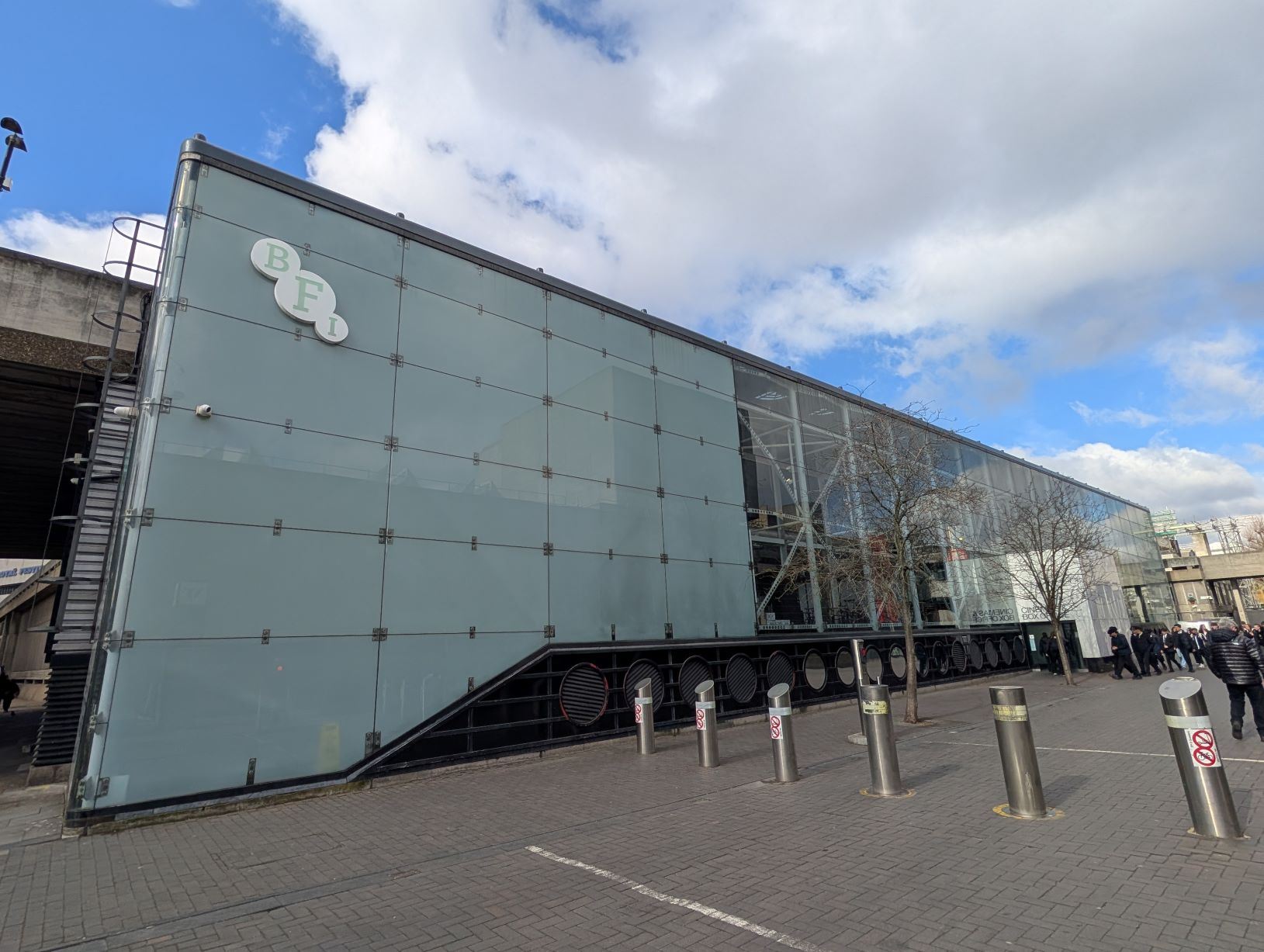
In partnership with Taiwan Film and Audiovisual Institute, the Cultural Division of the Taipei Representative Office in the UK and the British Film Institute (BFI) collaborate on a new season titled ‘Myriad Voices: Reframing Taiwan New Cinema.’ Opening on March 31, the season introduces the Taiwan New Cinema classics to the UK audiences, and directors Chen Kun-hou and Huang Yu-shan will attend the events in London. The season curator Hyun Jin Cho expresses, ‘Finding presence somewhere between the unresolved past and the inescapable pull of the future, Taiwan New Cinema offers a blend of insight, candor, and delicate lightness.’ Even until today, these films not only resonate with the audiences but prompt them to reflect upon what they perceive in the films. Therefore, after the success of The Films of Edward Yang: Conversations with a Friend held earlier in February at BFI, another season is curated to show the UK audiences the works of other Taiwanese filmmakers who are contemporary with Edward Yang. The season, Myriad Voices: Reframing Taiwan New Cinema, will be held from March 31 to April 30 at BFI Southbank, showing 15 films in more than 30 screenings. These films include Hou Hsiao-hsien’s A City of Sadness, A Time to Live and a Time to Die, and The Boys from Fengkuei, Edward Yang’s The Terrorizers, Taipei Story, and Duckweed, Chen Kun-hou’s Out of the Blue and My Favorite Season, Chang Yi’s Kuei-mei, a Woman, and This Love of Mine, Huang Yu-shan’s Autumn Tempest, Wan Jen’s Ah Fei, and Wang Toon’s Strawman. In addition, there are In Our Time and The Sandwich Man, both co-directed by several renowned filmmakers. ➤In partnership with Taiwan Film and Audiovisual Institute, the Cultural Division of the Taipei Representative Office in the UK and the British Film Institute (BFI) collaborate on a new season titled ‘Myriad Voices: Reframing Taiwan New Cinema.’ (photo courtesy of the Ministry of Culture) Golden Horse Lifetime Achievement Award winner Chen Kun-hou and director Huang Yu-shan are invited to the events in London to meet the UK audiences. Chen Kun-hou will do the introduction to The Boys from Fengkuei and attend the post-screening Q&A sessions on Out of the Blue and My Favorite Season. Huang Yu-shan will participate in the post-screening Q&A session on Autumn Tempest and deliver a speech on the development of the Taiwanese film industry in the 1980s from feminist perspectives at the Taiwan New Cinema Symposium on April 12. This season is supported by Taiwan Film and Audiovisual Institute, which took part in film selection and screening licensing. It is anticipated that audiences in the UK will be able to experience and appreciate the unique narrative charm and cultural significance embodied in Taiwan New Cinema. For more information on Myriad Voices: Reframing Taiwan New Cinema, please go to BFI website: Myriad Voices: Reframing Taiwan New Cinema | BFI Southbank