
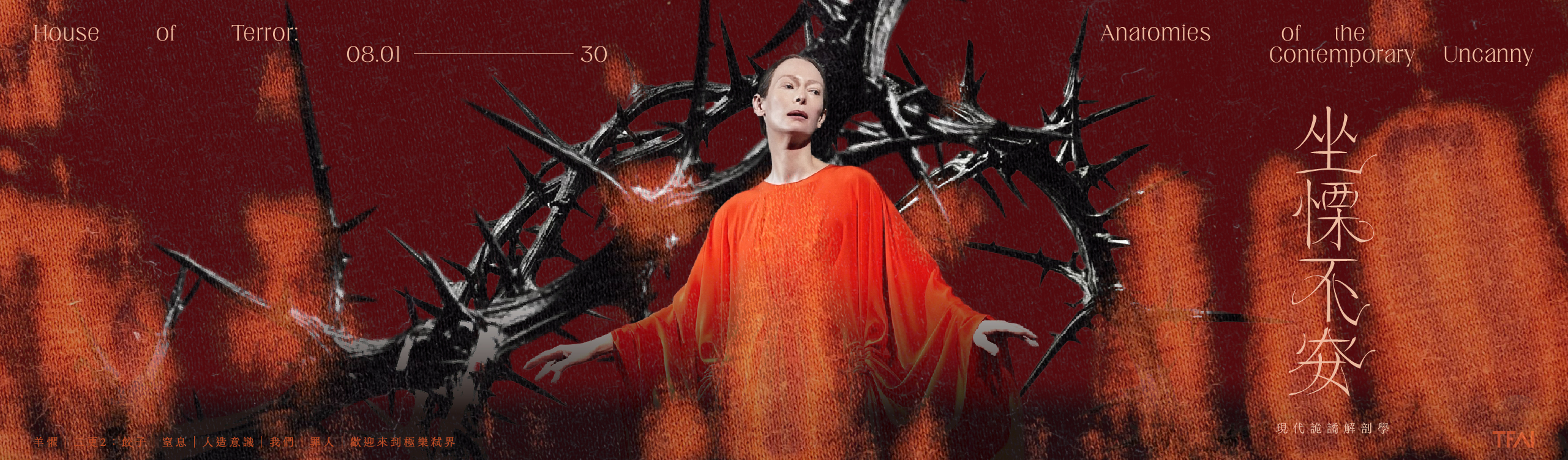
House of Terror: Anatomies of the Contemporary Uncanny
When looking at visceral fluids, organic decay, and primitive folk rituals, have you ever wondered what truly creates fear within the human psyche? Is it visual disgust, the rejection of death, or the challenge of witnessing something outside the margins of normalcy? Sigmund Freud defines "the Uncanny" (Unheimliche) as that which occurs when what is most familiar undergoes an unsettling psychological displacement, explaining why domestic settings in cinema can turn into our greatest nightmares. Julia Kristeva identifies the true site of horror as the collapse of the boundary between the self and the other, the human and the non-human, a somatic crisis provoked when the body is punctured by its own internal filth and foreign taboos.
Furthermore, spanning the post-WWII era to the 21st century, modernization and the explosion of technology have constantly broken down our imagination of the boundaries between 'self and non-self.’ The post-WWII era marks a surge in humanity's obsession with the future, yielding works depicting outer space and the unknown. As Apollo 11 touched down on the moon in 1969, it unleashed further imaginations while challenging the dominance of Earth. Decades later, the 21st century witnesses the birth of the first iPhone, entirely changing the communication patterns of the human race. Today, fears of overdevelopment, ecological crises, and the ability to replicate or outperform the human brain pose ethical and existential challenges. In times as such, what troubles our understanding of self?
"House of Terror: Anatomies of the Contemporary Uncanny" chronicles a journey contributed by contemporary auteurs, from primitive desires to visceral folklore toward a futuristic fear of technological uncertainty. This evolution begins with Lamb, Suspiria, and Three... Extremes: Dumplings, where boundaries of species, history, and flesh collapse into pastoral nightmares, folk rituals, and the taboo consumption of our own kind. The terror turns structural in Us and Sinners, as civilization is shattered by vengeful class doppelgängers and gothic ancestral curses. Finally, the journey crosses into a digital void. In Infinity Pool and Ex Machina, the human form is stripped of its soul—first replicated as a commodity, and ultimately discarded for the cold architecture of an unknowable synthetic intelligence.
When human form is distorted, we are forced to face: what remains under our skins?