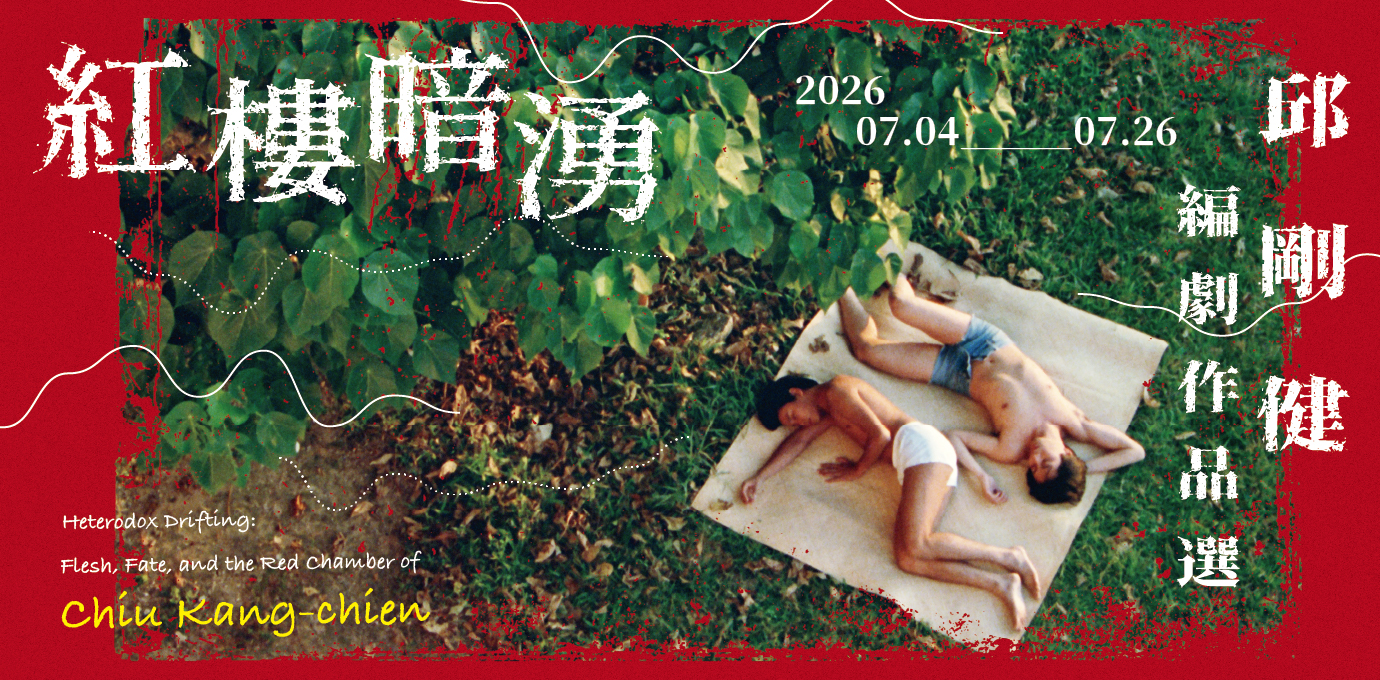
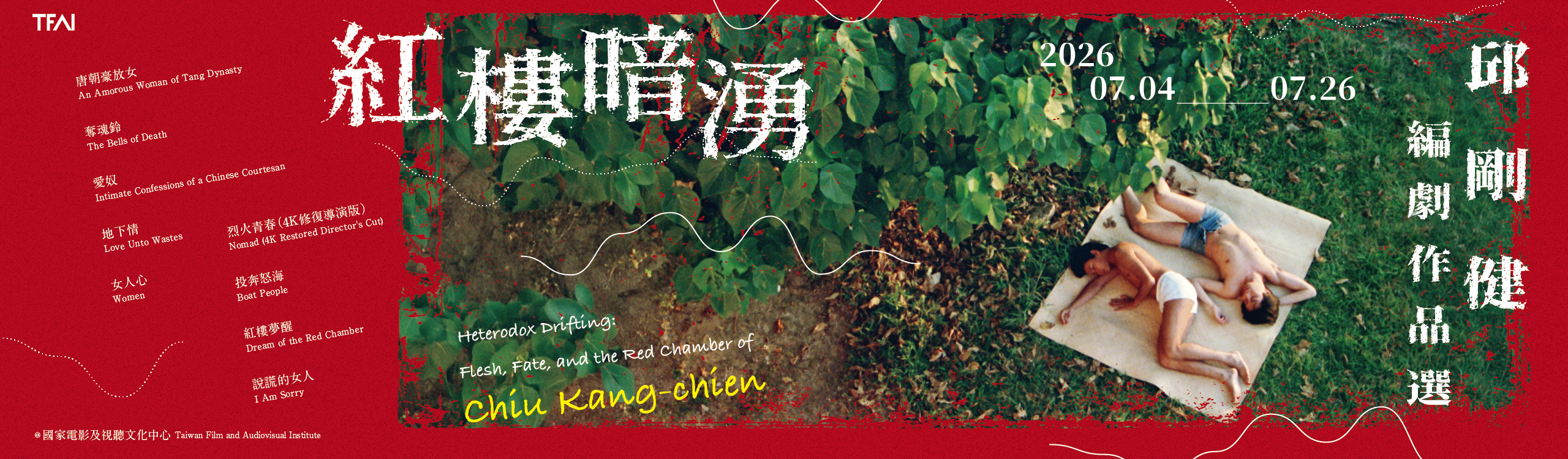
Heterodox Drifting: Flesh, Fate, and the Red Chamber of Chiu Kang-chien
Few screenwriters have reshaped the topography of Chinese-language cinema as profoundly as Chiu Kang-chien (1940–2013), a figure who remains as unforgettable as he is fiercely unclassifiable. Unlike traditional wordsmiths bound by narrative conventions, his greatness lies in his transgressive "heterodoxy"—with a poetic, uncompromising pen, he bypassed safe moralizing to pierce the chaotic, raw undercurrents of human desire and spiritual exile. Born in the isolation of Gulangyu, Xiamen, he had lived in a continuous displacement—moving to Taiwan in 1949, and pursued advanced drama studies in Hawaii. Upon his return, he co-founded Theatre Quarterly, letting in the avant-garde spirits of Jean-Luc Godard and Bertolt Brecht sweep through the Chinese cultural landscape.
His sensibilities as a modern literali caught the attention of the Shaw Brothers studio. Yet, it was his exquisite, Western-educated aesthetic vision that created a historical serendipity with the pioneers of the Hong Kong New Wave—Ann Hui, Patrick Tam, Tony Au, Eddie Fong, and others, at the volatile crossroads where traditional studio infrastructure collided with postmodern thoughts.
Following his arrival at Shaw Brothers in 1966, Chiu immediately began dismantling genre boundaries. His credited screenplay debut, The Bells of Death (1968), reconstituted the Spaghetti Western into a wuxia fever dream, where a late mother's copper bells transform into a motif of impending doom. By the time he partnered with Chor Yuen for Intimate Confessions of a Chinese Courtesan (1972), he pushed for an unprecedented approach that weaponized the female body, they boldly unfurled a landscape of lesbian desire and ruthless psychological warfare, operating under the dark maxim that "love is more lethal than hate."
As the New Wave erupted, Chiu's feminine writing decoupled itself entirely from traditional patriarchal labels. Whether navigating the crimson, tumultuous tides of the past in An Amorous Woman of Tang Dynasty (1984), where a poetess-courtesan declares sovereignty over her own flesh, or wandering the contemporary corridors of Tony Au's I Am Sorry (1989), Chiu focused on ordinary individuals with deeply flawed, complex personalities. His heterodox vision grants him the unique talent to sculpt female characters who possess rebellious souls, exercising autonomy over their bodies and fates.
In the 1980s, Stanley Kwan stepped out of the television studio to spearhead the Second Wave, choosing Chiu to pen his directorial debut, Women (1985), and that opened up to a profound, decades-long creative alliance. Chiu captured the witty, exhausted dilemma of modern urbanites who crave the anchor of marriage but refuse to surrender their freedom. Their subsequent masterpiece, Love Unto Wastes (1986)—Chiu's most personally satisfying text—took a routine murder inquiry and dissolved it into an existential wasteland, revealing the undercurrents of urban vanity.
At the same time, Chiu's lens never detached from modern politics. A two-time winner of Best Screenplay at the Hong Kong Film Awards, his screenplay for Ann Hui's Boat People (1982) stood as a monument to geopolitical realism, exploring the taboo of exile and totalitarianism after the Vietnam War. In the co-written Nomad (1982), harkening to Nietzschean thought, he blended bohemian hedonism and nihilism with political violence, prophesying the ultimate disillusionment of youth in this New Wave's masterpiece.
For a writer so prolific, Chiu's directorial filmography remains exceptionally rare. In 2025, Singapore's Asian Film Archive completed the restoration of Dream of the Red Chamber (1977)—an enigmatic classical adaptation written and directed by Chiu that had been lost to time. Weaving popular genre tropes with a local Singaporean cast, the film offers a mesmerizing, transnational snapshot of Singapore's early independent cinema. The Institute has offered the sole surviving, heavily degraded 35mm print to this arduous project. With less than 10% of the original color remaining, it was ultimately decided to be restored in black and white, recovering tonal depth and image clarity across 1,000 hours of meticulous restoration work. Making its Taiwanese premiere in this retrospective, this half-century-old dream offers a glimpse to Chiu Kang-chien's labyrinth of desire, mortality, and the naked human soul.
Corrections and Updates Notice
[Screening Timetable Revision] Updated on July 12, 2026
• Dream of the Red Chamber: The July 11 screening was cancelled due to Typhoon Bavi. The screening and post-screening talk have been rescheduled to 11:30 AM, July 19 (Sun). Guest speaker Tee Pow Chew (Senior Archivist, Asian Film Archive) will join the discussion online. Original tickets remain valid for admission. Full refunds are available until July 31, 2026 for those unable to attend due to the schedule change.
• Love unto Wastes: The July 11 screening was cancelled due to Typhoon Bavi. Full refunds are available until July 31, 2026.