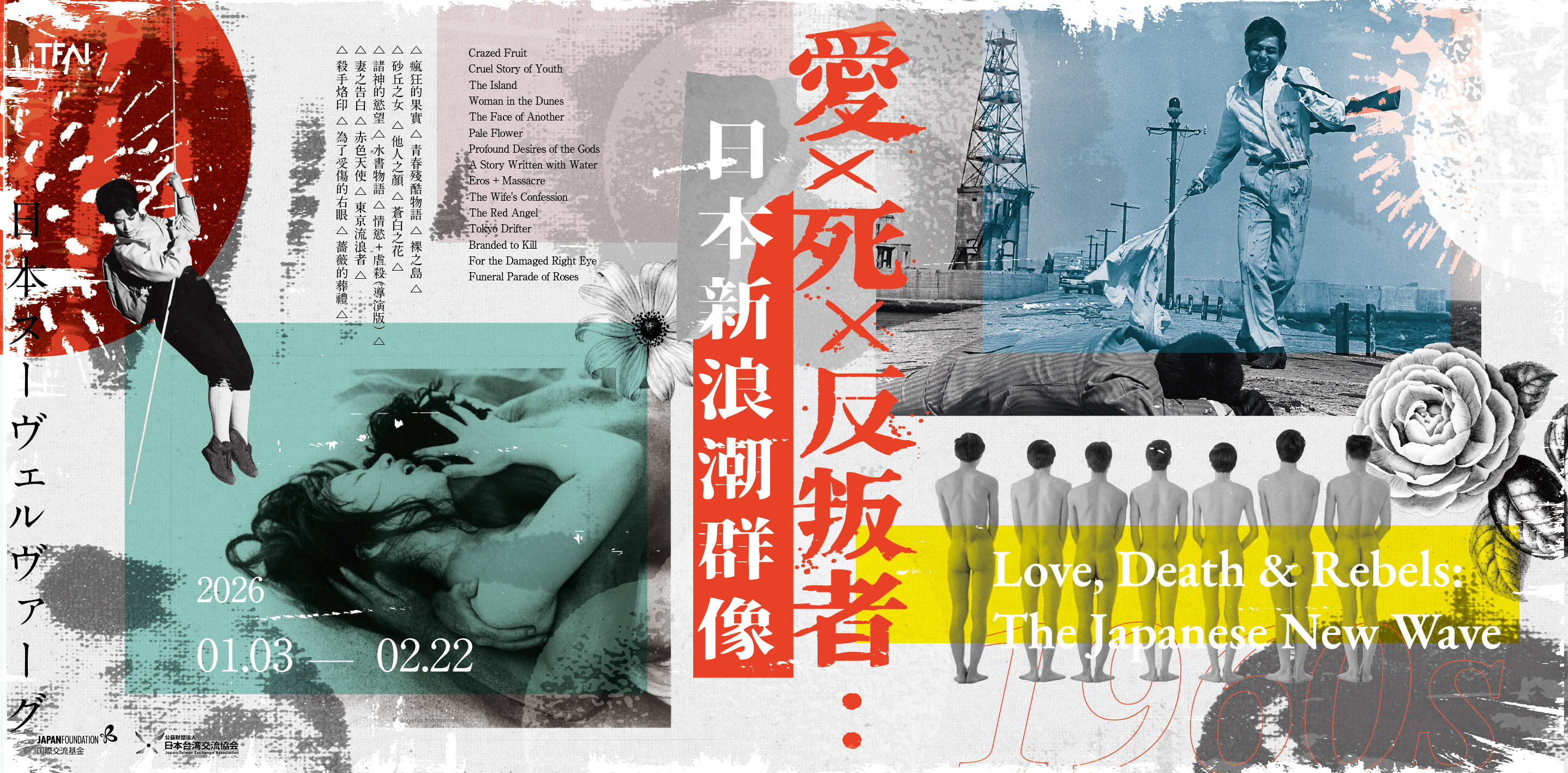
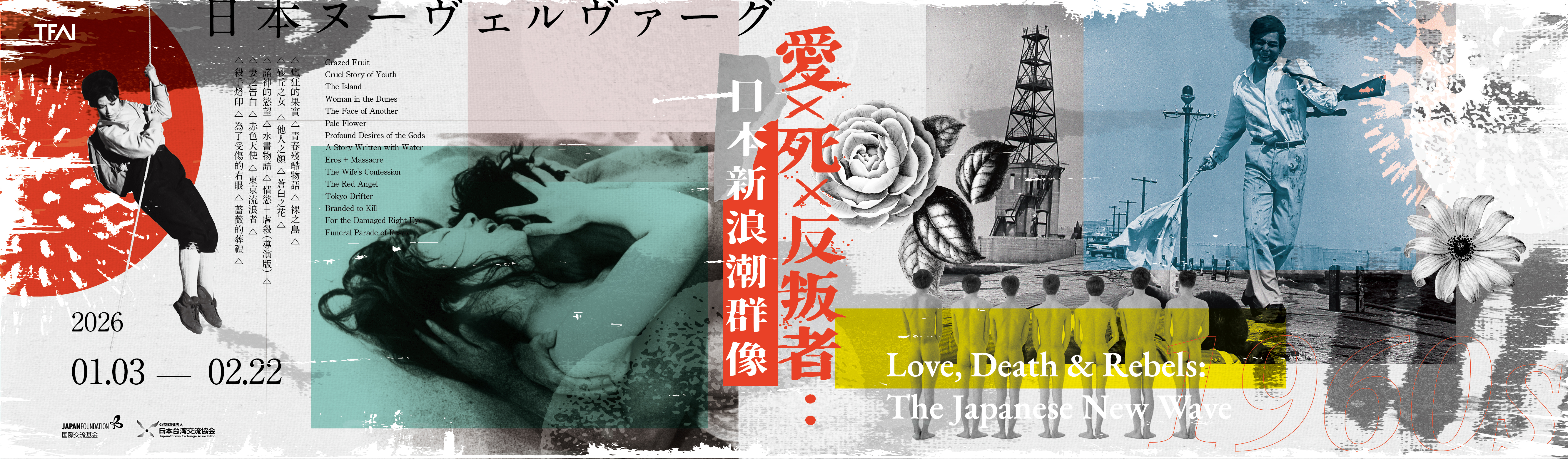
Love, Death & Rebels: The Japanese New Wave
Love, Death & Rebels: The Japanese New Wave
"In the sound of a skirt ripping, and the roar of a motorboat slicing across the sea, I heard the heralding of a new generation of Japanese cinema." — Oshima Nagisa on Crazed Fruit
After WWII, under Allied aid and the Cold War order, Japan's economy revived rapidly. By 1956, the Economic White Paper declared that "the postwar era is already over," a phrase that soon became a cultural slogan announcing Japan's entry into an age of prosperity and modernity. That same year, Nikkatsu adapted two short stories by Ishihara Shintaro, Season of the Sun and Crazed Fruit. With their sun-drenched hedonism marked by speedboats, summer parties, and reckless sex, they captured a new image of rebellious youth. The media labeled this generation the "Sun Tribe," foreshadowing a culture of youth rebellion.
The depiction of decadent youth in Crazed Fruit was reworked a few years later in Oshima's Cruel Story of Youth, which borrowed motifs from the Sun Tribe films but pushed them into the social margins, turning youthful indulgence into political disillusionment and nihilism. His protagonists are not tragic heroes but fractured individuals crushed by the society; their wild, hedonistic acts become acts of resistance born of despair. Oshima was critical of Japan's refusal to acknowledge wartime responsibility and its growing materialism. Riding the fury of the 1960 Anpo protests, Oshima turned cinema into a site of social action.
From Shochiku's Nouvelle Vague to Independent Productions
The label "Japanese New Wave" (Nuberu Bagu), a phrase borrowed from the French Nouvelle Vague, originally described Shochiku's bold promotion of a new generation of directors. The movement began in 1959 with Oshima's debut A Town of Love and Hope. In 1960, he followed with three striking films—Cruel Story of Youth, The Sun's Burial, and Night and Fog in Japan—which shook the Japanese film industry. Fellow directors Yoshida Kiju and Shinoda Masahiro explored similar themes, helping define the Shochiku New Wave.
But Shochiku's attempt to use youth films to attract younger audiences and compete with television soon clashed with the directors' ambitions. When Night and Fog in Japan was abruptly pulled from theaters four days after its release, Oshima terminated his contract in protest. Yoshida resigned in a few years as well, objecting to studio interference. Their departures signaled a broader shift, as many filmmakers broke away from the studios to form independent companies. Supported in part by the Art Theatre Guild (ATG), they created a wave of bold, uncompromising films. In the end, directors from different studios and backgrounds helped forge a movement defined by radical form and political vision.
Sex, Death, and a New Language of Rebellion
The Japanese New Wave of the 1960s frequently embraced eroticism and death. Sex became the final proof of existence against nihilism; death, the ultimate assertion of one's will. Masumura Yasuzo injected fierce individualism in his melodramas about female desires and immorality. Matsumoto Toshio's Funeral Parade of Roses and Yoshida Kiju's A Story Written with Water and Eros + Massacre explore taboo subjects like incest and polyamory through overlapping timelines and experimental narratives, turning erotic imagery into a philosophical inquiry into history and reality.
Imamura Shohei, known for his focus on the underclass and the "lower part of the human body," turned to originary mythology in Profound Desires of the Gods, where the islanders' incestuous acts collide with modern social norms. Shindo Kaneto's The Island and Teshigahara Hiroshi's Woman in the Dunes and The Face of Another also use allegorical settings of isolation to explore human alienation and identity crisis in a collectivist society. Meanwhile, Shinoda Masahiro and Suzuki Seijun's yakuza films subvert genre conventions with adrift anti-heroes, stylized imagery, and a nihilistic undertone. Their yakuza worlds become metaphors for the post-war collapse of Japan's social order, where loyalty falters and individuals drift into uncertainty and cycles of violence.
In a world where conservative institutions remain intact and politics grow increasingly turbulent, the New Wave's critique of power, social norms, and cinematic convention remains vital. This program gathers fifteen landmark works and invites you to revisit a time when filmmakers pushed against the current with uncompromising resolve, using sex and violence to shatter the confines of their era and inspiring later generations to challenge the status quo and forge their own paths.
● The program is supported by
 |
 |