

This year 2026 marks the 70th anniversary of Taiwanese-language cinema, and the Taiwan Film and Audiovisual Institute (TFAI) has launched a year-long program “Formosa Treasure: Taiyupian as World Cinema” featuring a series of events. Meanwhile, to promote the cultural accessibility and foster diversity, equity, and inclusion (DEI), TFAI selected director LEE Hsing’s Good Neighbors (1962), which was restored by TFAI in 2025, to produce the world’s first restored film with Taiwanese-language audio description. This groundbreaking film had its world premiere today (August 12th ). Florence CHAO, an experienced audio description professional, was invited to explain the importance of audio description. Six guide dogs from the Huiguang Guide Dog School also joined the audience in the theater. Through this event, TFAI announced its commitment to the “Project for the Production of Audio Descriptions for Classic Taiwanese Films and the Promotion of Inclusive Access,” inviting more audiences to step into the golden age of Taiwanese-language cinema.
As new movies and drama series are constantly being released, audio description services enable visually impaired individuals who primarily rely on their hearing to enjoy brilliant film and TV works like everyone else. With its mission to promote cultural accessibility, TFAI selected director LEE Hsing’s Taiwanese-language film Good Neighbors as the starting point for initiating the “Project for the Production of Audio Descriptions for Classic Taiwanese Films and the Promotion of Inclusive Access.” Arthur CHU, the Chairperson of TFAI, noted that, “We chose Good Neighbors not only to celebrate the 70th anniversary of the Taiwanese-language films, but also to commemorate the fifth anniversary of director LEE Hsing’s passing, which falls on August 19, just one week later.” He added, “To mark the 70th anniversary of the Taiwanese-language films this year, TFAI invited the Golden Melody Award-winning singer Ricky HSIAO to compose the theme song ‘Let’s Catch a Movie’ for the whole program. We invite all audiences to open their five senses and ‘watch movies with their hearts.’ Audio description services embody this spirit, helping TFAI to achieve our goals of cultural and language accessibility.” Hopefully, the joys and sorrows portrayed in these great works will transcend age and ethnicity, becoming irreplaceable shared memories for all.
LU Mei-li, the Deputy Director-General of the Bureau of Audiovisual and Music Industry Development also attended the event to show her support. She remarked, “The film Good Neighbors is a story about ethnic inclusion. It signifies the spirit of Taiwan, which we hope to pass down through these films. What makes today’s premiere more special is that this is the very first Taiwanese-language film with audio description produced by TFAI, representing its efforts to put into practice our firm belief that all people should have the opportunity to engage with and learn about our culture.” While streaming platforms have introduced audio description services in recent years, TFAI is also committed to meeting the diverse needs of audiences, in addition to its persistent dedication to the digital restoration of classic films. By providing accessible audiovisual content to fulfill a vision of cultural inclusion, TFAI has marked an important milestone in the development of Taiwanese film restoration and audio description services.
TFAI has specially produced two versions of audio description for Good Neighbors, one in Taiwanese and the other in Mandarin. The bilingual versions echo a scene in the film, in which Dr. Huang, a Western-trained physician from a native Taiwanese family, and Dr. Chen, a Chinese medicine practitioner from a mainland Chinese immigrant family, live next door to each other while their families communicate in different languages. This lively and multilingual comedy full of humorous exchanges highlights the importance of professional audio description. To avoid overlapping with the film’s original dialogue and sound, audio descriptions must be inserted during appropriate pauses to convey the complicated visual images within a very limited amount of time. At the world premiere, Ms. CHAO explained that audio description is essentially a form of translation, “Except that our service is particularly tailored for people with visual impairments.” Interestingly, audio description also provides audiences with additional information that may otherwise go unnoticed when watching a film. In Good Neighbors, for example, the audio description specifically identifies Rose Marie, a well-known Western-style restaurant in Taipei during the 1950s and 1960s. In another scene, when the characters go on a date at the zoo, the audio description identifies the filming location as the former Taipei Zoo at Yuanshan and notes that two Asian elephants appearing on the screen are Lin Wang and Ma Lan. These supplementary details are like surprisingly cinematic Easter eggs for audiences.
Following Good Neighbors, TFAI will continue to produce audio descriptions for classic Taiwanese films. Through the Project which is funded by the Bureau of Audiovisual and Music Industry Development under the Ministry of Culture, TFAI plans to release audio description versions of director CHEN Yu-hsun’s Tropical Fish (1995), as well as Back to Anping Harbor (1972), Dragon Inn (1967), The Sandwich Man (1983), and The Wedding Banquet (1993). TFAI will also make audio description equipment available for public use. Audiences interested in using the service are welcome to inquire at the reception desk on the first floor before the screening.

➤ TFAI selected director LEE Hsing’s Good Neighbors to produce the world’s first film with Taiwanese-language audio description. Back row from left: CHEN Chuan-huei, the producer of disability-focused TV shows from Public Television Service; SU, Chia-yu, the family representative of director LEE Hsing; DU Li-chin, the Executive Director of TFAI; LU Mei-li, the Deputy Director-General of the Bureau of Audiovisual and Music Industry Development; Arthur CHU, the Chairperson of TFAI; Florence CHAO, the instructor of audio description services; YANG Sheng-hong, the President of the Inclusive Freedom Association; HUANG Yu-siang, the pianist and the winner of the Golden Melody Award for Best Composer; TAN Hong-hui, the CEO of the Li Kang Khioh Taiwanese Cultural and Educational Foundation. (Courtesy of TFAI)
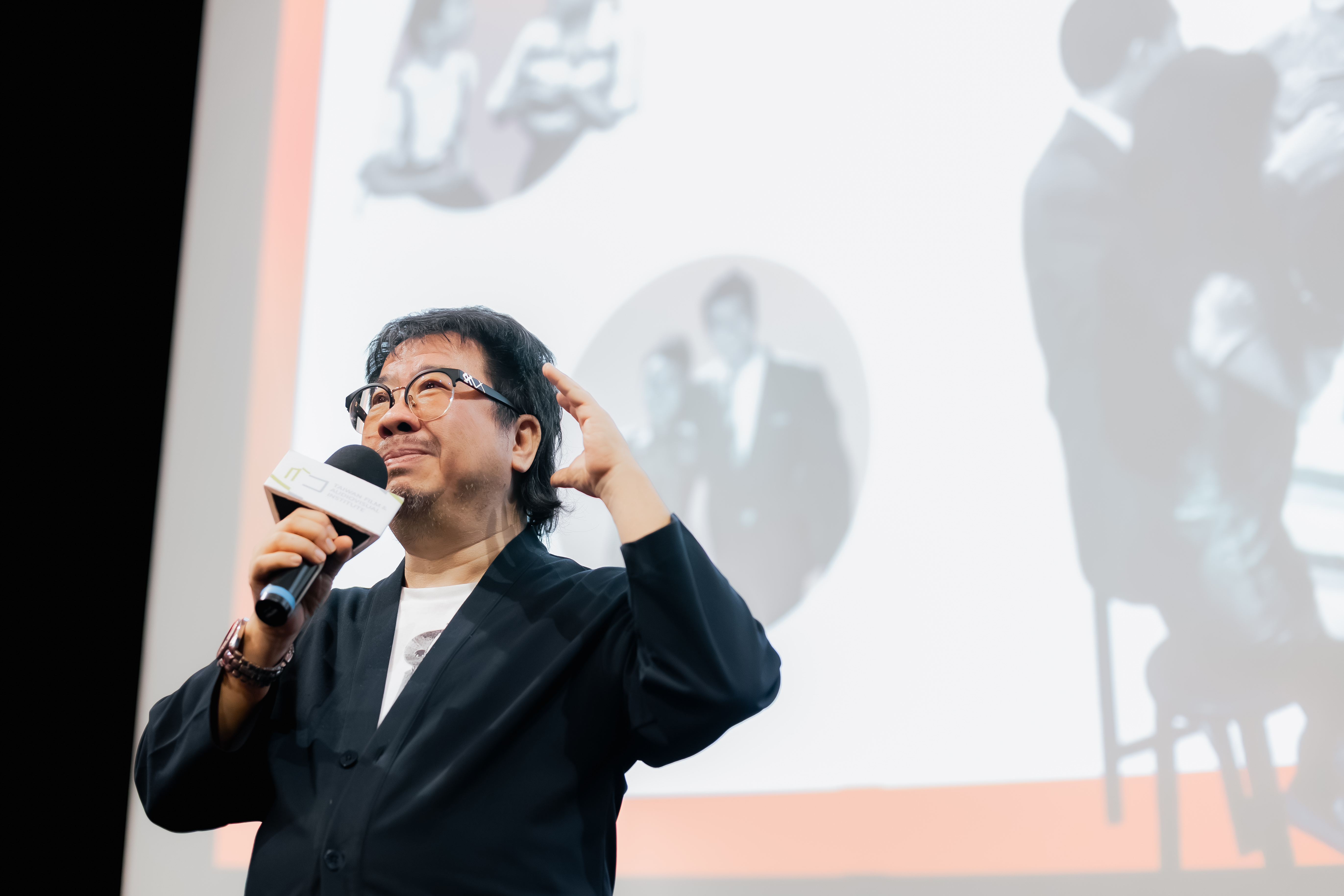
➤ Arthur CHU, the Chairperson of TFAI, noted that, “TFAI invites audiences to open their five senses and ‘watch movies with their hearts.’ Audio description services embody this spirit, helping TFAI to achieve our goals of cultural and language accessibility.” (Courtesy of TFAI)
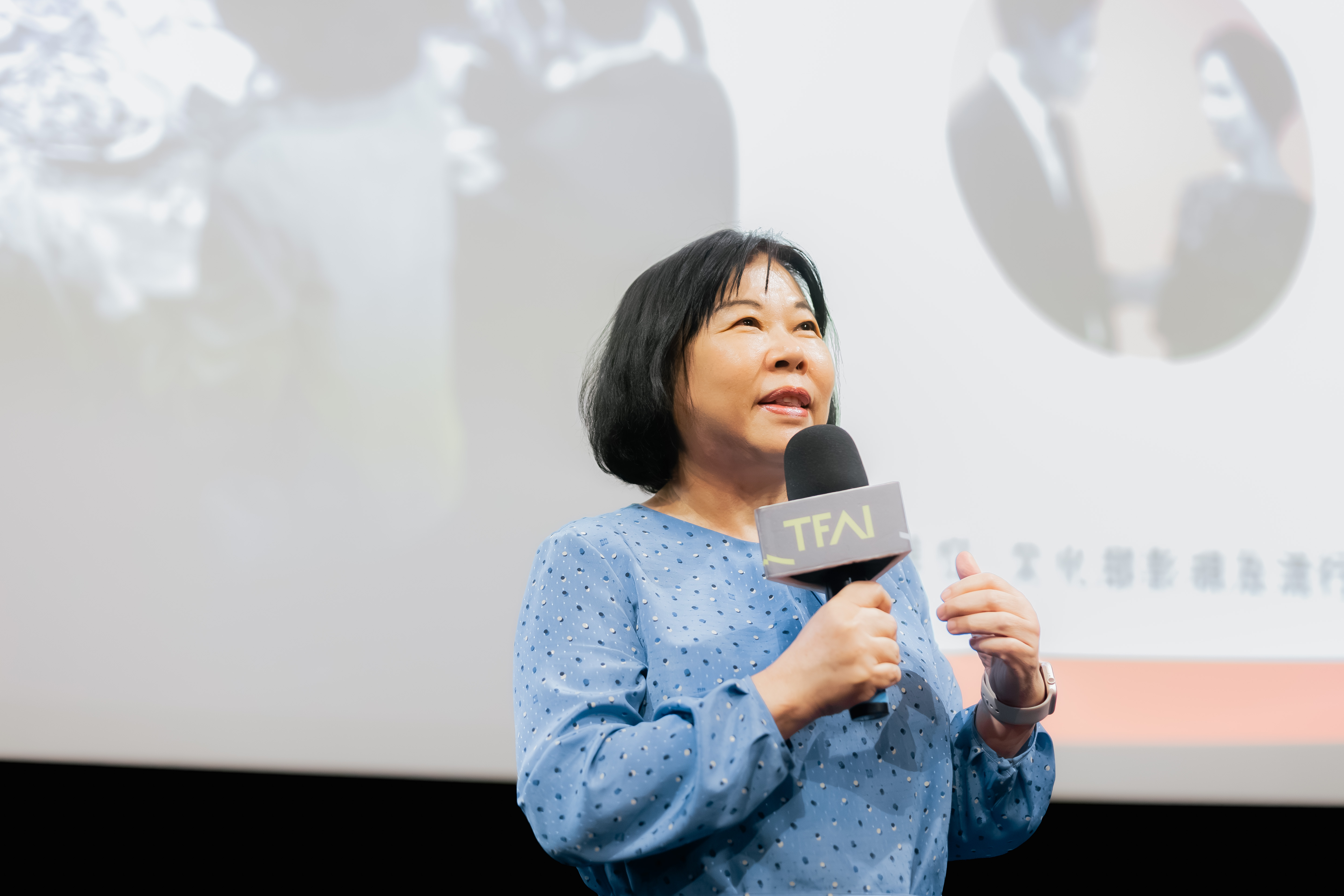
➤ LU Mei-li, the Deputy Director-General of the Bureau of Audiovisual and Music Industry Development remarked that, “We firmly believe that all people have the opportunity to engage with and learn about our culture.” (Courtesy of TFAI)

➤Florence CHAO, the audio description instructor explained the importance of audio description in the theater. (Courtesy of TFAI)
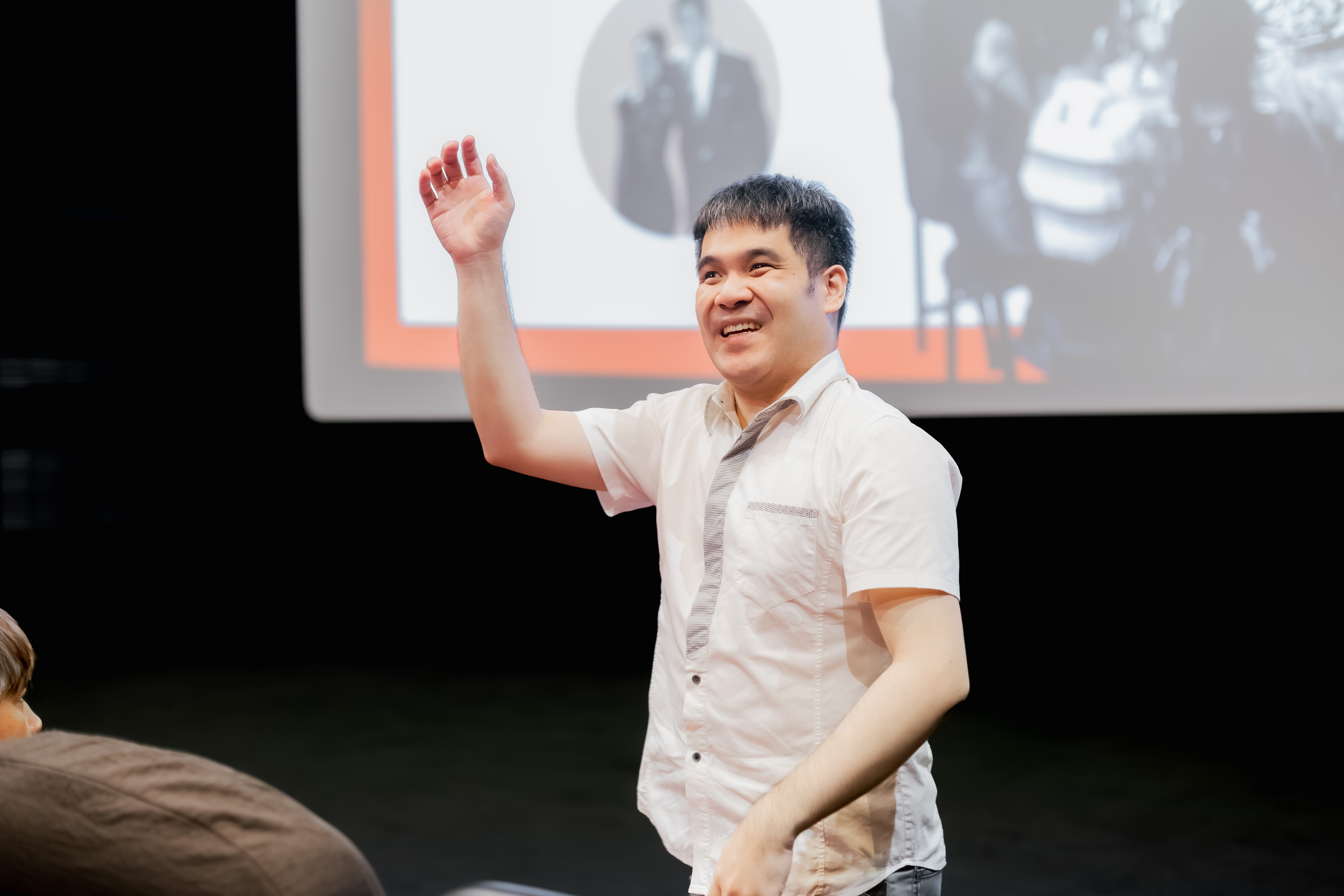
➤ HUANG Yu-siang, the pianist and the winner of the Golden Melody Award for Best Composer, also showed up to support audio description services. (Courtesy of TFAI)

➤ Good Neighbors, the world’s first film with Taiwanese-language audio description, had its premiere. Six guide dogs from the Huiguang Guide Dog School also joined the audience in the theater. (Courtesy of TFAI)
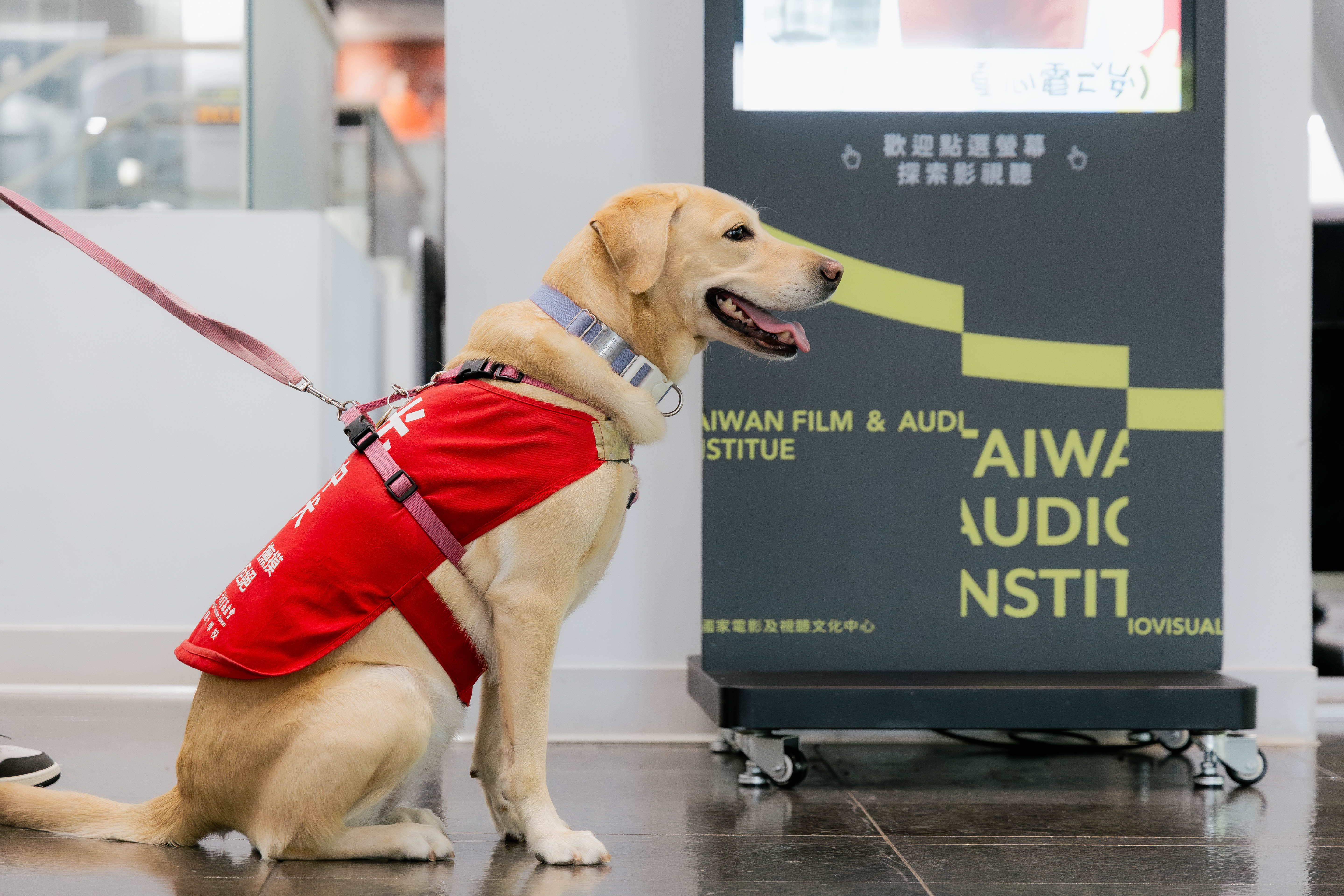
➤ TFAI announced its commitment to the “Project for the Production of Audio Descriptions for Classic Taiwanese Films and the Promotion of Inclusive Access” to create an inclusive venue where everyone can enjoy cultural activities together. (Courtesy of TFAI)