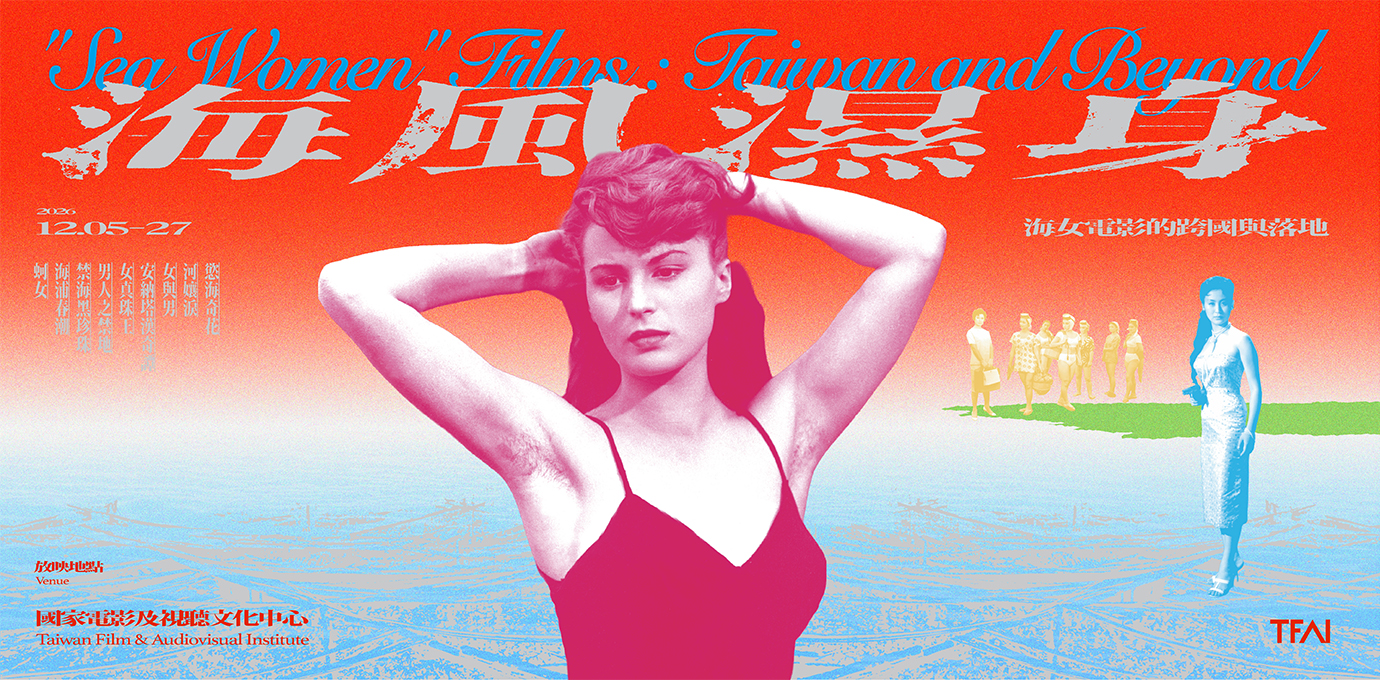
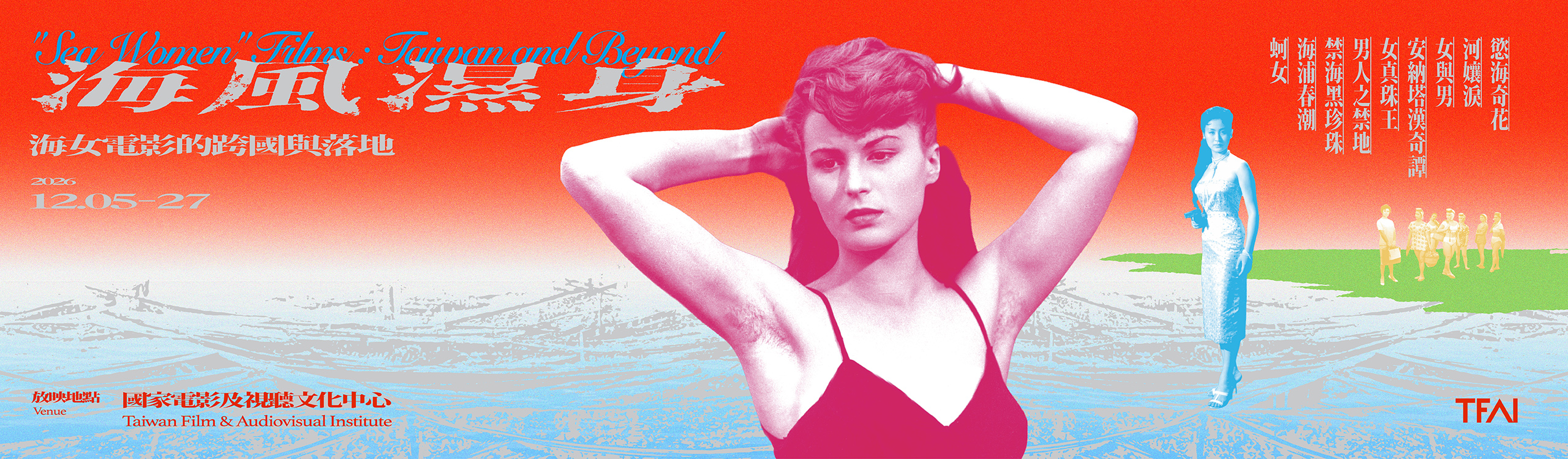
"Sea Women" Films: Taiwan and Beyond
2026.12.5 –12.27
Curator|Chu Meng-chin
Tracing the Genealogy of "Sea Women" Films in Taiwan
What exactly is a "Sea Women" film? Had you asked Taiwanese audiences in the mid-to-late 1950s, the answer might have been European cinema rather than Japanese films. In this context, a "sea woman" meant more than a Japanese ama, a woman who dives for shellfish. The term also evoked sensual young women working in European fishing villages, rice fields, salt pans, and coastal communities, their bodies soaked through by the labor of making a living.
The first film released in Taiwan with "Sea Women" in its Chinese title was a European melodrama about a fisherwoman. Taiwanese newspapers of the era linked European films with similar narratives and imagery, promoting them as "sister films" or variations on the same theme. When Japanese ama films arrived, their advertisements and reviews also drew comparisons with specific European titles. Through importation, promotion, and framing, these stories of sensual working women and romance by the sea forged a distinctive genealogy of "Sea Women" cinema in Taiwan.
This program traces how the Taiwanese market shaped this genre through nine films from Europe, Japan, and Taiwan. Though not necessarily considered "Sea Women" films in their countries of origin, these works became interconnected through their circulation and reception in Taiwan. Examining their original contexts and how Taiwan's audiences understood them reveals how the local industry absorbed and adapted foreign influences to develop its own "Sea Women" cinema, which in turn informed the subsequent "Healthy Realism" film movement.
Europe: Cinematic Models of Women at Work, Soaked to the Skin
Italian Neorealism, now regarded as a landmark in film history, soon lost ground in its home market amid commercial indifference, opposition from religious and political circles, and the growing influence of American capital. In response, elements of popular genre cinema and star appeal were incorporated into its legacy, giving rise to what became known as Rosy Neorealism. In Bitter Rice, Silvana Mangano departed from the fragile feminine ideal of earlier screen heroines. Her voluptuous, strong body shown in scenes of physical labor made her an international sensation and helped establish the defining imagery and narrative framework of "Sea Women" films.
In Taiwan, Woman of the River was advertised as "a sister film to Bitter Rice." Starring Sophia Loren, it retained the allure of the female star while relegating Neorealism's social concerns to the background. Its heightened passions and romantic entanglements proved more appealing to Taiwanese audiences, becoming a key model for later Mandarin and Taiwanese-language "Sea Women" films. Across Europe, filmmakers also adapted the same formula of romance centered on working-class women in soaked clothes. The European co-production Sand, Love and Salt reworked Italian cinematic sensibilities into a youthful comedy and was likewise embraced in Taiwan as part of the "Sea Women" canon.
Japan: Where Ama Films Meet the Erotic Genre
In late 1955, Shintoho's president Okura Mitsugu proposed a production strategy focused on erotic, grotesque, and genre-bending films. The studio's Revenge of the Pearl Queen combined urban crime and the narrative of lust and survival on a deserted island from Anatahan. Its star, Maeda Michiko, became famous for appearing bare-backed on screen. Though unrelated to "Sea Women" films in plot, its pearl-diving scenes echoed the labor of ama divers, linking Maeda to the genre and eventually to Japan-Taiwan co-productions.
Early Japanese ama films were mainly cultural documentaries or arthouse romances. However, with the influx of sensual Western actresses and the rise of Japan's own "flesh actresses" (nikutai joyū), the wave of eroticism in Japanese cinema became unstoppable. Shochiku, traditionally known for literary melodramas, aimed for an Italian-style "bright eroticism" with Underwater Romance, marketing lead actress Izumi Kyoko as "Japan's Mangano." Not to be outdone, Shintoho mixed the Sea Women archetype with crime, mystery, and ghost stories. The result was Girl Divers of Spook Mansion, a film integrating underwater cinematography, eroticism, mystery, and horror. It became a summer box-office hit that reshaped Taiwanese audiences' understanding of "Sea Women" films.
Taiwan: Transnational Models Take Root and Transform
From early European imports to the later dominance of Japanese cinema, Taiwan's spectrum of transnational Sea Women films expanded from social romances to boldly explicit genre mashups, providing multiple possibilities for local productions. Screened in this program, Spring Tide Rises reveals ideological tendencies that predated Healthy Realism, while accommodating bold expressions of bodily desire and marking a milestone in the history of underwater cinematography in Taiwan. Likewise, situating Oyster Girl, the seminal "Healthy Realism" film long debated for its ideological underpinnings, within this transnational genealogy offers a fresh perspective on its relationship with the Sea Women cinema.
Although not a strictly defined genre, these Sea Women films share commonalities forged through transnational circulation and local audience reception. As these films reached Taiwan, their imagery and narratives were reshaped by censorship, production technology, and state ideology, ultimately giving rise to a distinctively local iteration of Sea Women cinema.