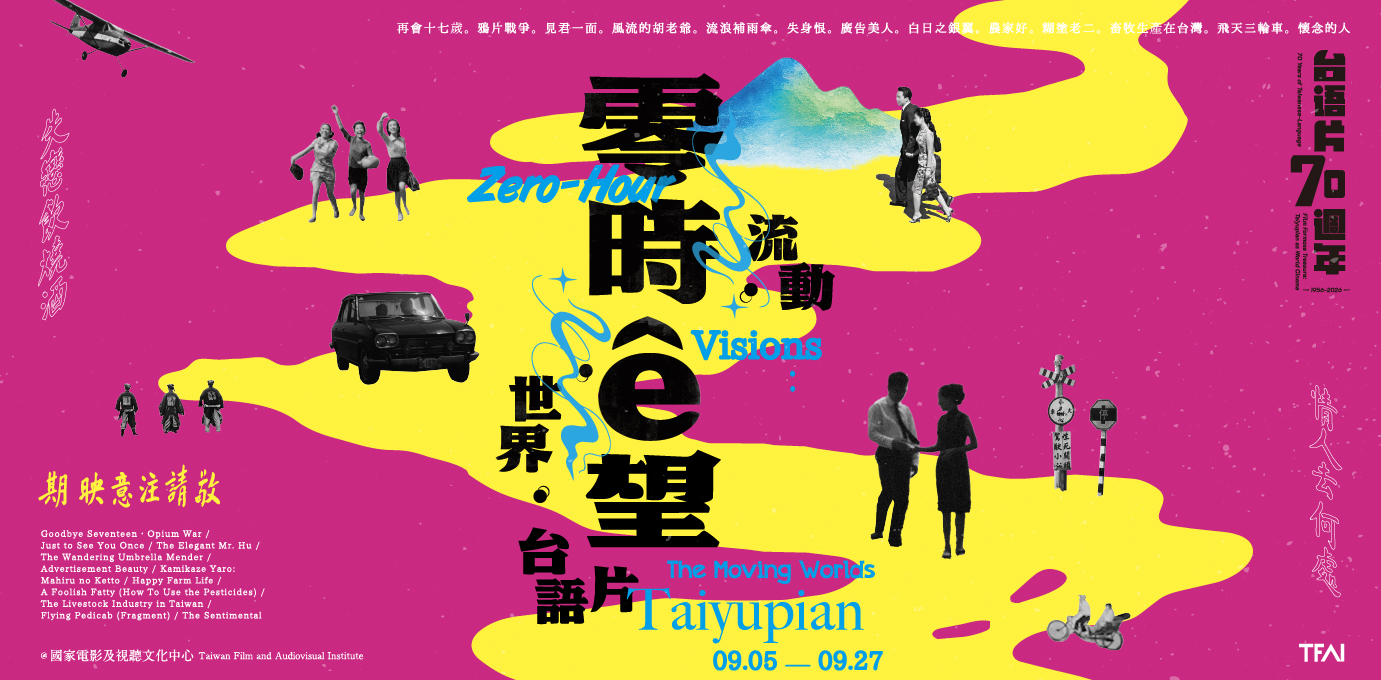
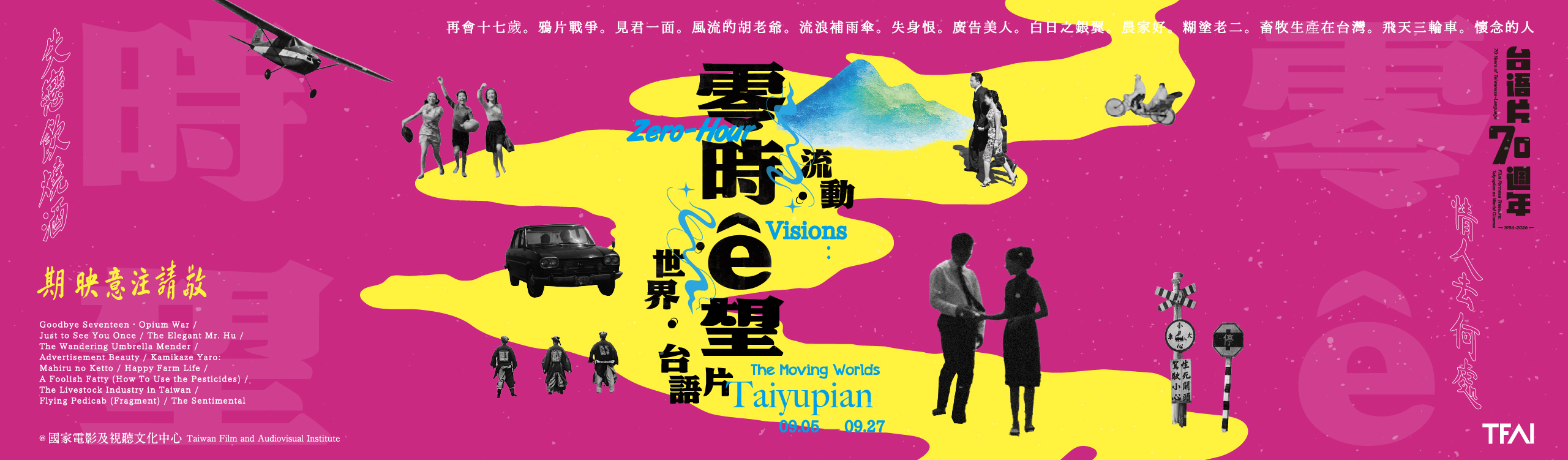
Zero-Hour Visions: The Moving Worlds of Taiyupian
Zero Hour: Another Way of Looking Back
After World War II, Taiwan entered a period of transition. Mandarin policy was not yet fully implemented, Taiwanese remained widely used, and the film industry lacked capital and stable infrastructure. Film stock, equipment, and processing depended on outside supply even as demand rapidly emerged. We use "zero hour" for this moment, when rules were still unwritten and film production had not been confined to a single path.
Within this zero hour, Taiwanese-language cinema (Taiyupian) used limited resources to bring varied stories to the screen. Through their own language, audiences encountered modern life and a wider world. "Zero-Hour Visions" names this act of looking and dreaming amid an unsettled order. Seventy years later, Taiyupian remains obscured by impressions of improvisation, crudity, and obsolescence.
What survives includes films, fragments, trailers, and versions in different languages. Once reassembled, and juxtaposed, their identities become uncertain and familiar assumptions loosen. A contemporary "zero hour" emerges when inherited understandings no longer explain what lies before us. Following the Taiwanese term bāng—with its overlapping senses of looking, dreaming, and longing—this program revisits Taiyupian and traces relations obscured by established narratives.
Seeing Worlds in Motion
Taiyupian was produced and circulated through the movement of people, media, and technology. Opera performers, radio singers, foreign filmmakers from elsewhere, theaters, and the recording industry intersected, while stories and performances traveled across regions and media. The Sentimental, directed by Yuasa Namio and starring singer Jin Mei, brought cross-border talent into Taiwan's production environment. Goodbye Seventeen combines Taiwanese dialogue, Mandarin songs, and Western popular music; its pools, dance halls, and cafés carry youthful restlessness and desire, resonating with contemporaneous New Wave cinema elsewhere.
Taiyupian also transformed diverse genres. Opium War reworked a Japanese wartime narrative, made world history speak in Taiwanese, and inserted it into Taiwan's postwar anti-communist context. Just to See You Once turns Gothic romance into a family nightmare. The Elegant Mr. Hu uses Ai-A-Tsai's comic body and a master-servant reversal to unsettle class order. The Wandering Umbrella Mender builds a migrant community from debt, labor, and mutual aid, while The Humiliated turns three women's journey to Taipei into a landscape of work, money, bodies, and gendered power. With limited budgets and technology, these films imagined elsewhere while registering their era's desires and anxieties.
Seeing Borders Shift
Taiyupian and Hong Kong Amoy-dialect cinema were distinct, yet linguistic proximity and overlapping markets connected them within Southeast Asian networks. Peach Blossom Village, financed by Li Linqiu and made in Hong Kong, reflects Amoy cinema's turn toward stars, song, and urban consumption. Advertisement Beauty integrates modern songs and advertising, while Kamikaze Yaro: Mahiru no Ketto (Kamikaze Man: Duel at Noon) brought Bai Lan and several Taiyupian actors into a Taiwan–Japan production.
"Assembling Taiyu" juxtaposes agricultural educational films with fragments from Flying Pedicab to ask how Taiyupian emerged within postwar visual regimes. The surviving version of The Sentimental is in Mandarin, while Taiyu survives only in the trailer. When a Taiyupian film no longer speaks Taiyu, what still defines its identity and memory?
Longing through Absence
Seventy years later, we encounter images and sounds shaped by loss, rediscovery, preservation, and reassembly. Today's "looking" is also longing born from absence: a hope for forms of viewing not yet established, and for films to generate new relations through their joins and fractures.
In those years audiences sat looking toward the screen, and Taiyupian looked toward the world. Today we look toward Taiyupian again—a world in which emotions and memories continue to speak and move.
Corrections and Updates Notice
[Film Rating Revision] Updated on September 3rd, 2026
• Goodbye Seventeen is rated PG12
• The Sentimental is rated PG