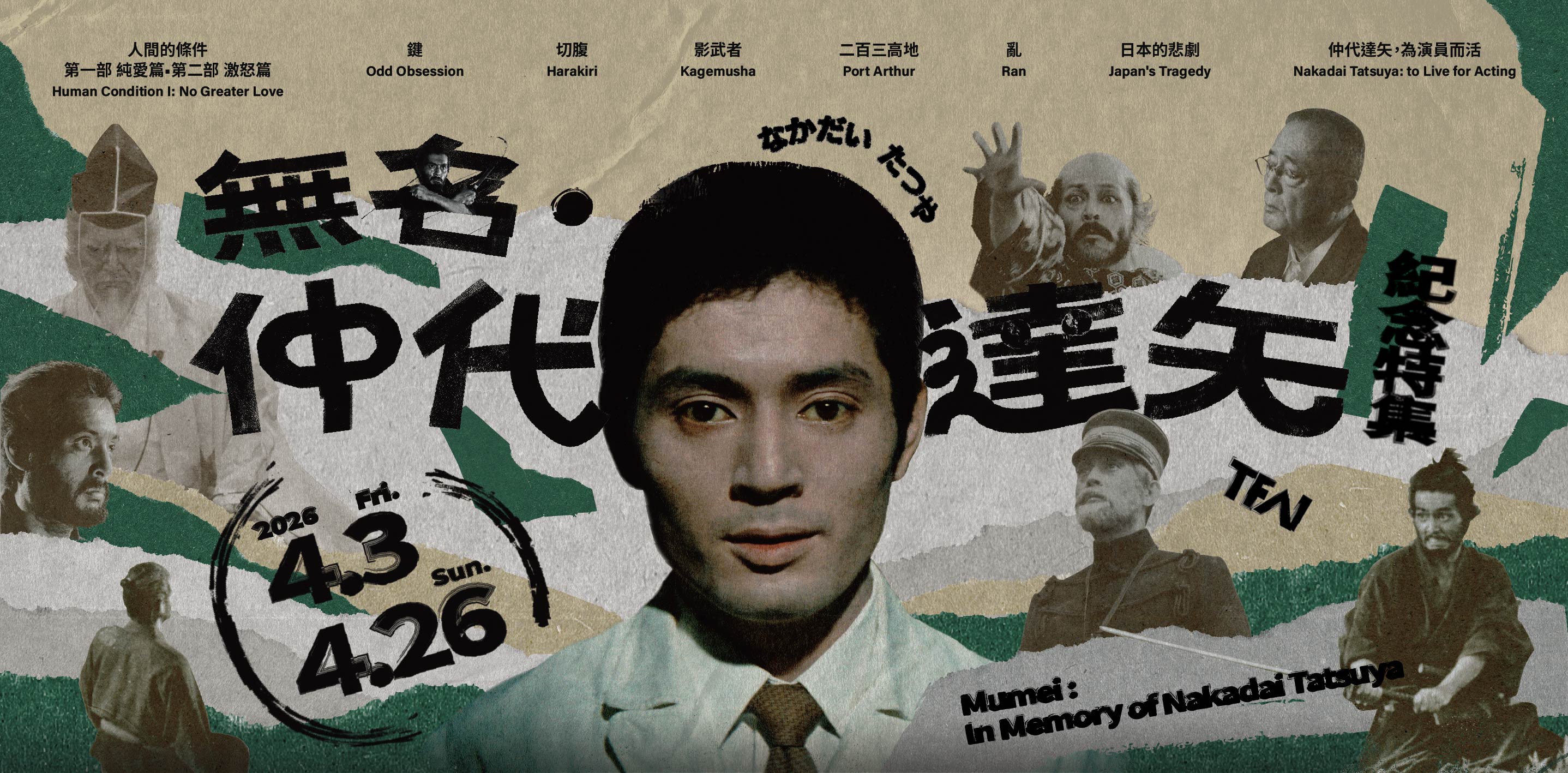
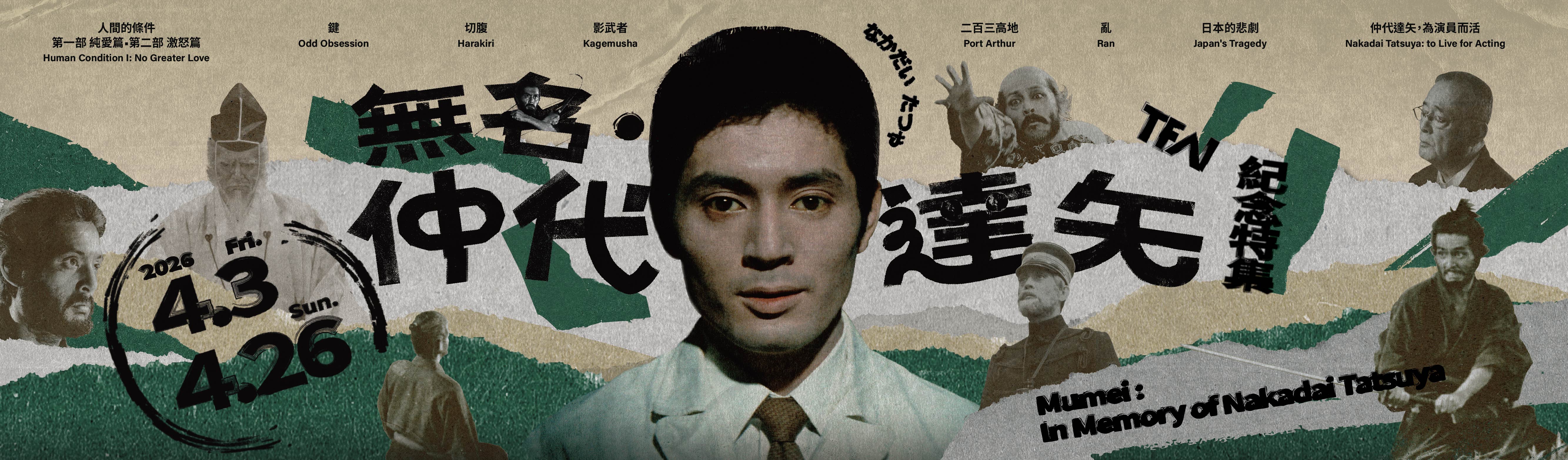
Mumei: In Memory of Nakadai Tatsuya
Mumei: In Memory of Nakadai Tatsuya
The seven-decade career of Nakadai Tatsuya (1932–2025) is, in itself, half the history of Japanese cinema. Spanning the Golden Age to the contemporary era of the Japanese cinema, from Showa to Reiwa, he worked with masters including Kurosawa Akira, Kobayashi Masaki, Ichikawa Kon, Okamoto Kihachi, and Gosha Hideo, Nakadai helped shape modern Japanese cinema. The actor's singular style and extraordinary range became a touchstone for generations of actors.
With his wife Miyazaki Yasuko, Nakadai founded the actor-training institute Mumeijuku, under the philosophy—Mumei, or “never forgetting one's beginnings in obscurity,” which defined both his art and life.
Initiated before his passing, this retrospective presents rarely screened works of Nakadai Tatsuya in Taiwan, aiming to honor Nakadai's spirit through key works that traced his evolving screen presence.
The Bondless
Debuted in 1956 during the studio system's golden age, Nakadai refused exclusive contracts and instead chose to work independently across studios while maintaining an active stage career. This freedom expanded his artistic range and forged a dynamic exchange between theatre and film.
The Selfless
In Kobayashi Masaki's The Human Condition I: No Greater Love, Nakadai portrays a young idealist torn between conviction and reality. At just twenty-nine, he drastically adapts his voice in Harakiri to embody the quiet desolation of an old ronin; Ichikawa Kon's Odd Obsession reveals his restrained yet simmering intensity. Under Kurosawa Akira, Nakadai assumes dual identities in Kagemusha and descends into tragic madness in Ran; in Port Arthur and Japanese's Tragedy, his disciplined minimalism leaves a profound impression.
The Nameless
Like forces of the wind, forest, fire, and mountain, shifting between swiftness, fierceness, or serenity, Nakadai embodied characters of strikingly different temperaments before ultimately returning to simplicity. In the documentary Nakadai Tatsuya: to Live for Acting, he leaves behind a portrait of unadorned authenticity.
Nakadai approached every role with humility, memorizing his co-actors' lines and treating each performance as a new beginning. Regardless of the harsh conditions and hours of reshooting a brief appearance in Seven Samurai, his discipline earned him lasting respect. The characters Nakadai created often eclipsed the man himself—a testament to his credo: Mumei.
Defining the Golden Age of Japanese cinema as a free agent, Nakadai established an unsurpassed benchmark for future actors. Though he has departed from life's stage, his "shougai gen-eki" spirit—active for life—will continue to inspire.