"70 Years of Taiwanese-Language" Film Salute to the Pioneers of Taiwanese-Language Cinema (Taiyupian): Ho Chi-ming and Huaxing Movie Studio
1956 marked a widely cited starting point in periodization of Taiwanese-language cinema (Taiyupian). With Xue Pinggui and Wang Baochuan—a collaboration between Ho Chi-ming (1916–1994) and the Gongle Troupe, a Taiwanese opera (Gezai opera / Gezaixi) troupe—Taiyupian saw a surge in production. The subsequent founding of the Huaxing Movie Studio in Taichung—Taiwan’s first private film studio—symbolized a pivotal shift in Taiwan’s production landscape. Seventy years later, this program returns to Ho Chi-ming and Huaxing not simply as a commemorative gesture, but as an entry point to examine how Taiyupian responded to market demands with limited resources and the crucial role it played in the formative years of Taiwan’s film industry.
The significance of Ho Chi-ming and Huaxing lies, first, in the collective memory preserved within rare surviving footage, and second, in the professional working arrangements established under tight technical constraints and market pressures—characterized by stable crews, clearer divisions of labor, and equipment procurement. From this perspective, Taiyupian history is more than a sequence of titles; it is a negotiated production system shaped by the constant push and pull between exhibition conditions, technology, and performance traditions. By maintaining this system and cultivating talent under limited conditions, these pioneers laid a visible foundation for the Taiwanese film industry.
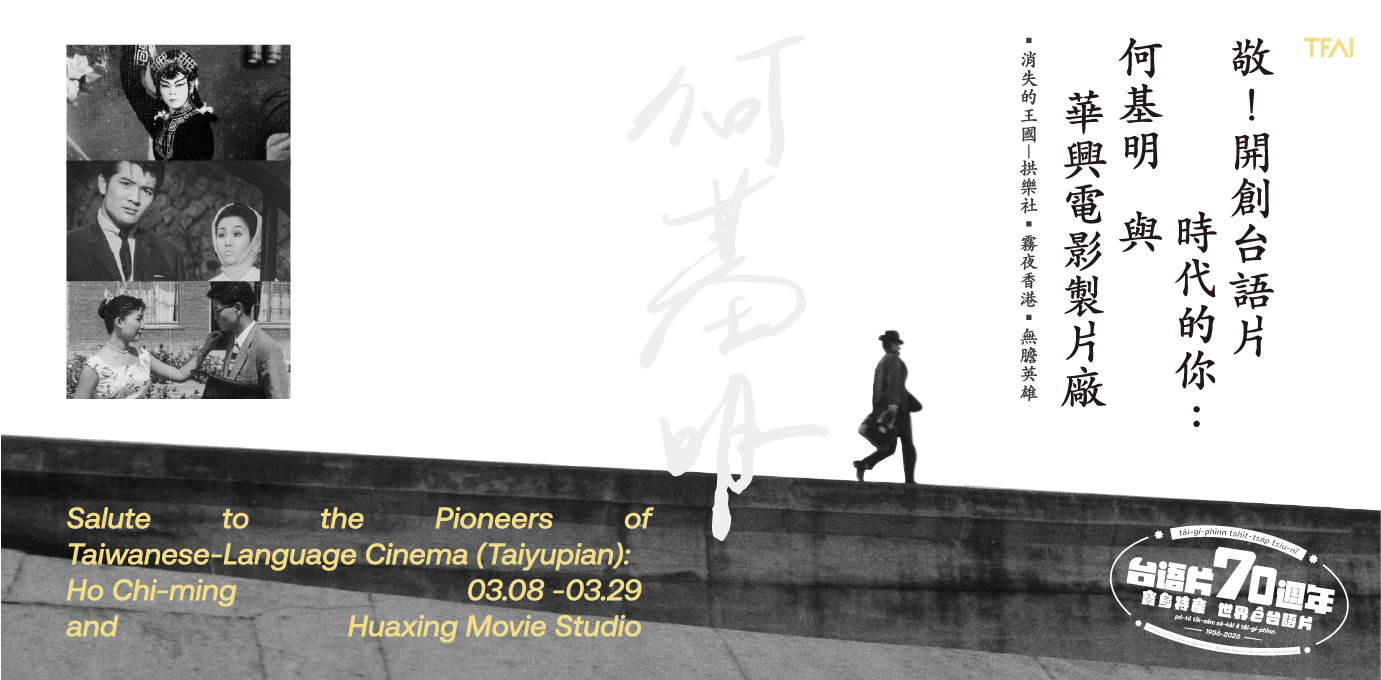
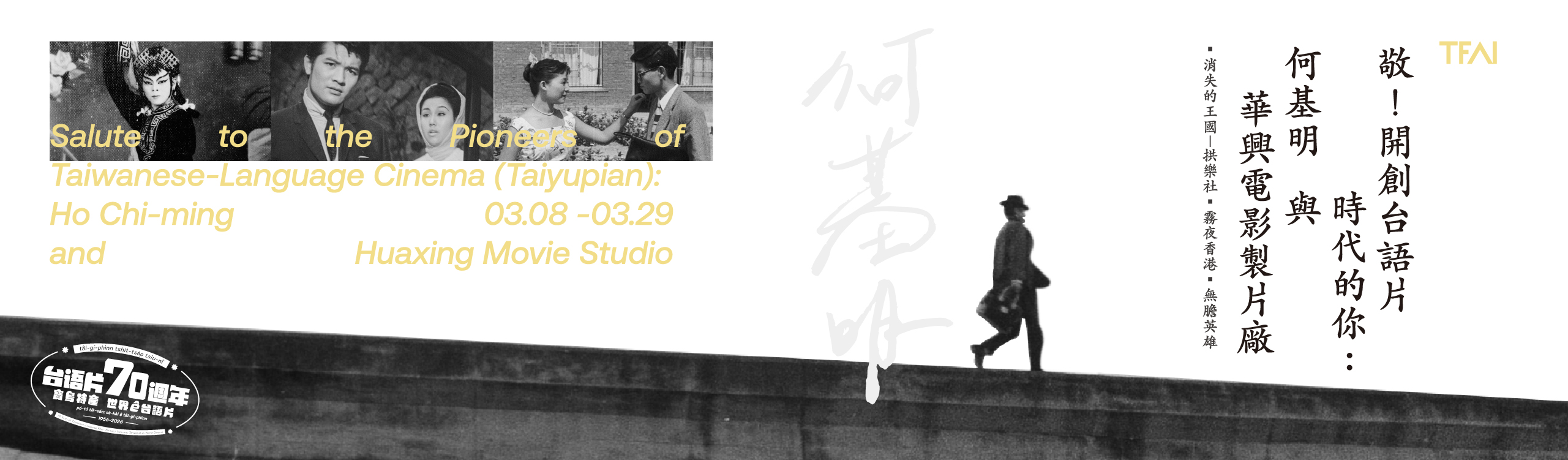
Given the limited number of extant works, we present three films as period slices for observation: The Cowardly Hero (1958) links technical ambition to popular taste through widescreen spectacle; Misty Night in Hong Kong (1967), which is released under a Taiwan-based production credit and made by Huaxing on commission, highlights Ho Chi-ming’s cross-regional collaboration with Japanese partners and The Lost Kingdom (1999) traces the translation from stage to screen, mapping the roles of voice, bodily technique, and troupe-based knowledge within the cultural substrate of Taiyupian.
Furthermore, as the original Taiyu soundtrack of Xue Pinggui and Wang Baochuan remains missing, to address the loss of audiovisual materials, we present a lecture-performance, “Re-drawing the Soundscape: Tracing the Lost Taiyu Soundtrack of Xue Pinggui and Wang Baochuan.” By utilizing surviving scripts, recordings, and musical scores, we reimagine lost sounds in the absence of a complete archive. We invite you to watch—and also to listen—to catch a glimpse of the unique posture of Taiyupian as it was shaped by the multifaceted forces of market, technology, and tradition.