
Set during the Japanese colonial era, Yang Shuangzi's International Booker Prize winning novel Taiwan Travelogue follows a culinary and railway journey across Taiwan to explore profound dialectics of Taiwan's colonial history. To mark the National Heritage Day, which falls on the third weekend of September this year, the Taiwan Film and Audiovisual Institute (TFAI) unveiled a series of videos titled “Taiwan's Railways During the Japanese Colonial Period” on its official YouTube channel. The historical context and themes explored in these videos perfectly echo those of Taiwan Travelogue, while offering a rare and fascinating glimpse into Taiwan's railways under Japanese rule.
In line with its Open Access policy that aims to promote public access, TFAI has been gradually releasing precious audiovisual archives from its collection. To coincide with the National Heritage Day to promote Taiwan's tangible cultural heritage, this online video exhibition uses “trains” and “railways” as key themes to showcase documentary footage of Taiwan during the Japanese colonial era. The four black-and-white silent films, each less than ten minutes long, provide modern audiences with a lively picture of Taiwan's diverse landscapes and scenic spots, as well as the railway culture in the last century.
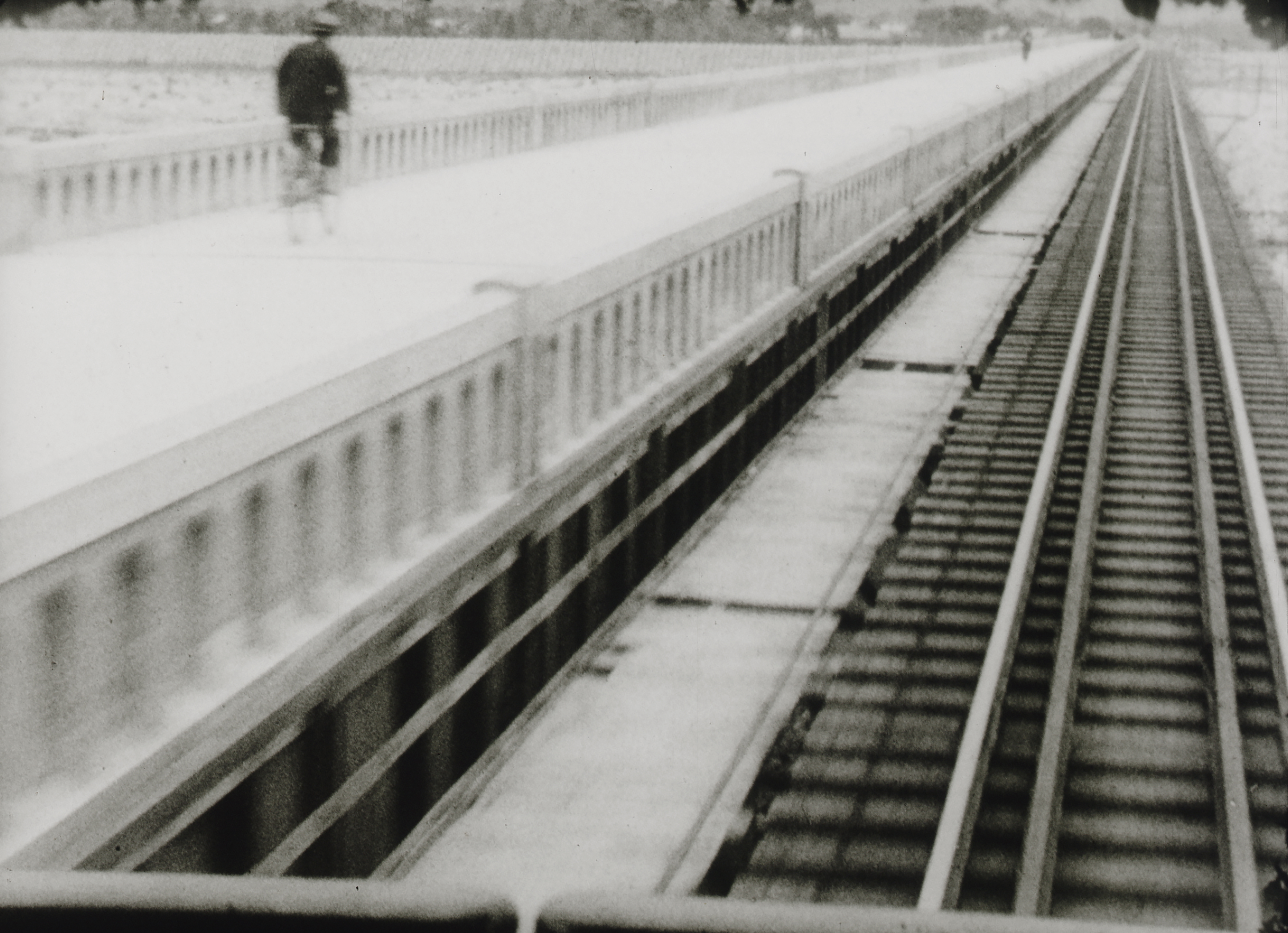
Outside the Train Window (c. 1935, filmed by the Railway Department of the Governor-General of Taiwan) features the historic Da'an River Bridge in Taichung City and the Dajia Tunnel, which was then the only railway tunnel beneath a river in Taiwan. A Pleasant Journey (c. 1936, filmed by Taiwan Travel Club) captures two travelers waiting for their friend in front of Tainan Railway Station. This film follows their journey from having their tickets checked to boarding the train. It documents the historic scenes of the sleek C55-class steam locomotive, an engine driver tossing and catching the electronic token, and track workers using pickaxes to maintain the rails. Travel by Rail (c. 1937, photographer unknown) captures the Alishan Forest Railway boarding point, the long Zhuoshui River Railway Bridge, and the Xinying Sugar Factory on the vast Jianan Plain. The final segment “A Trip to the Beach” depicts the delight of travelers heading to a seaside resort by rail. Even through the screen, viewers can sense the excitement and joyful atmosphere inside the train cars. Scenic Taiwan (c. 1937, photographer unknown) even features a sequence in which members of the Railway Department’s Military Canine Association send military dogs to the front lines, reflecting the historical context of the Marco Polo Bridge Incident which had just erupted at the time of filming. These precious images are sure to delight not only history buffs and railway enthusiasts, but also dog lovers. Interspersed throughout the film are intertitles such as “racing along the coastline in the cool breeze,” “not forgetting the hardworking railway workers behind the scenes,” and “an idyllic day-trip destination,” vividly depicting the development of Taiwan’s railway system and this island nation’s charming tourist atmosphere.
Issue 208 of the Film Appreciation Journal features a special project titled “Outside the Train Window—A Collection of Footage of Taiwan’s Railways During the Japanese Colonial Period,” inviting cultural and historical experts to analyze the historical context and social realities of the time through the footage and present their preliminary research findings. At that time, Taiwan was under Japanese colonial rule. As symbols of modernization, these railway films served not only to promote tourism, but also to showcase local produce and infrastructure, including new stations, routes, and train models, through the ever-changing scenery outside the train windows. Plus, they document the various tasks involved in maintaining railway operations. The colonial authorities’ propagandistic intentions were therefore evident. The opening of Travel by Rail also features two newsreel segments: the triumphant return of the Japanese reconnaissance aircraft “Kamikaze” (Divine Wind) at Taipei Airport and the swimming competition between Taiwan and the Philippines, highlighting Japan's industrial strength and diplomatic achievements at the time.
Following last year's release of Formosa, the earliest documentary about Taiwan, TFAI has now released this series of videos about Taiwan's railways during the Japanese Colonial Period. Footage from ninety years ago continues to bring surprises. Du Li-chin, Executive Director of TFAI, stated, “Over the next five years, TFAI will carry out its public mission based on three core objectives—'Centering Taiwan,’ ‘Archiving Time,’ and ‘Accessing Memory’—with Open Access project as a concrete manifestation of this commitment. As we view these four railway films made between 1935 and 1937, we are required to confront the historical context in which they were made. By that time, Japan had already ruled Taiwan for forty years, and in 1935, the Taiwan Governor-General’s Office showcased the empire’s achievements of its colonial development and promotion through the Taiwan Exposition: In Commemoration of the First Forty Years of Colonial Rule. These railway films are by no means mere scenic records; rather, they are deeply imprinted with the imperial gaze of colonial power. Today, we are archiving and making this collection of footage available to the public precisely to encourage people to look beyond the rulers' gaze, see the political context behind it, and unearth the collective memory of the Taiwanese people, thereby reclaiming our own right to interpret history.” Believing that valuable historical discoveries can often come from the public, TFAI views the digitization of archives and the interpretation of information as merely the first step. We look forward to the public sharing and discussing these images after their release, uncovering more historical details and unexpected discoveries through contemporary perspectives.
- The YouTube List of Taiwan's Railways During the Japanese Colonial Period:
https://tfaitw.pse.is/9m3xln - Issue 208 of Film Appreciation Journal: https://tfaitw.pse.is/9m3xrn
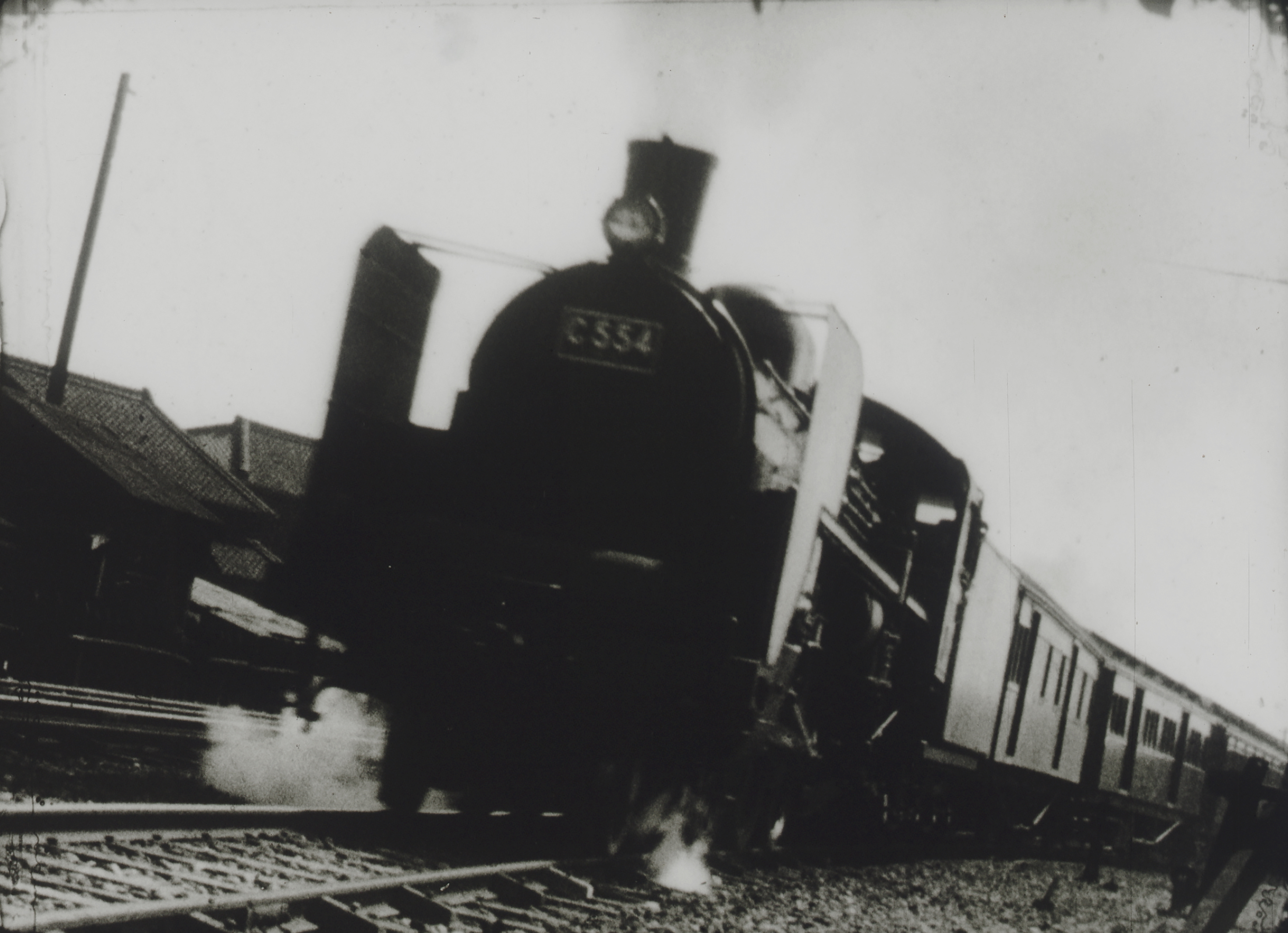
➤ Pic1: An image from Outside the Train Window (c. 1935, filmed by the Railway Department of the Governor General of Taiwan), highlighting the progress of the railway system and the train speeding along the tracks. (Courtesy of TFAI)
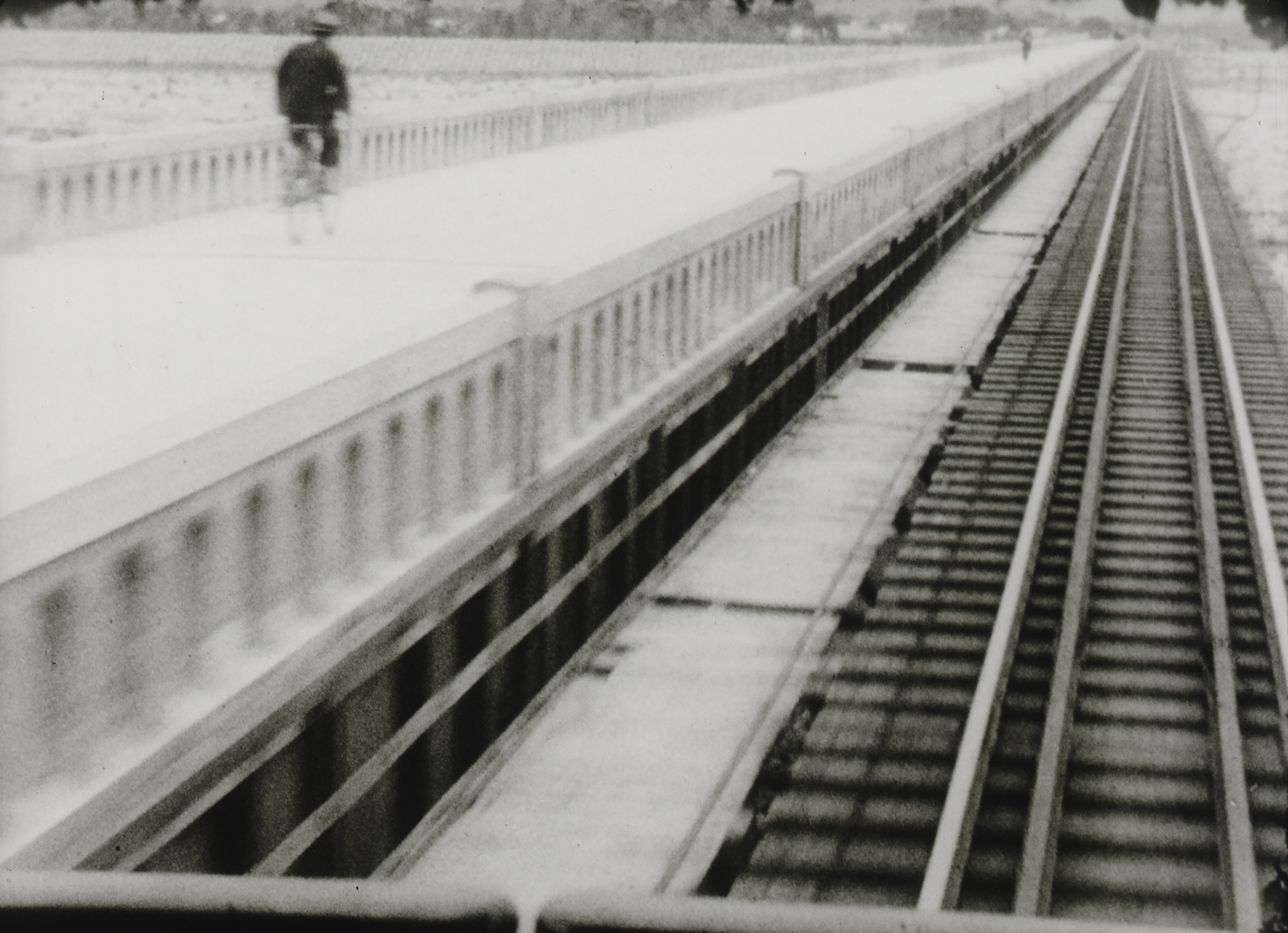
➤ Pic 2: An image from Outside the Train Window (c. 1935, filmed by the Railway Department of the Governor General of Taiwan), featuring the historic Da’an River Bridge in Taichung City. (Courtesy of TFAI)
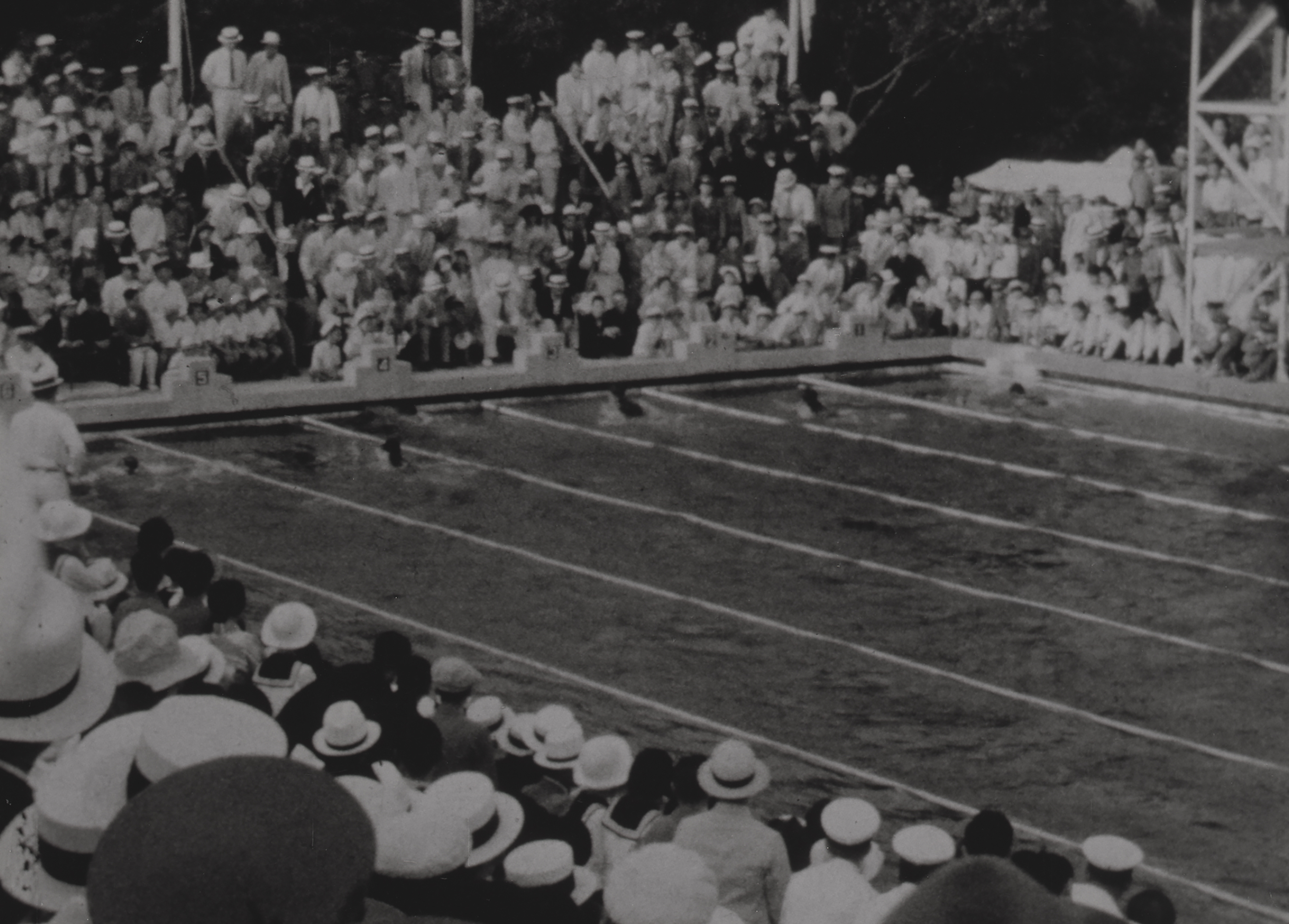
➤ Pic 3: An image from Travel by Rail (c. 1937, photographer unknown), showcasing the newsreel of the swimming competition between Taiwan and the Philippines. (Courtesy of TFAI)
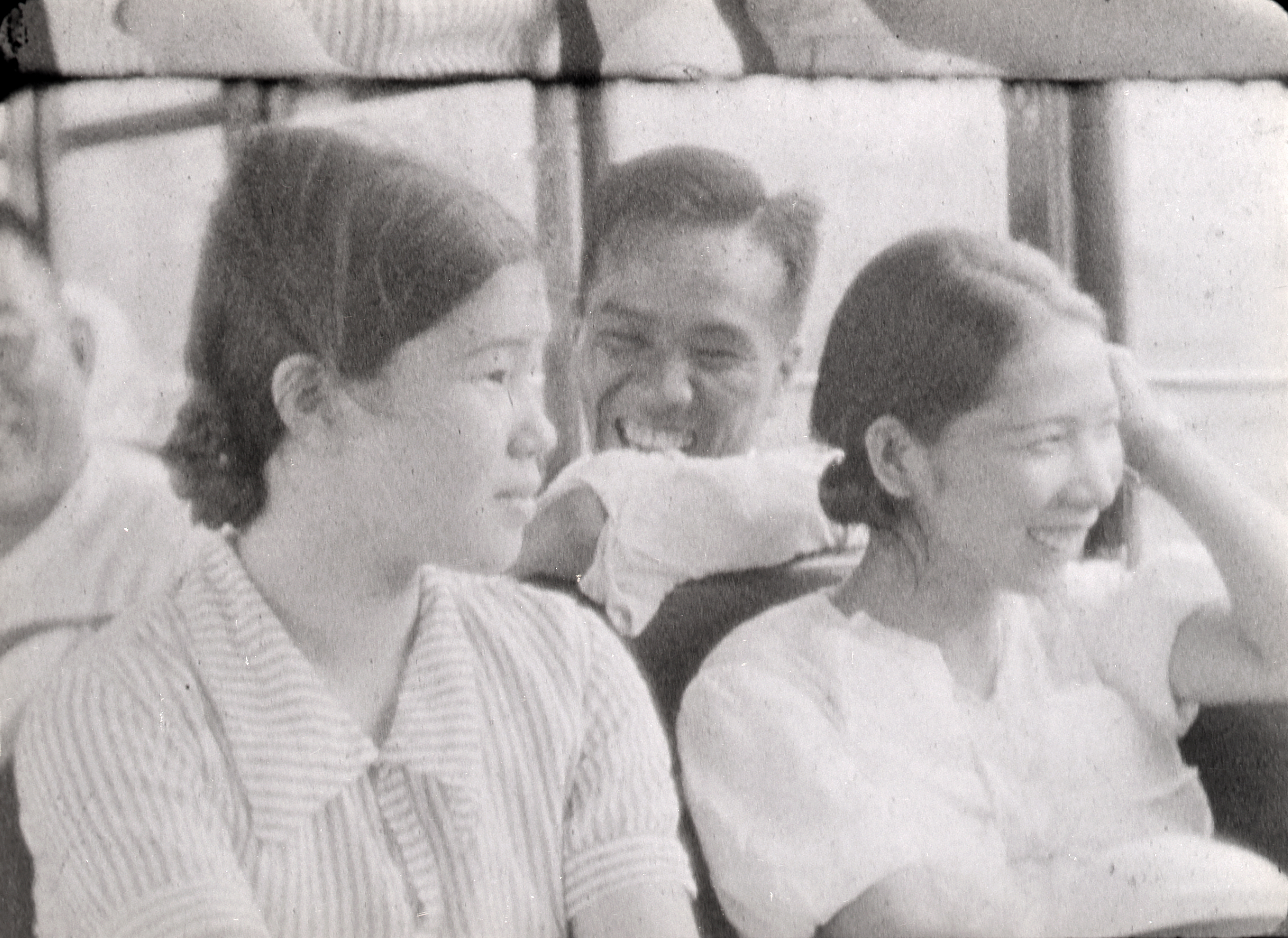
➤ Pic 4: An image from Travel by Rail (c. 1937, photographer unknown), offering a glimpse of the travelers heading to the seaside resort by train. (Courtesy of TFAI)
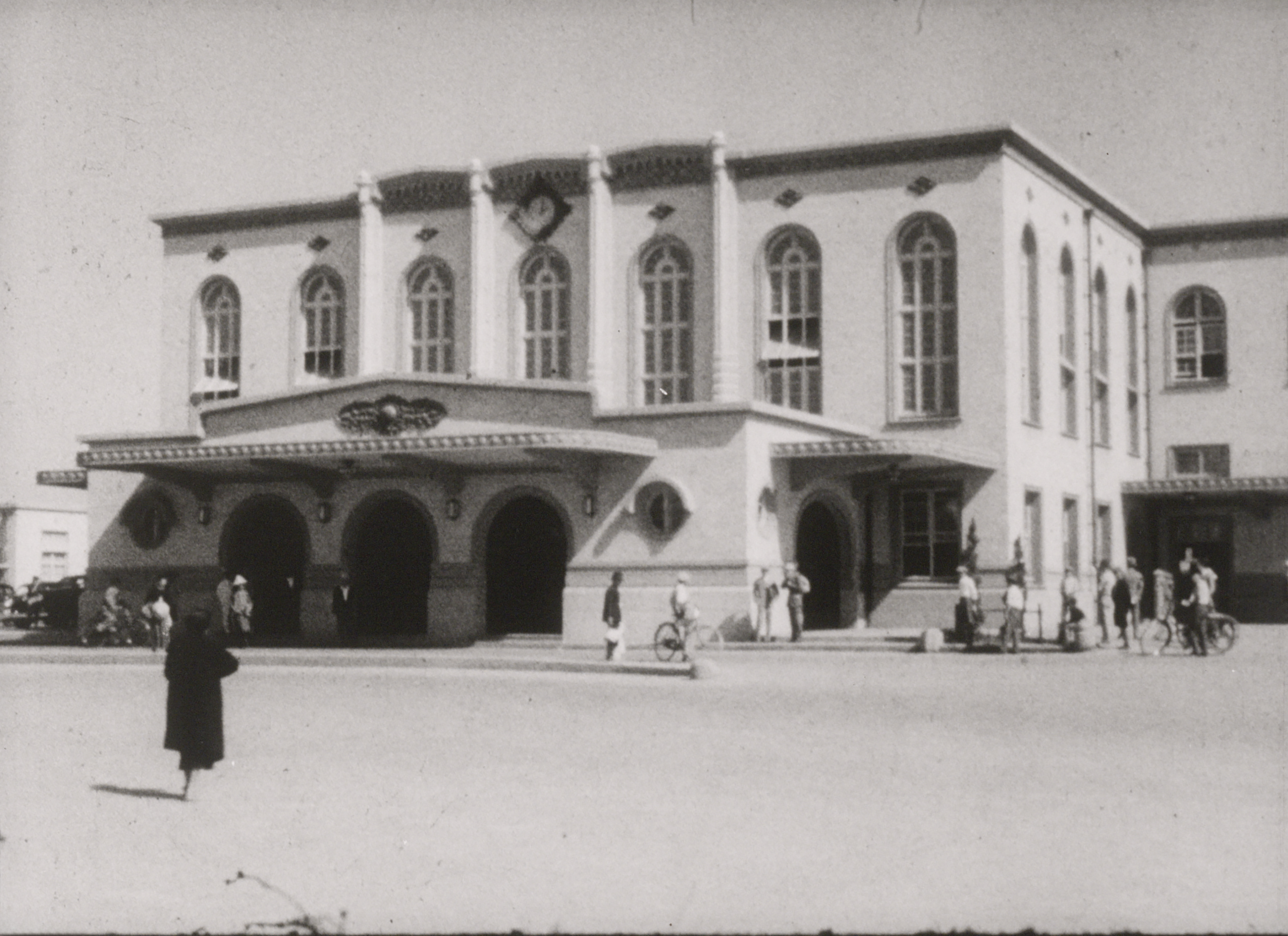
➤ Pic 4: An image from Travel by Rail (c. 1937, photographer unknown), offering a glimpse of the travelers heading to the seaside resort by train. (Courtesy of TFAI)
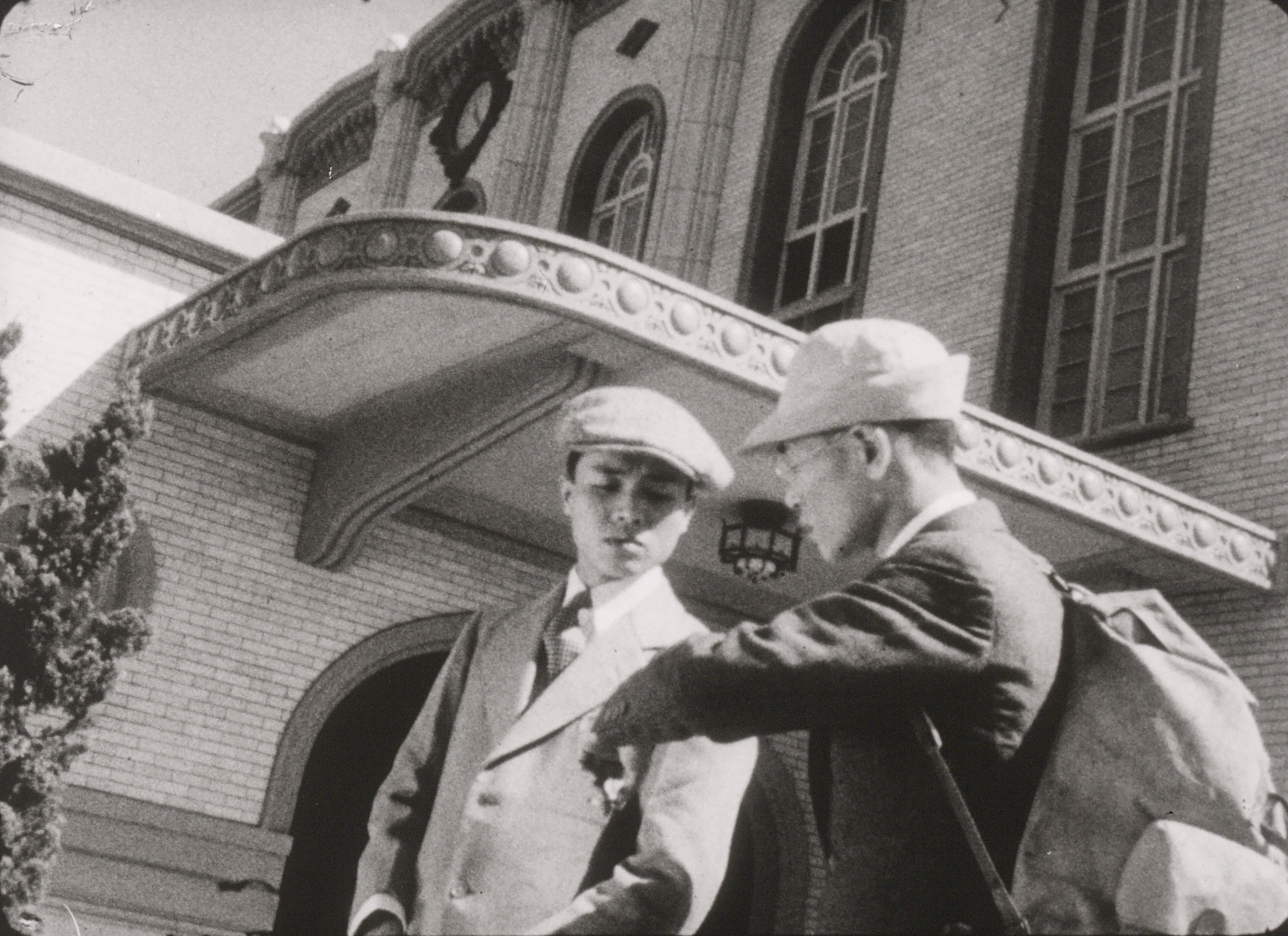
➤ Pic 6: An image from A Pleasant Journey (c. 1936, filmed by Taiwan Travel Club), capturing two travelers waiting for their friend in front of Tainan Railway Station. (Courtesy of TFAI)
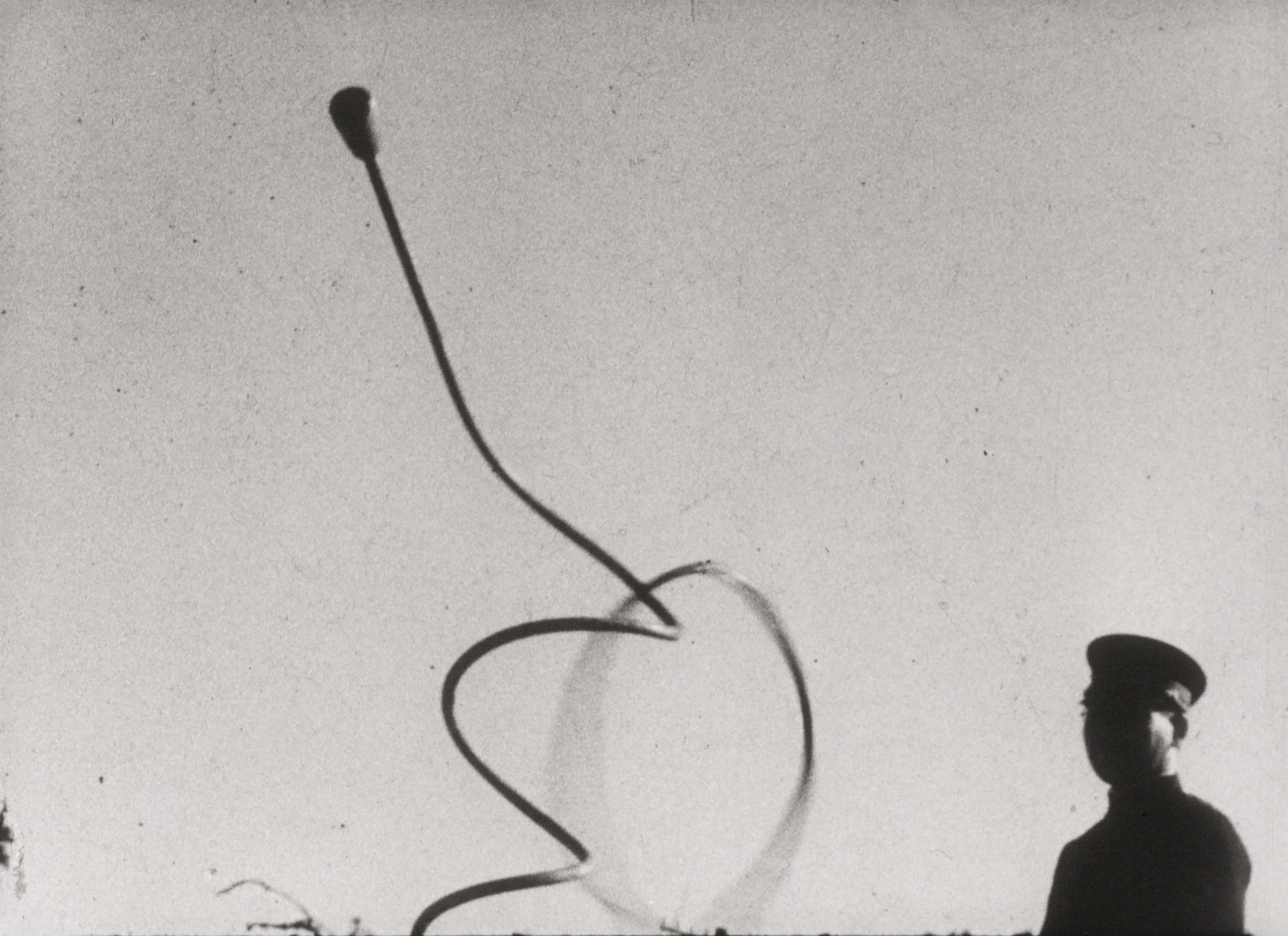
➤ Pic 7: An image from A Pleasant Journey (c. 1936, filmed by Taiwan Travel Club), showing an engine driver tossing and catching the electronic token. (Courtesy of TFAI)
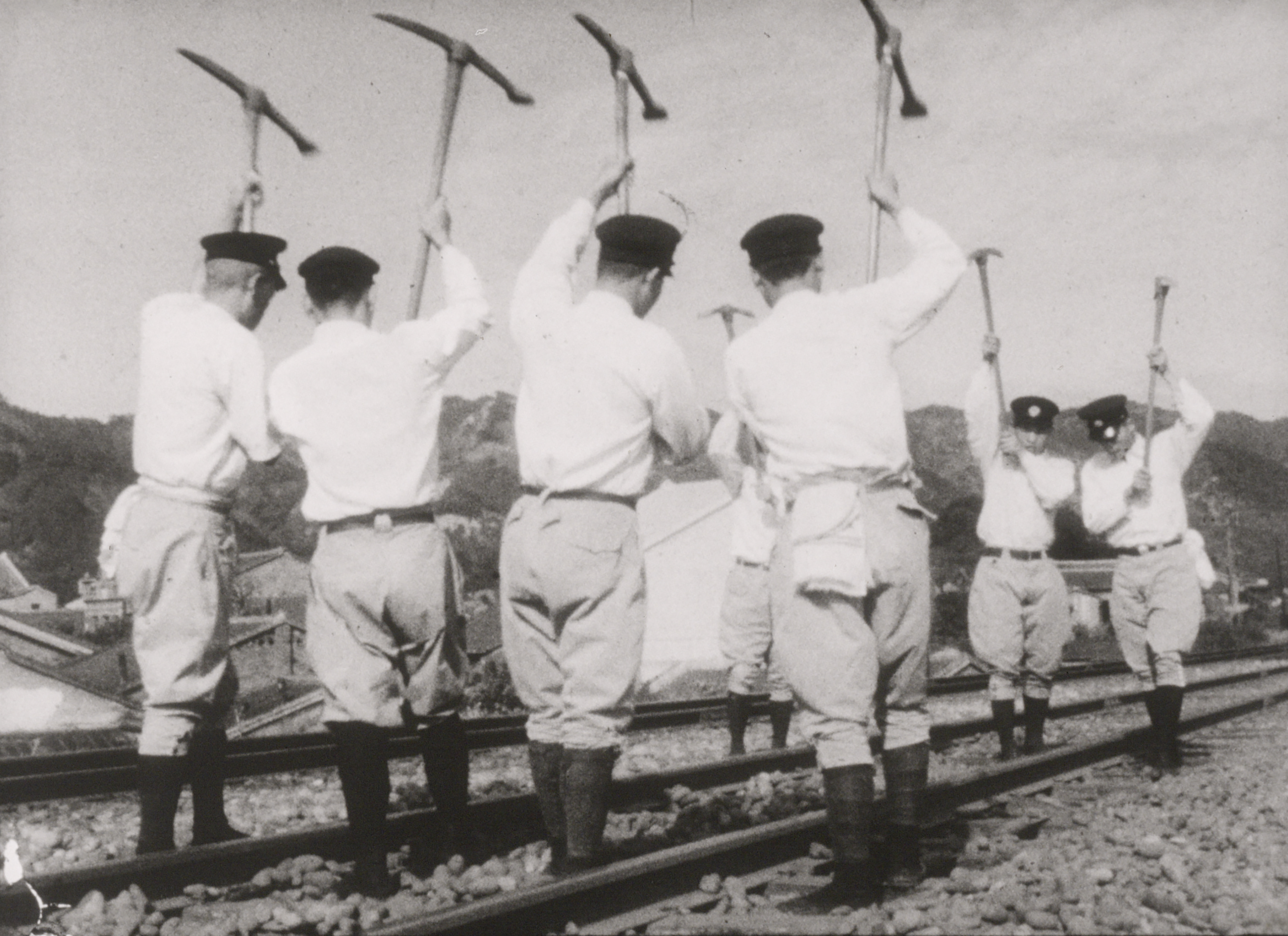
➤ Pic 8: An image from A Pleasant Journey (c. 1936, filmed by Taiwan Travel Club), showing track workers using pickaxes to maintain the rails. (Courtesy of TFAI)
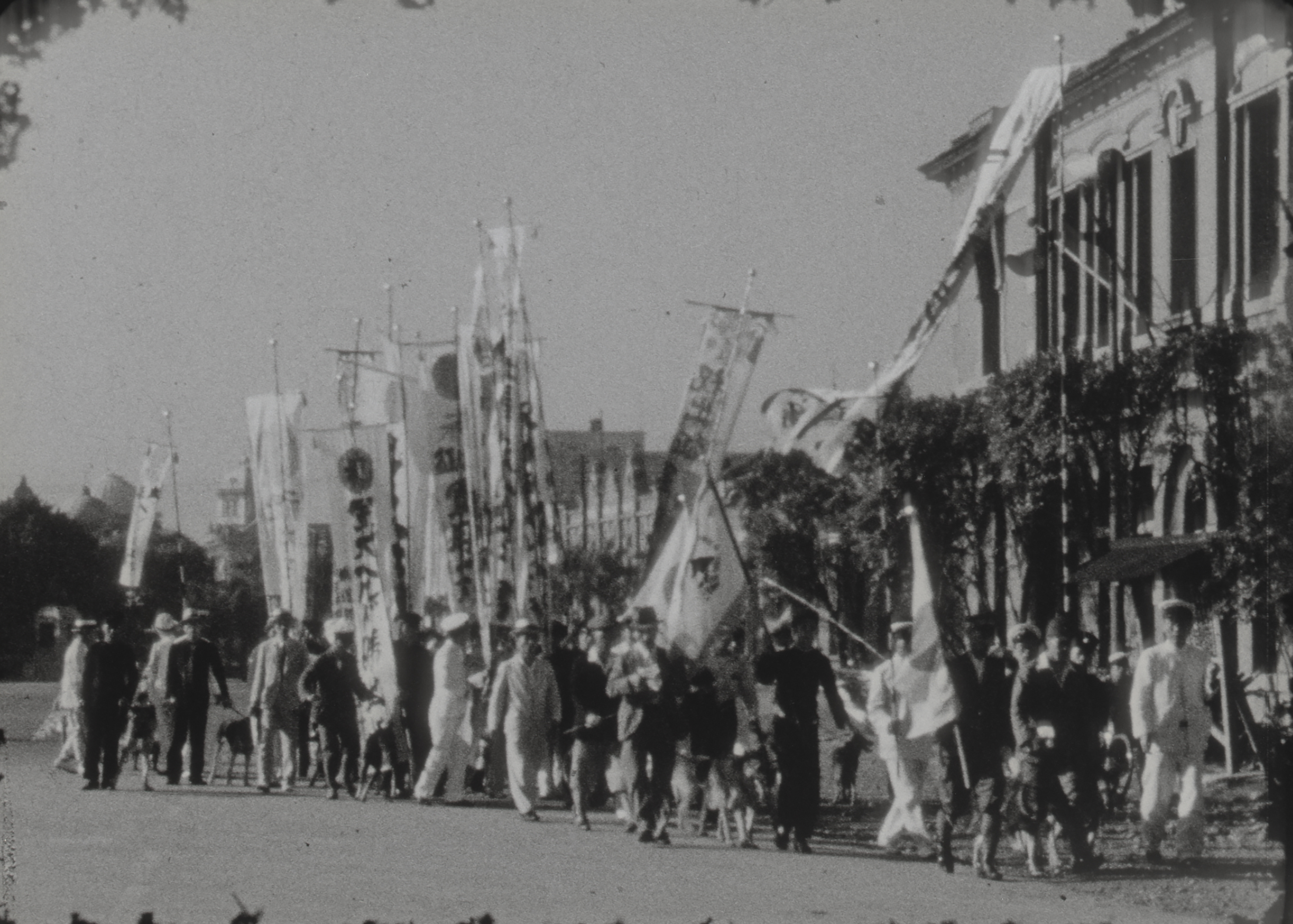
➤ Pic 9: An image from Scenic Taiwan (c. 1937, photographer unknown), showcasing members of the Railway Department’s Military Canine Association sending military dogs to the front lines. (Courtesy of TFAI)
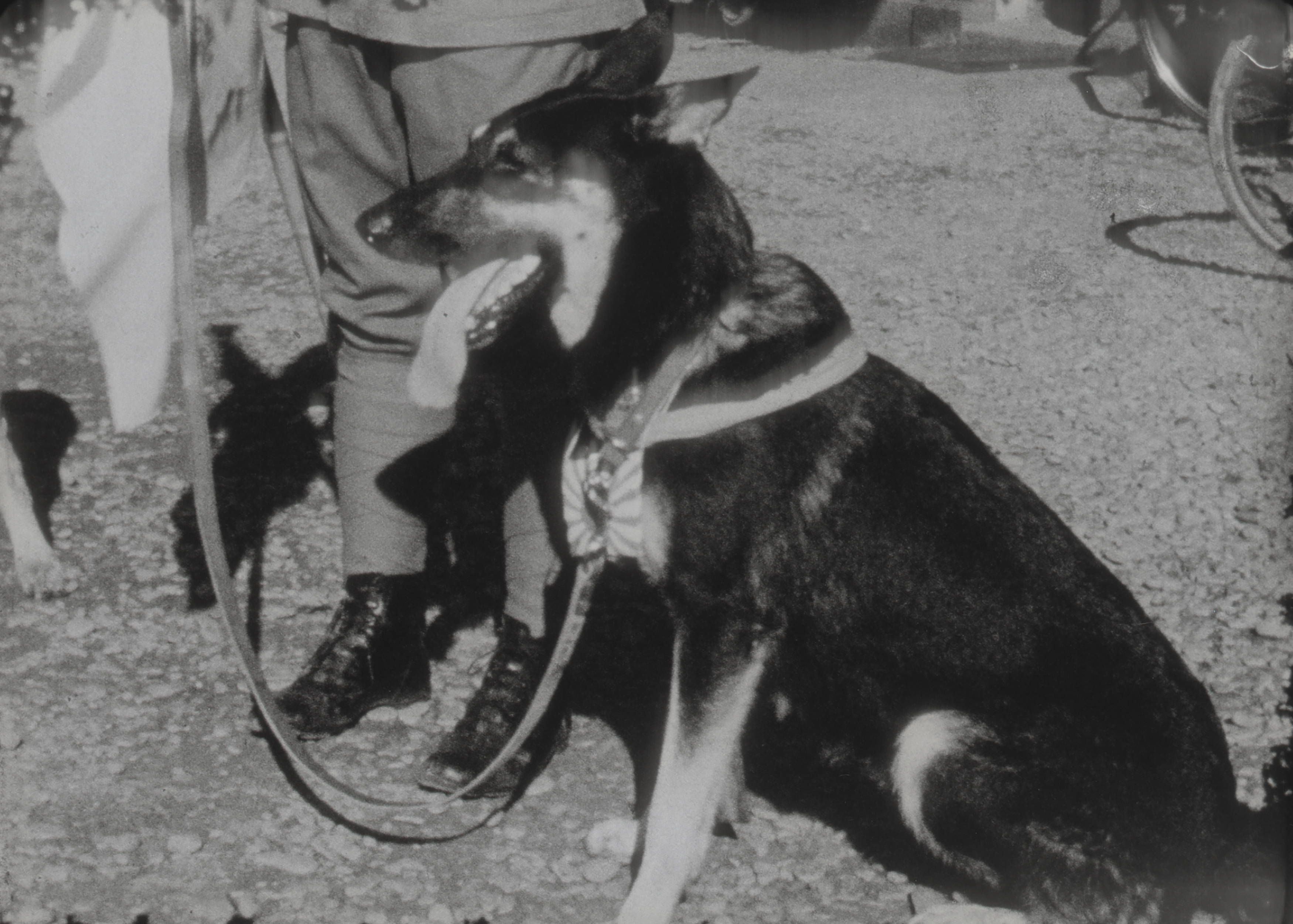
➤ Pic 10: An image from Scenic Taiwan (c. 1937, photographer unknown) in which the appearance of a military dog reflects the historical context of the Marco Polo Bridge Incident that had just erupted at the time of filming. (Courtesy of TFAI)
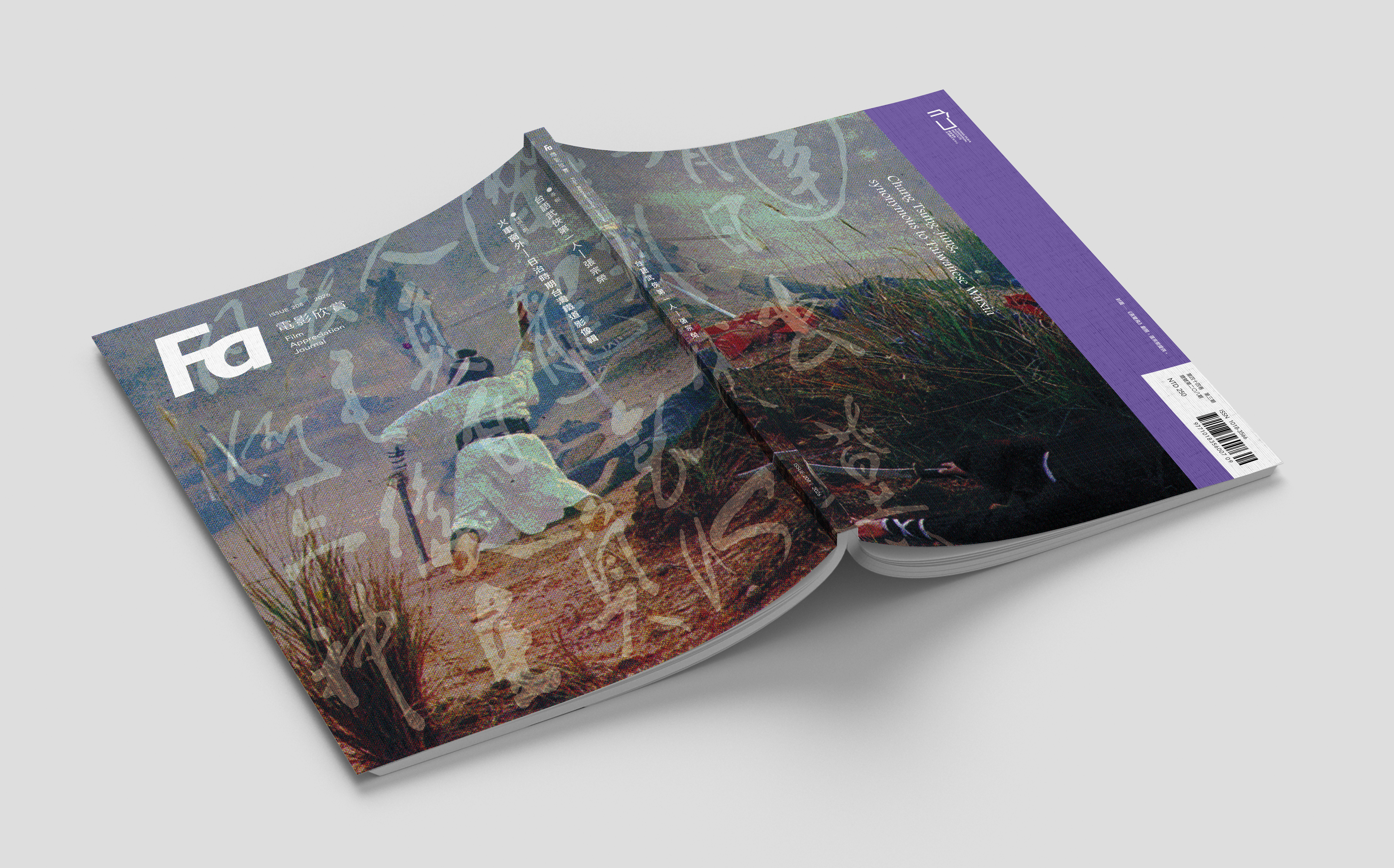
➤Pic 11: Issue 208 of the Film Appreciation Journal features a special project titled “Outside the Train Window—A Collection of Footage of Taiwan’s Railways During the Japanese Colonial Period.” (Courtesy of TFAI)
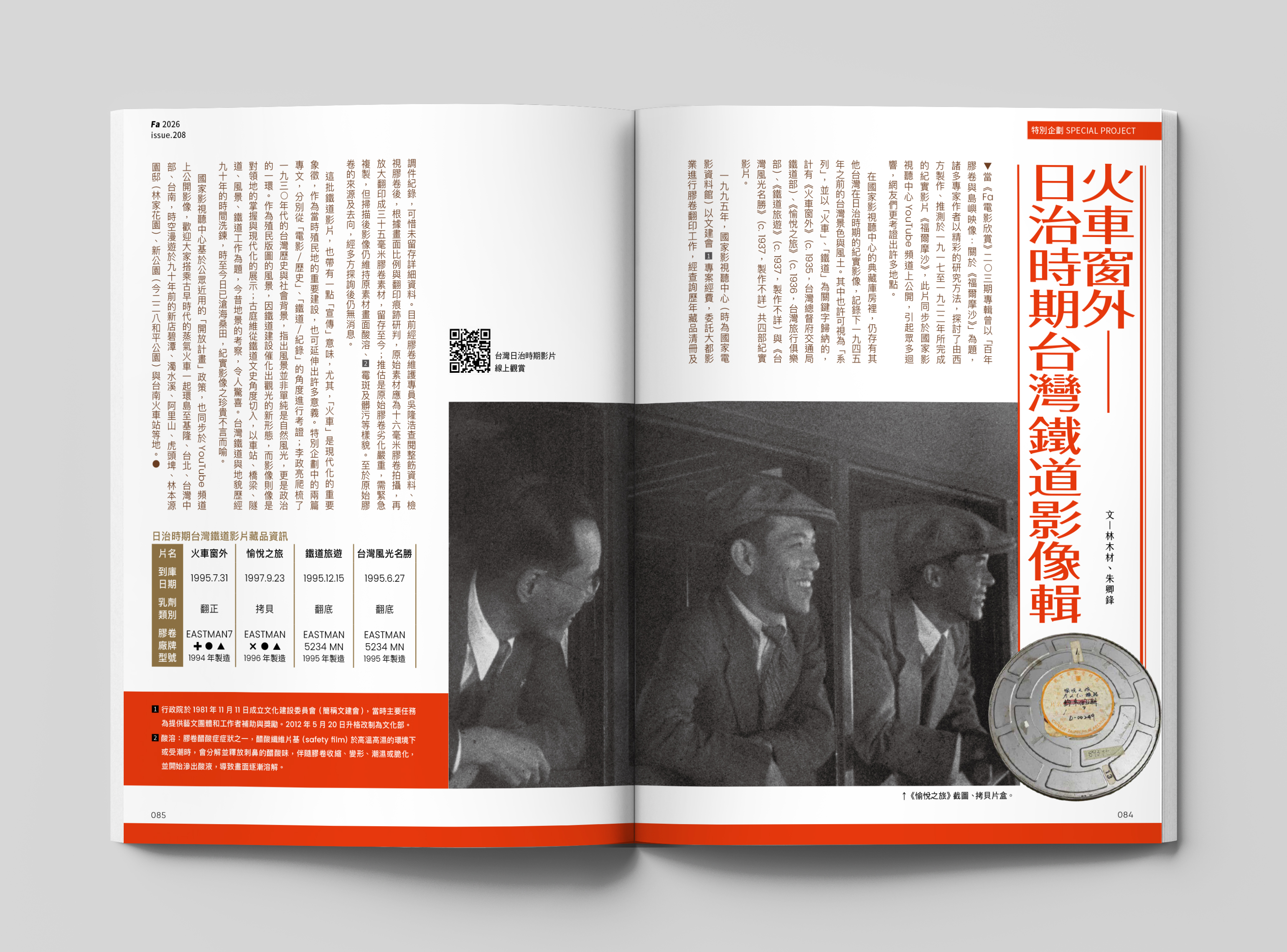
➤ Pic 12: Issue 208 of the Film Appreciation Journal features a special project titled “Outside the Train Window—A Collection of Footage of Taiwan’s Railways During the Japanese Colonial Period,” inviting cultural and historical experts to analyze the historical footage. (Courtesy of TFAI)